

The Argument is holding another live event, this time on June 17 in Washington, D.C.!
Jerusalem Demsas will be interviewing USC psychologist Darby Saxbe about her new book, Dad Brain: The New Science of Fatherhood and How It Shapes Men’s Lives.
Drawing on two decades of research, Darby explains how becoming a father changes men, from their hormones and brain architecture to their sense of purpose. (Yes, men experience postpartum depression, and “dad bod” is real.)
They’ll get into hot-button topics like:
Are great dads born or made?
How do men’s brains and hormones change when they become fathers?
Why does motherhood get all the attention while fatherhood goes overlooked?
Does the way dads play with their kids matter?
The conversation kicks off at 7 p.m. at Politics and Prose (5015 Connecticut Ave. NW).
Americans are not Luddites, except on behalf of software engineers.
In our latest poll, The Argument asked respondents whether they would support a ban on AI to replace human workers in a number of professions, a policy that would represent, perhaps, the best modern equivalent to Luddism.
I expected Americans to be Luddites for teachers or Luddites for truckers — for any profession that had a human touch or a little bit of workingman’s valor.
Instead, the only profession that got plurality support for a ban on AI use was software engineering:
Overall, Americans supported the ban on AI in software engineering by a split of 44 to 41. It’s a small margin but a notable one given that bans for many professions were underwater by double digits.
One obvious explanation for this is that the public responds to a drumbeat of news stories about whatever industry is being automated next. The industry with the second-most support for a ban was manufacturing, which was sitting at break-even support (44 to 44). For a long time, manufacturing has been the stereotypical job facing automation, but now that software engineering is in that spotlight, Americans are willing to protect it.
That explanation is probably true, but it’s also a big step from hearing that an industry could be automated to supporting a ban to protect it.
The surprising support for a ban on the automation of software engineering likely also stems from the fact that it has spent over a decade as the field that represented social mobility, including for those who didn’t go to an elite school.
In the 2010s, the advice “learn to code” became something of a mantra, both as advice to young people as well as a taunt to people in declining industries. Now, in the late 2020s, with massive labor market disruption in the offing, it’s unclear what advice replaces it. A lot of Americans are willing to throw up blockers to preserve the old path, even if that path was only aspirational.
Americans viewed coding as the path up
Most bans in our poll showed a strong age gradient. On average, across all of the industries where we polled automation bans, young people (18 to 29) were 9.5 percentage points more likely to support a ban on AI in a given profession compared to 45- to 64-year-olds.1 This makes sense because younger people, earlier in their careers, have more of a stake in any given ban.
With software engineers, that age gradient all but disappeared. Older cohorts roughly matched the support of young people for a ban. Our poll showed relatively muted differences along race and gender lines. The other thing that did stick out along the age gradient was that the young cohort was 20 points more likely to want to ban AI in K-12 education than people in the 45 to 64 cohort, which is double its support for other bans.
As a teenager in the 2010s, I remember getting two kinds of professional advice from my elders: Learn Chinese and learn to code.2 These two things were, respectively, the future of international business and, well… international business, domestic business, business, and even entrepreneurship.
In the early 2010s, it was common to think that everything was computer, or would be.3
In 2014, BuzzFeed published a quiz called “Should You Learn To Code?” The quiz asked people to click on an identity that described them so they could get a personalized answer, listing everything from being a woman to being a rapper.
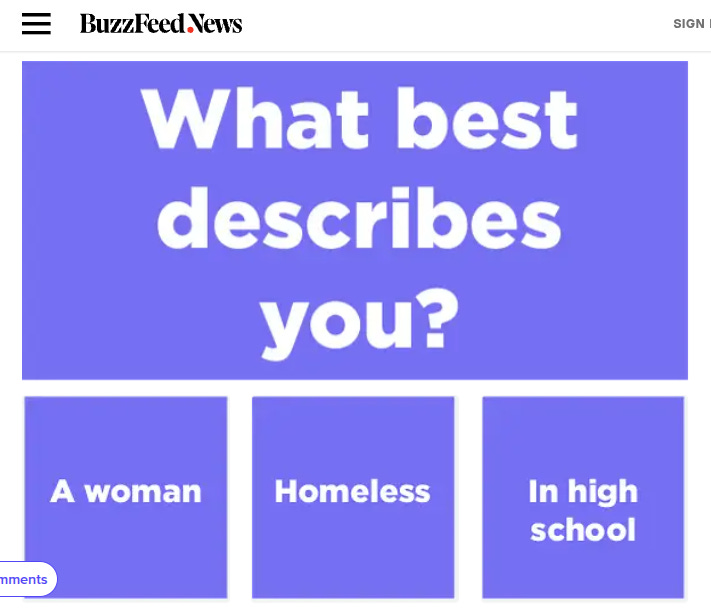
The joke, of course, was that every square led to a hyperlink where someone was telling that group they should learn to code. Basketball fans should learn to code because basketball star Chris Bosh said you should learn to code. A disabled veteran should learn to code because when one disabled veteran asked Reddit for advice on his future, Reddit users mobbed him with advice to code. Everyone was being told the same thing: Learn. To. Code.
It’s important to distinguish between two versions of this advice. One kind was directed at young people going to college and another was purportedly meant as a DIY path back from a layoff or otherwise dimmed financial prospects.
In 2012, billionaire New York City Mayor Michael Bloomberg tweeted an endorsement of Codecademy’s campaign #codeyear, posting that coding was his own New Year’s resolution. Codecademy was one of the online outlets that had popped up to give people a DIY way to get into the industry.
Bloomberg’s advice was a common nudge to those living through a decade of slow job growth and flat wages. Retraining as a coder was, apparently, the way back up.
By the end of the decade, that kind of advice would produce backlash, perhaps reasonably.
In 2019, when a round of layoffs hit BuzzFeed and The Huffington Post, the hashtag #LearnToCode blew up as a sardonic jab at journalists who had made this suggestion many times to laid off coal miners. “Learn to code” was now seen as the way elites offered outsiders the dregs of an economy that had rewarded knowledge work in superstar cities.
Separately from the retraining discourse, students entering college were driven to computer science in large numbers: Data from Revelio Labs shows that computer science majors peaked at 11% in this year’s graduating class. This means that the peak year for the enrollment of computer science majors was 2022, which had been climbing throughout the decade prior.
That growing share of computer science majors were responding to a real wage premium. In 2016, a typical computer science graduate earned $19,000 more than a mechanical engineering graduate from the same school, according to Revelio. But by 2024, this premium had dropped to less than $10,000.4
There are more reasons for this than the widespread release of chatbots in 2022. For one, the tech industry had major layoffs in 2024 as interest rates rose, lowering demand for software engineers. But whatever the causes, it’s easy to see how the economic bump for computer science majors is unlikely to come back.
The brief path coding offered in the 2010s has now narrowed, if not disappeared.
Americans aren’t learning to vibe code
The irony is that AI makes coding itself more accessible, not less accessible. The threat to software engineers is a threat precisely because it makes their skillset less scarce and more available to others.
As of right now, however, not many people are using AI to code, despite the fact that it requires zero prior coding knowledge to produce fully functional projects. With AI, if you want to start a business, you can not only create your website with AI, but you can now run all your business processes — from expense tracking to payroll — with a set of prepackaged commands.
Nonetheless, the vast majority of people use AI to do enhanced Googling.
In our poll, we asked responders how they use AI. A majority said they used AI for looking up information (55%), while just 8% used it for coding, despite the immense range of self-starting projects it could facilitate.
But software engineers are themselves an unusual vanguard. Norms in the industry favor disruption, quitting, and entrepreneurship, which makes an odd fit for protectionist politics.
The most valorized software engineers are not old hands who stay at the same company for 30+ years but those who leave and start their own companies. Remarkably, in a recent Pew Research Center poll, workers in information and technology were among the most likely to say the technology would help, not hurt, their future job prospects.
Those workers may be right.
In their latest essay, authors Sayash Kapoor and Arvind Narayanan argued that software engineering may not be at risk at all. In it, they cited three recent news stories in which either CEOs or the media credited a tech company’s layoffs to AI when there were really other causes.
It can be helpful for CEOs to point at AI when a business has other reasons for layoffs. It turns a bad story into one where the CEO is a hero for driving adoption. But as Kapoor and Narayanan pointed out, layoffs would not be the sign of rapid AI productivity gains — slower hiring is much more likely to be a sign of AI’s effect on an industry.
In other words, a lot of the stories that have led to concern for software engineers might be based on a false premise and a few flashy news stories.
But if the public is ready to go to war for even the software engineers, it raises the question: How strange will the politics get if AI disruption comes for very different industries? Ones with credentialism baked into the DNA, with lobbyists ready to push for state-by-state bans, with unions ready to fight back?
If AI disruption reaches these industries, then the latent protectionism within large swaths of the American public will no longer be cutting against the professions’ own instincts; they will be aligned.
Recommended reading:
AI could destroy the labor market. We already know how to fix it.

Stop overthinking this. In reality, the most boring, well-established social democratic policy approaches will work perfectly fine.
The Tinder-ization of the job market

AI may not have collapsed employment, but it has turned job seeking into a modern dating nightmare.
I chose this cohort rather than 65+ because it is the oldest working cohort, and some people in this group would have a stake in a ban.
I learned Spanish and waited for coding agents.
To paraphrase the president.
As this gap closes, more students are enrolling in mechanical engineering, which may be seen as more insulated from AI than comp sci is.
"As of right now, however, not many people are using AI to code, despite the fact that it requires zero prior coding knowledge to produce fully functional projects. With AI, if you want to start a business, you can not only create your website with AI, but you can now run all your business processes — from expense tracking to payroll — with a set of prepackaged commands."
I'm a non-software engineer who has been using coding agents for months now both at work and for personal projects and gets a lot of value out of them, and I don't agree with this. Yes, you can create little programs and scripts reliably with AI, but I would not trust it to write enterprise-level code, and I especially wouldn't just ask Claude to run crucial parts of a small business as your link suggests. I would not recommend small business owners rely on AI to that degree.
Why not? For many reasons:
1. If something goes wrong, you as the business owner are liable rather than Anthropic.
2. Enterprise code is reliable, efficient, secure, and built for myriad edge cases in a way that a vibe coded app is very unlikely to be (and you wouldn't be qualified to evaluate whether it is or not).
3. Hallucinations have become a lot less common, but they do still happen, and especially for process like payroll where you need to be right 100% of the time, they're still not reliable enough.
You are clearly over analyzing a poll that doesn’t hold up to much scrutiny. 44-41 (85% total). There’s simply no credible way that percentage of people actually have an opinion on this more niche topic.