

A political earthquake shook Texas this week: Democrat Taylor Rehmet, a machinist and Air Force veteran, flipped Texas’ 9th state Senate district in a stunning special election upset. He won by 14 points in a district that voted for Trump by 17 points in 2024.
His victory is made all the more impressive by the fact that the GOP went all-out to defend the seat. Rehmet’s Republican opponent, Leigh Wambsganss, received a massive financial boost from the party, along with the endorsements of Donald Trump and Greg Abbott.
Democrats’ strong performance in the district aligns with the usual midterm pattern for the party out of the White House. Accounting for all the special elections in 2025 and 2026, the average swing from 2024 is 12 points in favor of the Democrats.
Our polling also picked up this shift: In our recent survey, though Democrats led by four points with all registered voters, they led by 10 among voters who said they would “definitely” or “probably” vote in 2026.

But the million-dollar question remains: Is the race for Texas’ U.S. Senate seat going to be competitive?
The simple answer is that it depends entirely on the candidates. That sounds cliché, but this is probably the race most prone to candidate quality variance, given the extremes on both sides.
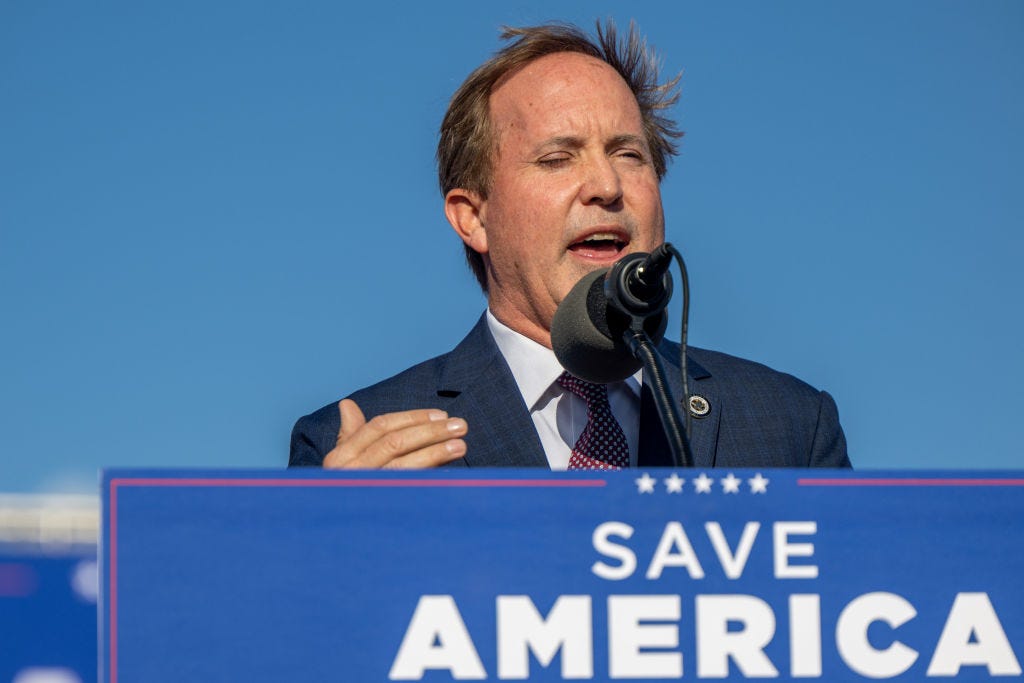
If incumbent John Cornyn wins the Republican primary, it’s likely that he wins re-election somewhat comfortably in the Trump +14 state. But he is being challenged from the (far) right by Texas Attorney General Ken Paxton and Congressman Wesley Hunt. Normally, this wouldn’t matter, but Paxton is so deeply flawed and plagued with scandal, that if he wins, it would immediately endanger the Republican chances of holding the seat against a strong Democratic candidate.
But will the Democrats field one? That’s up in the air. Congresswoman Jasmine Crockett and state Rep. James Talarico will face off in a primary that polling suggests will be a close contest.
Between the two, I think Talarico would have a better chance of beating Paxton because Crockett has shown no interest in winning swing voters, going instead with a theory of “expanding the electorate” and doubling down on partisan rhetoric.
For what it is worth, this trick does sometimes work in off-cycle and primary elections, but rarely is it successful in a midterm election, especially in a state as large as Texas. And there’s no reason to think that Crockett is going to be the exception.
The betting markets think Talarico is better poised to pick up undecided primary voters based on his fundraising, campaigning, and potential appeal among white and Latino Democrats.
Normally, in Texas, this would just be a fight over a relatively academic question: “How much will the Democrat lose by?” (And if you listen to Crockett, that’s actually similar to how she describes the race.)
This time, however, I’m not so sure that’s the case. Assuming that our D+10 January survey result among enthusiastic voters is the environment the candidates face in November (and it’s fair to be skeptical, but there are some reasons to believe that we’re on track for something a touch bluer than 2018’s D+7), then Democrats will need just a four-point overperformance in order to win the race.
That’s extremely doable. It’s not easy, but Talarico seems a bit more likely to pull it off than Crockett.
The people DEMAND a similar post about the primary in Maine!
🙏🙏🙏
The Crockett stuff to me seems like the farce to pair with the 2020/2016 tragedy of political remoras using identity politics to justify naked thirst for power. At least this time it seems like people have wised up to it instead of bending over backwards for them.