

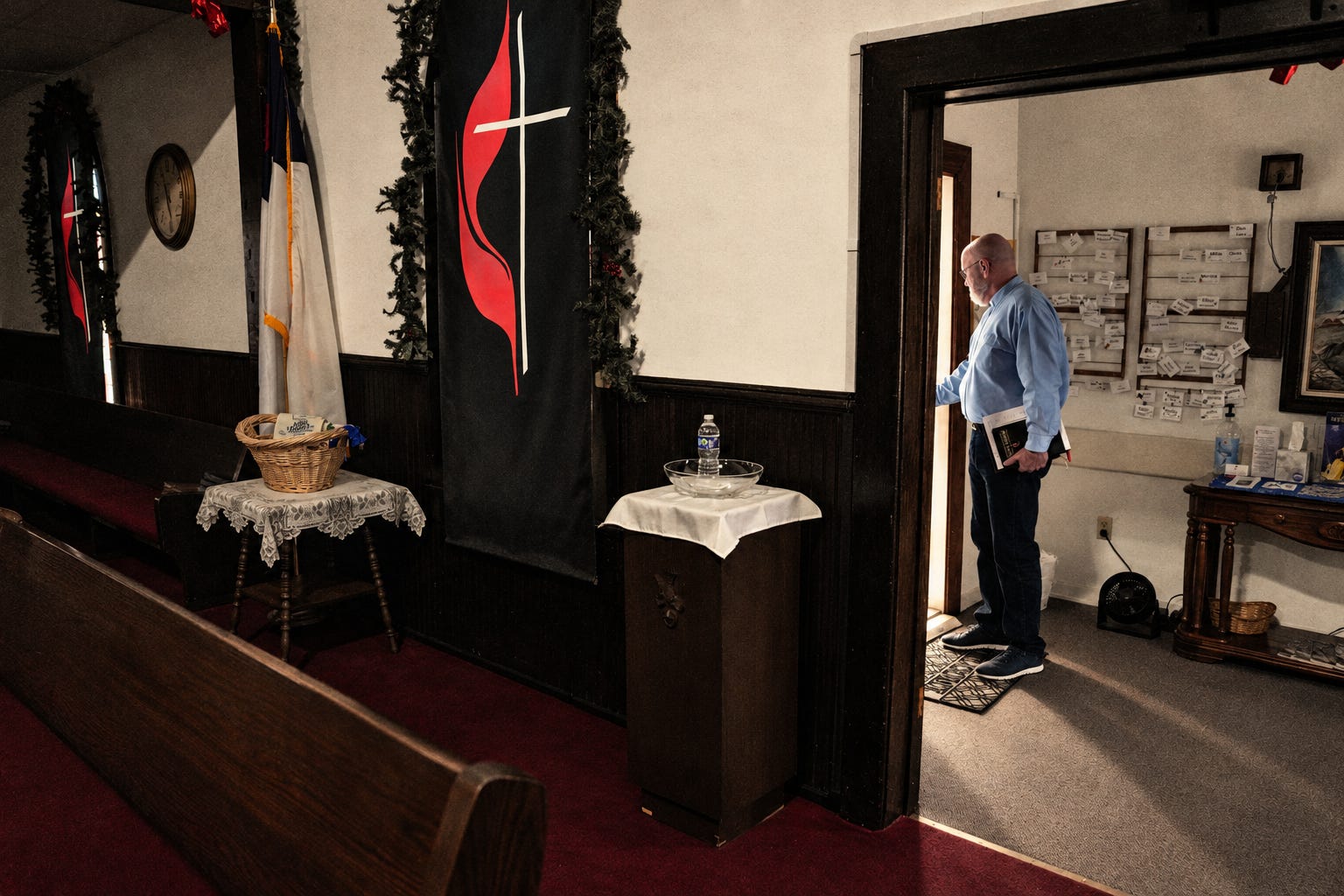
In the 48 hours after the midterm election results came in, 16 reporters interviewed me. Whether they were from large mainstream outlets or niche Christian publications, they all wanted to talk about the same thing: how the 2026 elections could signal the rise of a “new religious left” in the American political landscape.
If you just look at the winning candidates, you might think they were onto something. Adam Hamilton, a man who in 1990 started a United Methodist Church in suburban Kansas City (which is now one of the largest churches in his entire denomination), became the first Democrat in almost a century to win a U.S. Senate seat in Kansas. The incoming U.S. senator from Texas, James Talarico, is a seminarian in the Presbyterian Church (USA) who took a break from the campaign trail to discuss how his Christian faith shaped his political views on Ezra Klein’s podcast.
Two ministers from other mainline Protestant denominations, Sarah Trone Garriott and Lindsay James, won House races for the Democrats. Iowa Gov.-elect Rob Sand is fond of quoting the Bible, and soon-to-be U.S. senator from Mississippi Scott Colom cites his faith when detailing his issue positions.
All this led to The New York Times running a post-election piece about a “new Christian left,” and The Week declaring that “mixing religion and politics proved decisive in the Democrats’ midterm victories.” These postmortems followed pre-election coverage crediting Talarico with “reviving a long-neglected tradition of left-leaning American religiosity” and reporting that “party strategists and officials have grown excited about the number of candidates for whom religion is a major part of their biography and identity.”
It’s enough to make anyone wonder: Has the Democratic Party found God? And has this newfound piety pulled religious voters back under the party’s tent?
As a guy who spends nearly every single day of his life digging into the data about American religion and politics — and as someone who spent 17 years as a pastor myself — I have to answer both questions with a resounding “no.” If the lesson Democrats take from 2026 is that they should set their sights on winning over religious voters, they’ll be drawing exactly the wrong conclusion.
There’s a simple reason for that: As U.S. religious disaffiliation has grown, any semblance of a religious left has been disappearing rapidly over the last several decades. While religious appeals may occasionally put certain candidates over the top with marginal voters in close races (as they likely did for Hamilton) even those benefits are fast diminishing as the electorate grows more secular.
In other words, an explicitly Christian appeal to religious voters might be one tool in a successful Democrat’s toolkit — but it’s a hammer that risks finding vanishingly few nails, if recent trends in religious affiliation and partisanship continue on anything resembling their current paths.
