

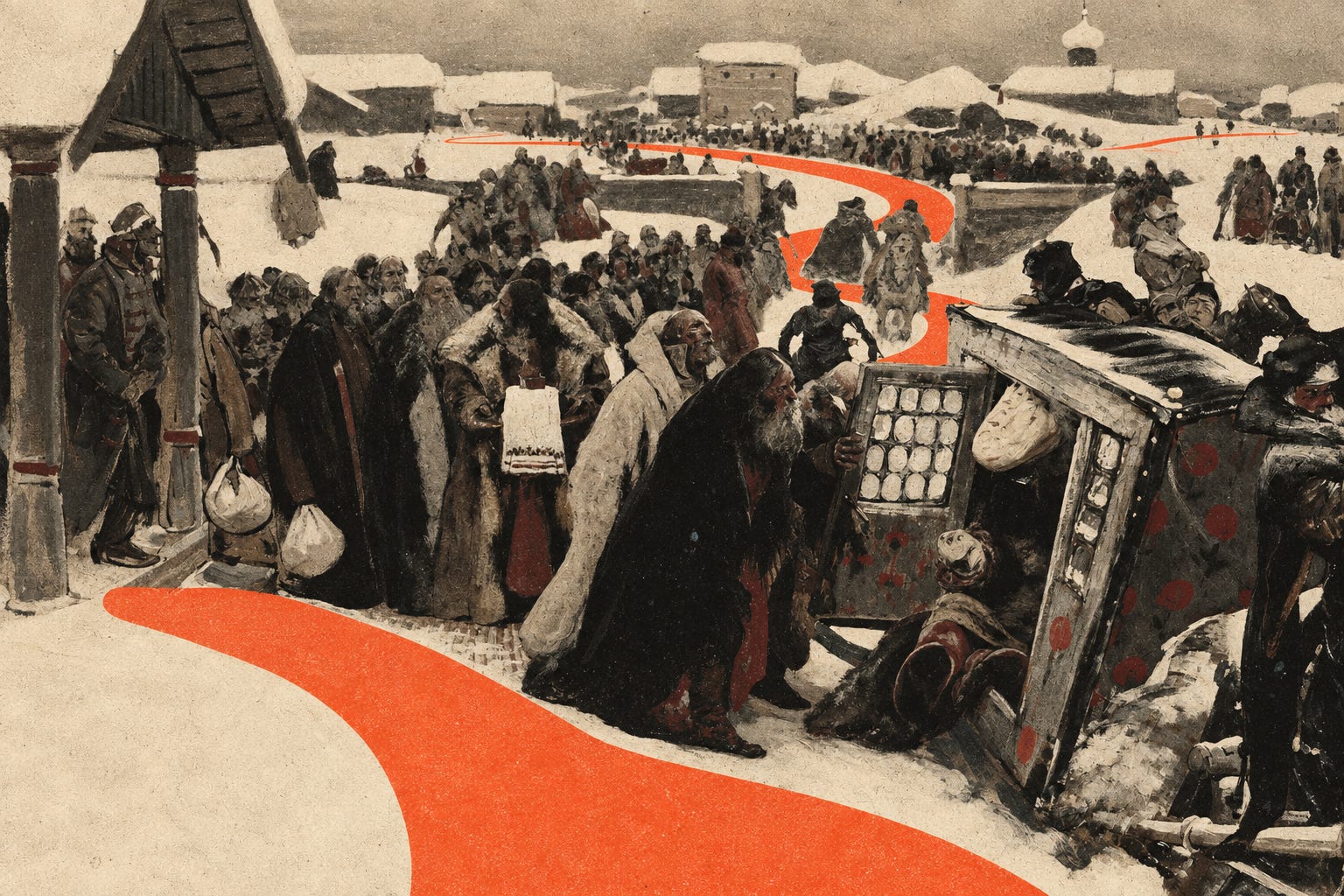
Friedrich Hayek’s most famous book argues that Nazism emerged in part from Germany’s interwar embrace of central planning. Composed during World War II, The Road to Serfdom was written as a counterargument to the British Labour Party’s proposal to nationalize large swaths of the economy.
The Labour Party did, in fact, win the 1945 election in a landslide and subsequently did a bunch of central planning: Under Clement Attlee, the postwar nationalization program brought coal mining, railways, electricity, gas, and much of the iron and steel industry into public ownership.
As a prediction, The Road to Serfdom clearly fell flat, in the sense that it did not result in literal serfdom — that is, a system where people are legally bound to a lord who controls all their economic decisions, including the ability to move freely and profit from their own labor. Nor did it even lead to a softer sort of serfdom where people lost all their meaningful economic freedom.
Whatever one thinks of central planning, Britain’s experience is that extensive public ownership can clearly coexist with competitive elections, peaceful changes of government, and successful efforts to liberalize the economy. Conservatives began privatizing steel again in the 1950s, though Labour reversed that in the late 1960s. Under Margaret Thatcher and John Major in the 1980s and 1990s, Britain largely privatized all of these industries.
But while I think Hayek severely undercut his project by hyperbolically comparing central planning to serfdom, he does persuasively argue that control over the economy can easily become control over people’s lives. Labour didn’t just nationalize a few industries in 1947. Attlee’s government also reintroduced controls over hiring to steer workers toward industries it considered essential. This wasn’t just the government owning coal mines; it was the government controlling access to employment.
Employers seeking men aged 18 to 50 and women aged 18 to 40, with some exceptions, had to go through a government employment exchange or agency in order to find hires. There was at least one instance where a company was prosecuted and convicted for hiring a typist without the permission of the Ministry of Labour.
This is a pretty big infringement on freedom! Notably, some of the backlash came from within the Labour Party itself: Rhys Davies, a Labour member of Parliament and former miner, argued that “a pair of handcuffs are no easier to wear because they happen to shine with a Socialist solution” and quipped that his party should “try freedom for a change.”
The insight that central planning can undercut important freedoms is overplayed by conservatives but underplayed by liberals. That said, Hayek missed the many ways that government intervention can enable freedoms as well.
For instance: I didn’t get married for health insurance… but I also didn’t not get married for health insurance.
In early 2025, I decided to start my own media company. The problem was that my wedding wasn’t scheduled until September. So, my then-fiance and I decided to accelerate things and get courthouse-married right away so that I could get on his health insurance.
Debates about economic liberalism tend to focus on the costs that state intervention in the marketplace imposes on people and firms. But just as important is the question of what types of state interventions enable people and firms to exercise true freedom. Universal healthcare and other social welfare programs enable people to move, start new businesses, try to write the next great American novel, or do anything else they might find important.
Amartya Sen and Martha Nussbaum developed versions of what’s called the “capability approach”, which asks what people are actually free to do and be. Legal permission is part of what enables freedoms, but so too are resources and circumstances that make more choices available. You might be legally free to learn how to read, but without access to books or schools, that freedom is worth very little. You might be legally allowed to leave a job, but if you depend on it for medical care, how much is that freedom worth?
My co-host, Matt Yglesias, makes a related point about people who aspire to work in the private market finding that economic regulations can be frustrating barriers to freedom. If you dream of being a chef, but opening a restaurant in your city requires a yearlong permitting process that costs you tens of thousands or hundreds of thousands of dollars, how free are you to pursue your life goals?
The problem, of course, is that invoking freedom doesn’t settle these questions. A health inspection can constrain a restaurant owner while protecting customers; health insurance can expand a worker’s options while requiring resources from others. There are disagreements about the consequences of these policies, but also about which freedoms can be weighed against other goals and which are sacrosanct.
Listen to Matt and me review The Road to Serfdom on today’s episode, and if you have other books to suggest, drop them in the comments below!
The Argument. Libbing out.
Paying subscribers can find the transcript for this post beneath the paywall.
WATCH THE EPISODE ON YOUTUBE HERE
New episodes post every Thursday.
For an ad-free version and full transcript, subscribe at TheArgumentMag.com.
Corrections:
Around 21:15, Matt names one of Hayek’s chapters “Freedom and Security,” which reverses the actual name “Security and Freedom.”
Around 22:15, Matt attributes an article to Yale Law School’s Law and Political Economy journal. It was actually published on the Law and Political Economy blog.
Around 1:06:00, Jerusalem describes the Giving Pledge as a billionaire’s pledge “to give away all their money before they die.” The Giving Pledge’s description actually says the majority of their wealth.
Around 1:11:40, Jerusalem says inclusion in the White House Press Corps used to be “controlled by the White House Press Association.” The organization is actually called the White House Correspondents’ Association.
Show notes:
The Road to Serfdom, 1944 book by Friedrich Hayek that serves as the main topic of discussion for this episode: Goodreads page
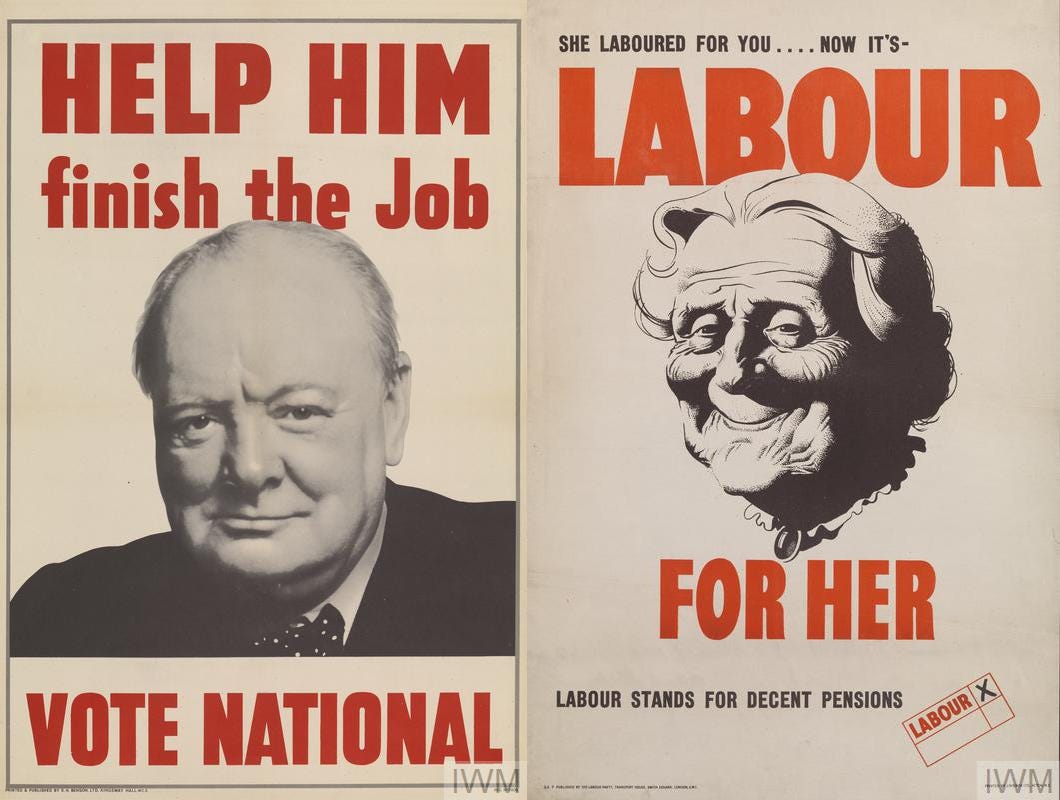
Posters for the 1945 election in Britain, referenced by Matt: Imperial War Museum page, Imperial War Museum page
The Constitution of Liberty, 1960 book by Friedrich Hayek, referenced by Matt: Goodreads page
“The Old World and the New Society: A Report on the Problems of War and Peace Reconstruction,” 1942 Labour Party reconstruction plan, referenced by Matt: Google Books page
“Did Joe Biden really kill Spirit Airlines?” previous podcast episode about airline deregulation: The Argument podcast
Democratic Socialists of America’s platform, referenced by Matt: DSA page
Tweets referenced by Matt:


“Why We Need to Stop Subsidizing Venture Capitalists,” article by Hilary J. Allen about Uber, referenced by Matt: The Law and Political Economy blog article
Articles and op-eds at The New York Times regarding the loss of taxi drivers’ economic livelihoods when Uber became popular:
“I changed my mind about Big Philanthropy,” article by Dylan Matthews, referenced by Jerusalem: The Argument article
“No, Senator Murphy, I don’t want to join your cult,” article written and referenced by Jerusalem: The Argument article
“Terminal Sickness,” article by Lina Khan and Phil Longman, referenced by Matt: Washington Monthly article
“What If the Next Democratic President Governs Like Trump?” article by Matt Ford, referenced by Matt: The New Republic article
“Why Trump’s ‘golden shares’ are enticing progressives,” article by Joseph Schatz, referenced by Matt: Politico article
Confessions of the Old Wizard, autobiography by Hjalmar Schacht, referenced by Matt: Goodreads page
The Feminine Mystique, book by Betty Friedan, referenced by Matt, which served as the basis for a previous episode: Goodreads page
“Boy moms and Nazi POWs: How ‘The Feminine Mystique’ changed feminism,” podcast episode about The Feminine Mystique: The Argument podcast
i plugged my phone into the car at the start of school drop off run to put on k pop demon hunters but couldn’t play it in time before we got the snippet of Matt calling private equity firms that limit video taping in hockey arenas “motherfuckers”. Lesson learned!
He was a genius ahead of his time but, as ever with libertarian leaning critiques of central planning (I) arguments that it doesn’t work very well and ends up making people worse off, because of fundamental economic, political, and informational realities are very, very strong and (ii) arguments that public provision of the enables of positive freedom (healthcare, income assistance, education, housing etc.) are IN PRINCIPLE an intolerable affront to liberty, are pretty bad.