
Hantavirus incompetence
We're all sick of pandemics. That's a terrible reason to mishandle outbreaks

“We’re taking The Argument to San Francisco! On May 13, Jerusalem Demsas and I are debating a question that feels unavoidable right now: Is AI actually changing how science gets done, or are we in the middle of a very expensive illusion? She’s bullish; I’m skeptical.
And you won’t just be watching. You’ll get to join in on the argument, too.
Join us May 13 at The Chapel from 7 to 10 p.m. Come argue with us! RSVP here.
In 2016, a lot of pundits said that Hillary Clinton had a 99% chance of winning the election. Nate Silver said she had a 71% chance. They were both wrong, but I think it’s fair to say that Silver was much less wrong — the Election Day result was much less surprising from his standpoint than theirs.
If you get the wrong answer, very few people care whether you assigned the right probability or whether your overall track record is good. If you say that a pandemic has only a 5% chance of being a big deal, and then it is a big deal, you were wrong. If you write something saying that 19 other pandemics have a 5% chance of being a big deal, and then none of them are a big deal, you were wrong about those ones too — you wasted everyone’s time over nothing!
We are collectively horrendous at reasoning about not just extremely implausible things but mildly implausible things, and if something is moderately unlikely but would be a huge deal if it did happen, you can predict just from that that we’re probably horrendously mishandling it.
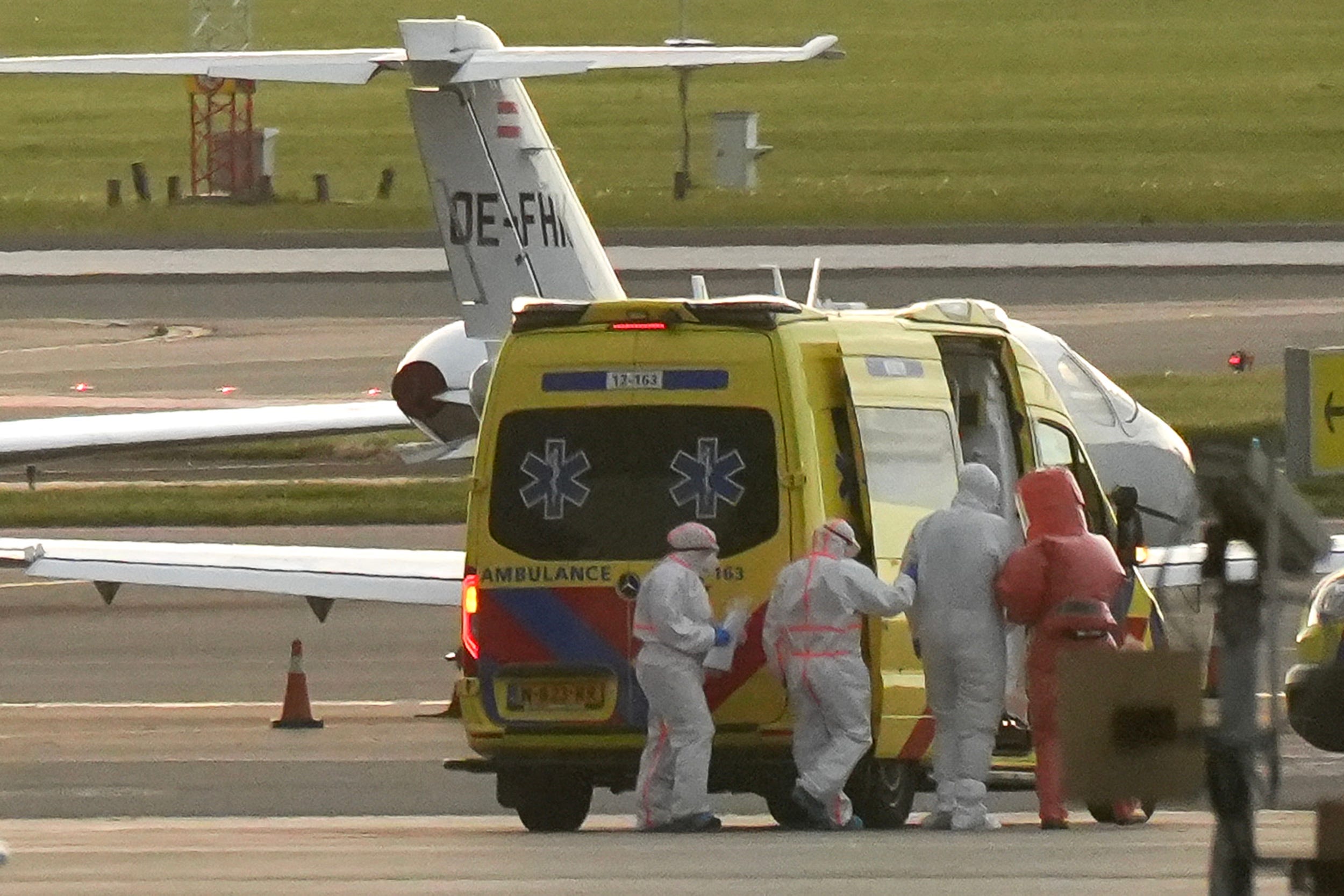
This brings me to the hantavirus outbreak attracting international attention: While it’s unlikely to achieve significant further spread, health officials need to quarantine every person on that boat.
The hantavirus is in the news because an outbreak on a cruise ship making its way from Argentina to Cape Verde killed three people and sickened several others.
The wife of one man who died on board the cruise ship flew to Johannesburg and died there one day later. Five other people on the cruise ship have also become ill, and tests are pending for a few people who were exposed to infected passengers on subsequent plane flights. Contact tracers are trying to get in touch with people who left the cruise at various stops and people who flew on plane trips with infected people.
Human-to-human transmission of the Andes hantavirus rears its head in Argentina every few years, more often in recent years. The last time there was a major person-to-person hantavirus outbreak, it reportedly killed 11 people before being contained.
That’s the likeliest scenario for the hantavirus outbreak currently underway aboard a cruise ship, too.
While the virus is very deadly — with 30% to 40% of the infected ultimately dying — it typically spreads through close person-to-person contact and not as easily as respiratory illnesses like COVID-19 and the flu. During the most recent outbreak in Argentina in 2018, the virus’s R0 — the average number of people infected by a sick person — was just above two before infection-control measures were taken and fell below one once they were.
Having said all those reassuring words, I would like for our governments to spend a lot of manpower and money making sure they come true — because I don’t think we’re yet out of the woods.
The problem is the virus’s one- to six-week incubation period, which makes it a real pain, and the fact that several now-known-to-be-sick patients flew out on commercial flights before the details of the outbreak had been established. This is a suppressible virus, but you do have to suppress it.
The Washington Post reported May 6 that the cruise ship will stop at the Canary Islands, where passengers will “be examined, treated and transferred to their home countries.” The Spanish health ministry said (translated from Spanish) that the repatriation of the remaining passengers “will include all necessary safety measures” with “transport arranged specifically for this situation.”
The Canary Islands government does not want the ship to stop there at all, which might explain the emphasis on transferring the passengers out immediately — and of course I’m sure the stuck passengers are eager to be back home — but it’s hard for me to escape the sense that it would be wiser to wait out the quarantine period before shipping the passengers off to their 23 countries of origin.
More importantly, the WHO also seems to have been slow to contact the 30 ship passengers who disembarked in Saint Helena on April 24, nearly two weeks after the first death on board: One of them has since turned up sick, which strongly suggests that the rest should be quarantining, but El Pais reported May 6 that some of the passengers who disembarked in Saint Helena weren’t contacted until May 3, though it was known by May 2 that the deaths and illnesses were related to a hantavirus outbreak.
Furthermore, it appears that whether people with an exposure are asked to quarantine or not is a country-by-country decision. “When we got to Turkey,” one passenger who had been aboard the ship during the outbreak told Agence France-Presse, “we were told that as long as we don’t show any symptoms, at this point we don’t have to be quarantined.”
Being a little slow about contact tracking and lackadaisical about quarantining in a case like this is one of those things that will probably be fine, but in expectation is quite bad.
What do I mean by “probably fine, but in expectation quite bad”?
The median scenario here is probably like the Argentina 2018 outbreak, which caused 34 confirmed infections and 11 deaths, or the 1996 one that caused 20 cases and 10 deaths; the virus is deadly and initially spreads, but dies out quickly once everyone realizes the risks and starts quarantining, disinfecting surfaces, and taking the obvious precautions. Even if there’s a screwup in the process of transporting all the passengers back home or a failure of contact tracing for the people on the affected planes, it would be expected to cause one or two new infections, not 10.
But I do think it’s way better to overreact than underreact here. Before the COVID outbreak, there were a few SARS coronavirus outbreaks in Asia; those viruses were more deadly but less contagious, and they were quickly extinguished.
But you would have been badly mistaken if you looked at those and concluded COVID would go the same way; by sheer bad luck it was a more contagious variant.
Hantavirus is generally not contagious enough to worry about, and the likeliest explanation for the cluster of cases is just the unusually close quarters of a cruise ship. But the possibility that you want to definitively rule out is that the hantavirus now spreading is a more contagious variant — at which point its one- to six-week incubation period could make controlling it extremely challenging, and its 30% to 40% mortality could make even a moderate-scale outbreak devastating.
The chance of that is small, but I would struggle to argue that it’s minuscule — if we look ahead to the next hundred human-to-human hantavirus outbreaks, my guess is that one of them or more will be an unusually transmissible variant. A society that is unable to react reasonably to one-in-100 virus outbreaks is doomed to, eventually, get an unlucky roll.
Lately, I have been feeling that we are doomed in exactly that manner.
COVID’s lasting scars
In March 2020, 85% of Democrats and 90% of Republicans said they trusted the CDC. In 2026, only about 60% of American adults said the same.
This didn’t come out of nowhere. Public health officials and policymakers screwed up during COVID by keeping in place measures that were probably justified as an initial, emergency response long past the point where they were justified by an imminent crisis. They screwed up by trying to play clever with messaging when they should have just been as clear as possible about what they knew and didn’t know. They screwed up by trying to delay the Pfizer vaccine announcement until after the election and by trying to do a complicated elaborate priority-groups negotiation for vaccine access.
But I don’t think they screwed up by taking COVID seriously in the first place.1
Pandemics are really, really bad. COVID cost the global economy $4.7 trillion in the first year, ultimately causing around 15 million excess deaths; if we could have spent $100 billion in December 2019 to stop COVID from ever happening, it would have been a bargain.
My current rule of thumb is that we should, in fact, react way more strongly in the early stages of any new person-to-person virus transmission. We should quarantine way more aggressively, we should test way more aggressively, we should take the worst-case scenarios seriously and react strongly enough that we could prevent a pandemic even in the worst-case scenario.
Inconveniencing a few hundred people is far, far better than having to take any measure at all at the scale of billions.
In this specific case, we should fully quarantine everyone on the ship — and everyone who departed it after the virus broke out — until the full incubation period is over.
We don’t seem to be on track to do this. No one wants to spend limited political capital on making a big fuss over something that is probably going to turn out to be nothing. No one wants to be accused of overreaching again — never mind that the scale of overreach is necessarily minuscule compared to the scale of any reaction if we did get an unlucky roll in viral transmissibility here.
There was a brief window where it looked like things might be better. Early in the Biden administration, I knew lots of people who were hoping they could leverage everyone’s COVID horror into a real, serious effort to be equipped for the next pandemic — better wastewater surveillance for outbreaks, better manufacturing of needed equipment, better rapid vaccine development, better testing, you name it.
But, unfortunately, this effort was substantially funded by Sam Bankman-Fried, and when his crypto empire collapsed, everyone stopped talking about it or thinking about it. That was a mistake.
Disease prevention is both eminently possible with current technology and incredibly important. We can afford to get it right, and we can’t afford not to.
Recommended reading:
Education research is weak and sloppy. Why?
Across the board, the state of education research is incredibly grim.
You're not the captain of the parenting police
Intensive parenting culture has been ramping up since the late 1990s, but it has accelerated due to viral videos and the social media echo chamber.
If anything, they didn’t take it seriously enough in the early stages, delaying mass testing and telling people not to panic past the point where it was pretty reasonable to panic. The reasonable takeaway from COVID is “You should be very reluctant to impose large-scale policy measures that affect the whole population and quick to remove them if they’re not passing a cost-benefit analysis.” It’s absolutely not “just stop trying to prevent pandemics.”


Why didn’t an editor fix that opening? Just a plain misreading of how statistics work. A good editor would not have let a good article get ruined by an opening that just completely misunderstands how stats work.
> if we could have spent $100 billion in December 2019 to stop COVID from ever happening, it would have been a bargain.
It's a point of lasting (morbid) fascination for me that this has, in practice, not been realized. Our political system would much rather spend $4 trillion on stimulus, to score points with constituents and to pick winners and losers, than spend $100 billion on prevention and preparedness. Funding even below that level was rejected during the Biden administration.