

Among liberals, the primary explanation for tech heavyweights swinging to the right over the last few years has been that the Biden administration swung too far left. This account — put forward by, among others, technology writer Jasmine Sun, The Argument’s Kelsey Piper, and economist Noah Smith — for why some tech billionaires conspicuously jumped aboard the Trump train goes like this:
The Democratic Party retreated from market liberalism and good governance, committed to a vast expansion of antitrust enforcement under Biden, and otherwise alienated a political culture in Silicon Valley that is socially liberal yet temperamentally libertarian. Since Trumpism itself was never premised upon free markets or back-to-basics governance, liberals now crow, the tech right was inevitably heading for an ignominious political death.
Despite the faltering relationship between Donald Trump and Elon Musk, this account has problems. It treats tech rightism as at odds with MAGA populism and imagines the tech right as in an alliance of convenience with Trump in the hope that he’ll squeeze in some deregulation.
Undoubtedly, some of tech’s most well-known names defected from their traditional liberalism to support Trump for these very reasons. Venture capitalists Marc Andreessen and Ben Horowitz seem to fit that description. After a year of Trump 2.0, Sun told The Argument’s Jerusalem Demsas in a recent podcast that she has witnessed “a sense of embarrassment and a sense of retreat” among this set.
But an undercurrent of techno-populism remains steady and is likely to endure. For some right-leaning technologists, populism isn’t a distasteful compromise: it’s the whole point.
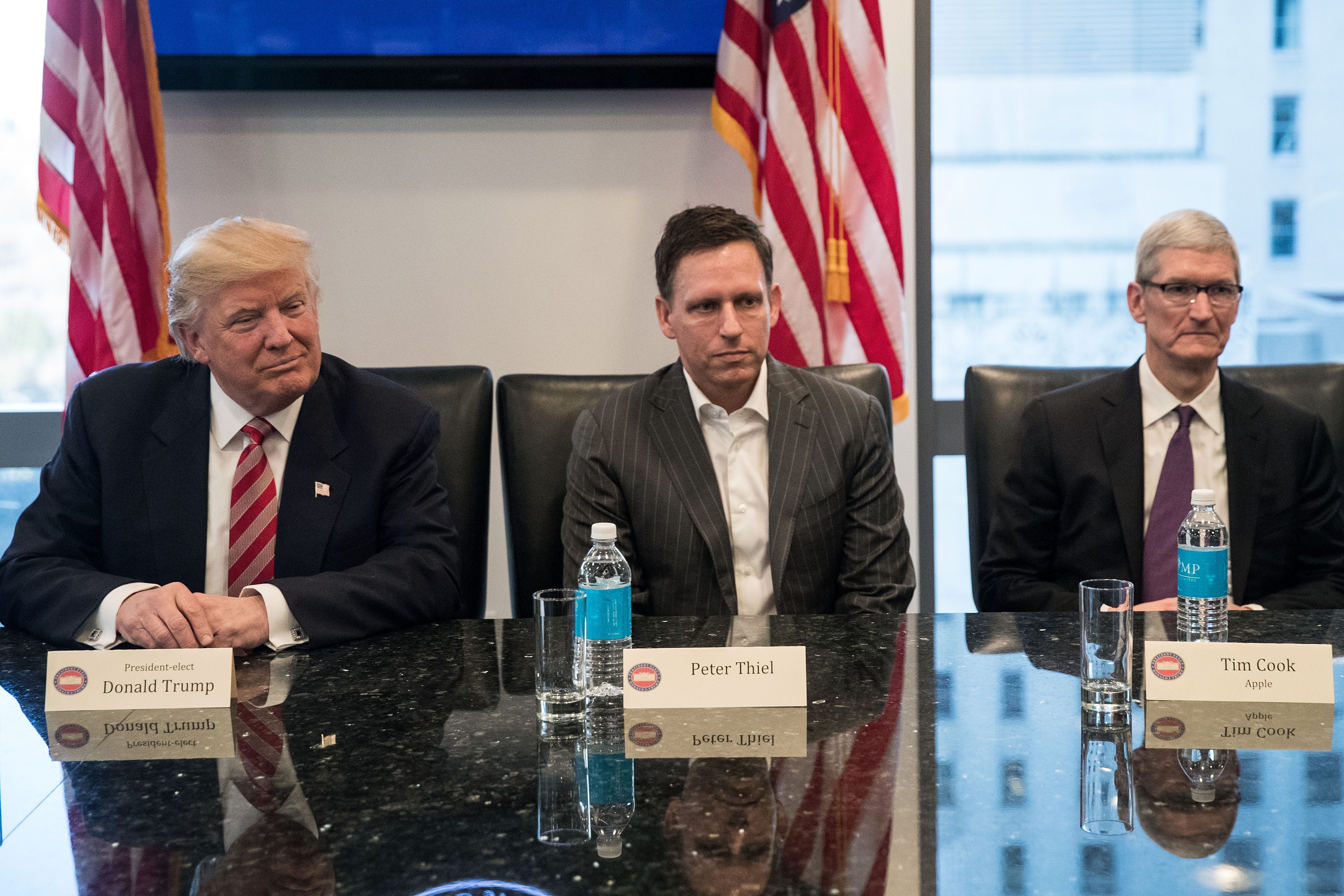
What liberals have failed to internalize is the earnestness of techno-populist godfather Peter Thiel’s hostility to established institutions. Thiel sees tech, the Democratic Party, and elite institutions writ large as having devolved into stolid enforcers of the status quo.
The new right is techno-populist
In focusing so much on recent history, liberals largely overlook a multidecadal parallel evolution of American politics and Silicon Valley ethos that has resulted in genuine overlaps between important parts of the tech world and the populist right. The compatibility is generational and perhaps even structural in nature.
As Thiel put it in a January 2020 email, a year before Joe Biden would be inaugurated, Americans are suffering from a “broken generational compact.” Within tech (as in many other arenas) Boomers got theirs — and Gen Xers, Millennials, and Zoomers feel frozen out.
To understand this evolution, look at how politics has cycled through Silicon Valley. Boomer technologists emerged as a cultural force in the 1970s just as the long postwar economic upswing drew its final breaths, presenting an alternative to an exhausted corporate-political fusion. Tech’s cultural insurgency in that era meshed perfectly with Democrats, who were becoming the party of the young and forward-thinking as Republicans tried to hang onto the 1950s.
