

Like many readers of The New York Times, I found Nikole Hannah-Jones’ reflection on her decision to send her daughter to one of New York City’s worst-performing schools both poignant and maddening. Hannah-Jones believed she could fix the school with the attention she would bring as a prominent journalist, but she ended up changing practically nothing as her daughter floundered.
Many elements of this story — Hannah-Jones’ reluctance to look at high-performing majority-Black schools, her lack of follow-through on her plan to fix the school, her continued insistence on the very educational policies that failed her family — have been discussed at length, but one piece of the picture remains, to my mind, underexplored: How did she not realize that her daughter was being failed?
It took Hannah-Jones years to realize that her daughter was severely behind in school — that despite getting good grades, she had huge deficits in her math knowledge, for example, that led to her failing New York’s standardized Algebra I exam. Her daughter struggled on other standardized tests as well, but Hannah-Jones wrote, “I assumed she didn’t pass because, like many children, she has trouble sometimes on standardized tests.”
It’s easy to dissect Hannah-Jones’ choices, and it’s easy to say she in particular should have known better: She worked as a journalist on education policy! Why wasn’t she paying far more attention to how her daughter was doing in school?
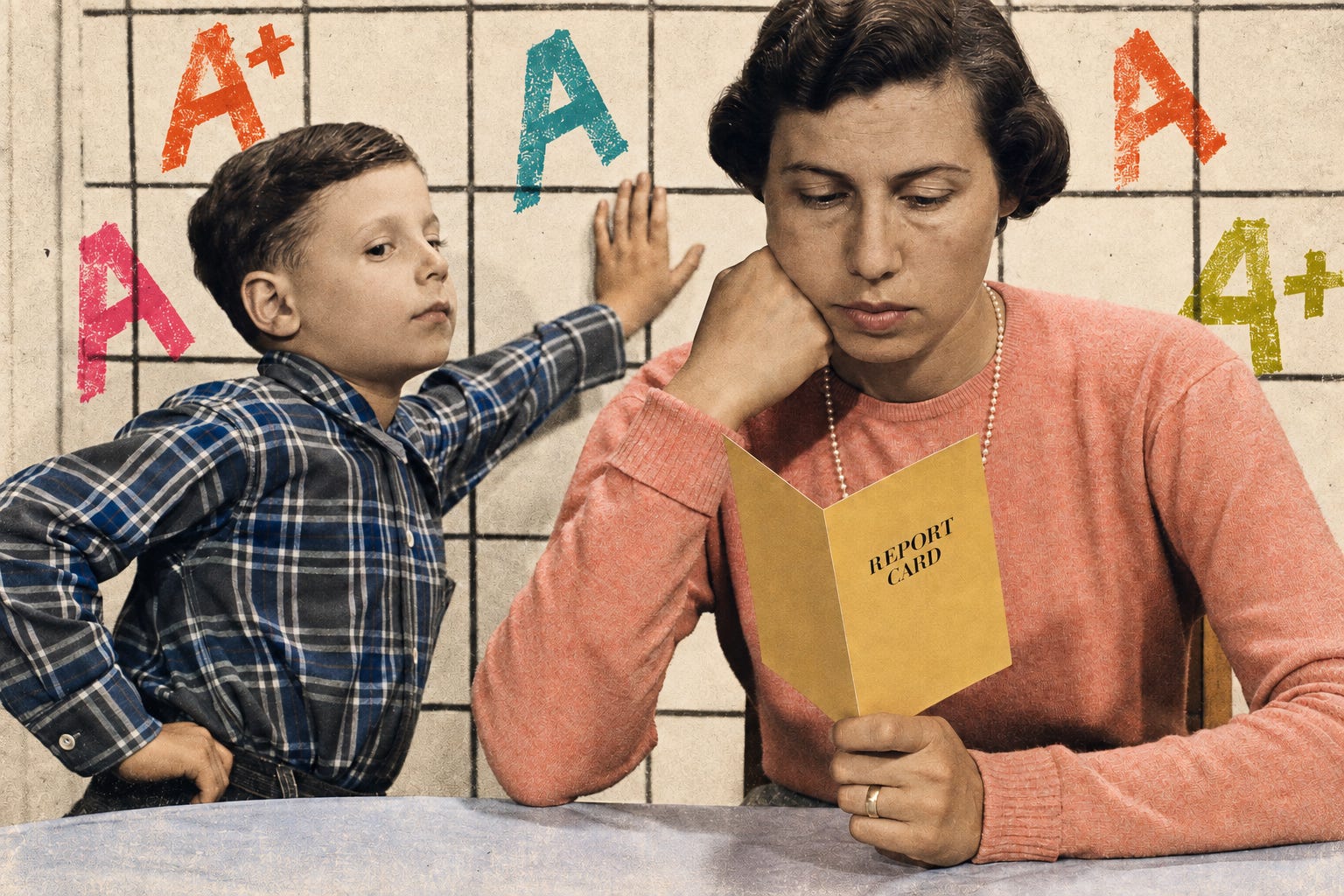
But in this respect in particular, I’m on Hannah-Jones’ side. Student grades ought to reflect how well a student is doing. If a student is getting good grades, their parents ought to be able to assume that they’re adequately academically prepared for the next year’s material.
This is, these days, broadly not true.