

This is a bit of a weird holiday message to write because while in practice Memorial Day is mostly celebrated as a kickoff to summer, its original purpose was pretty somber.
I find myself remembering when the right lost their minds over then-Vice President Kamala Harris telling people to “Enjoy the long weekend.”


Several high-profile right-wing elected officials and thought leaders dogpiled on the tweet, criticizing the vice president for treating the weekend like a holiday instead of a somber occasion.
But the very reason Memorial Day is always on a Monday is to give us a three-day holiday.
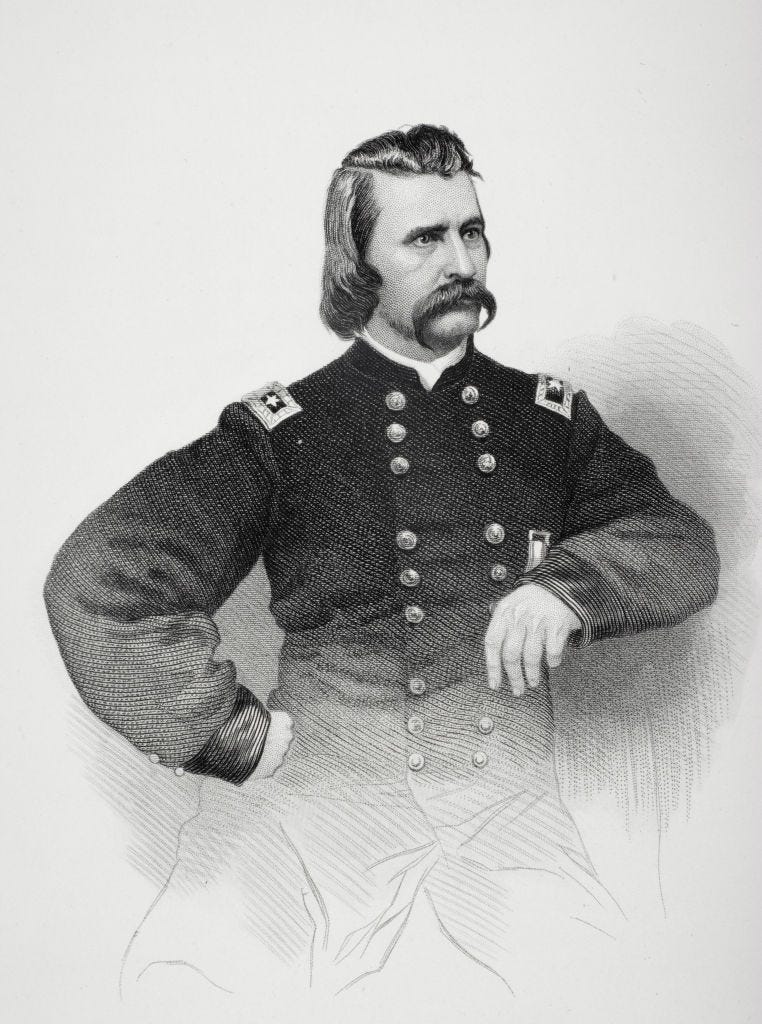
After the Civil War, Maj. Gen. John A. Logan designated May 30, 1868, as the first annual day of remembrance for those who “died in defense of their country during the late rebellion and whose bodies now lie in almost every city, village and hamlet churchyard in the land.” Almost exactly 100 years later, President Lyndon Johnson signed the Uniform Monday Holiday Act, moving the holiday from May 30 to the last Monday in May.
The Veterans of Foreign Wars and the Sons of Union Veterans of the Civil War have advocated for returning to the original date.
From the late 1980s until his death in 2012, Sen. Daniel Inouye, a World War II combat veteran, introduced legislation to restore the original date of Memorial Day: “In our effort to accommodate many Americans by making the last Monday in May, Memorial Day, we have lost sight of the significance of this day to our nation. Instead of using Memorial Day as a time to honor and reflect on the sacrifices made by Americans in combat, many Americans use the day as a celebration of the beginning of summer.”
It’s obvious that if you give people a three-day holiday on the cusp of summer, it will result in barbecues and awkward “Happy Memorial Day!” greetings. But the bigger problem for anyone concerned with honoring those who lost their lives defending the nation is that those best poised to represent this concern—veterans—are a dwindling share of the US adult population.
I understand the impulse behind Inouye’s bill, and I think he was clearly right to note how removed Memorial Day celebrations are from the holiday’s original intent. But the holiday’s dwindling poignancy is also a marker of progress: Fewer Americans dying in foreign wars. There’s a lot to worry about with that development: Will it be easier for our leaders to declare war if it requires fewer casualties? Will artificial intelligence change the face of modern warfare? What will tie together our national identity without shared national service?
But, for today, I think it’s okay to put those questions aside. A lot of people died for you to get the chance to kick back and relax. And so, in honor of all the people who served in our nation’s military, I hope you enjoy the long weekend.
The Argument’s regular programming will return tomorrow.
Recommended Reading:
Why Americans think other Americans are bad people

In Canada, if you ask people what they think of their countrymen’s morals, 92% of them say good. In Indonesia, same thing. The Swedes (88%) and Japanese (83%) are right behind them. Even in countries riven by political crises—Hungary, Argentina, Israel—solid majorities say their fellow citizens are, on the whole, morally decent people.
Hey someone should look into self-reported feelings of isolation in the U.S. aggregated by immigration status. When you go to the parks here in Seattle on the weekends, the picnic tables and their grills are in full use by mostly Hispanic families and Arab families. If it's true nationwide that these groups gather more than white people, it would be worth investigating. Why aren't smartphones affecting them the same way?
The answer is probably "culture", but white people used to gather, too.
The answer to all our holiday culture wars is to detach any meaning from national days off work. In Britain they simply have a “spring bank holiday, a “summer bank holiday,” etc. On Remembrance Day, by contrast, they all go to work. Detaching meaning from days off would lower the stakes of debates over which holidays we should celebrate and how. Nobody would fight over MLK day vs. Lincoln’s birthday or Flag Day vs. Juneteenth if a day off weren’t at stake. People could just recognize both … or neither.