

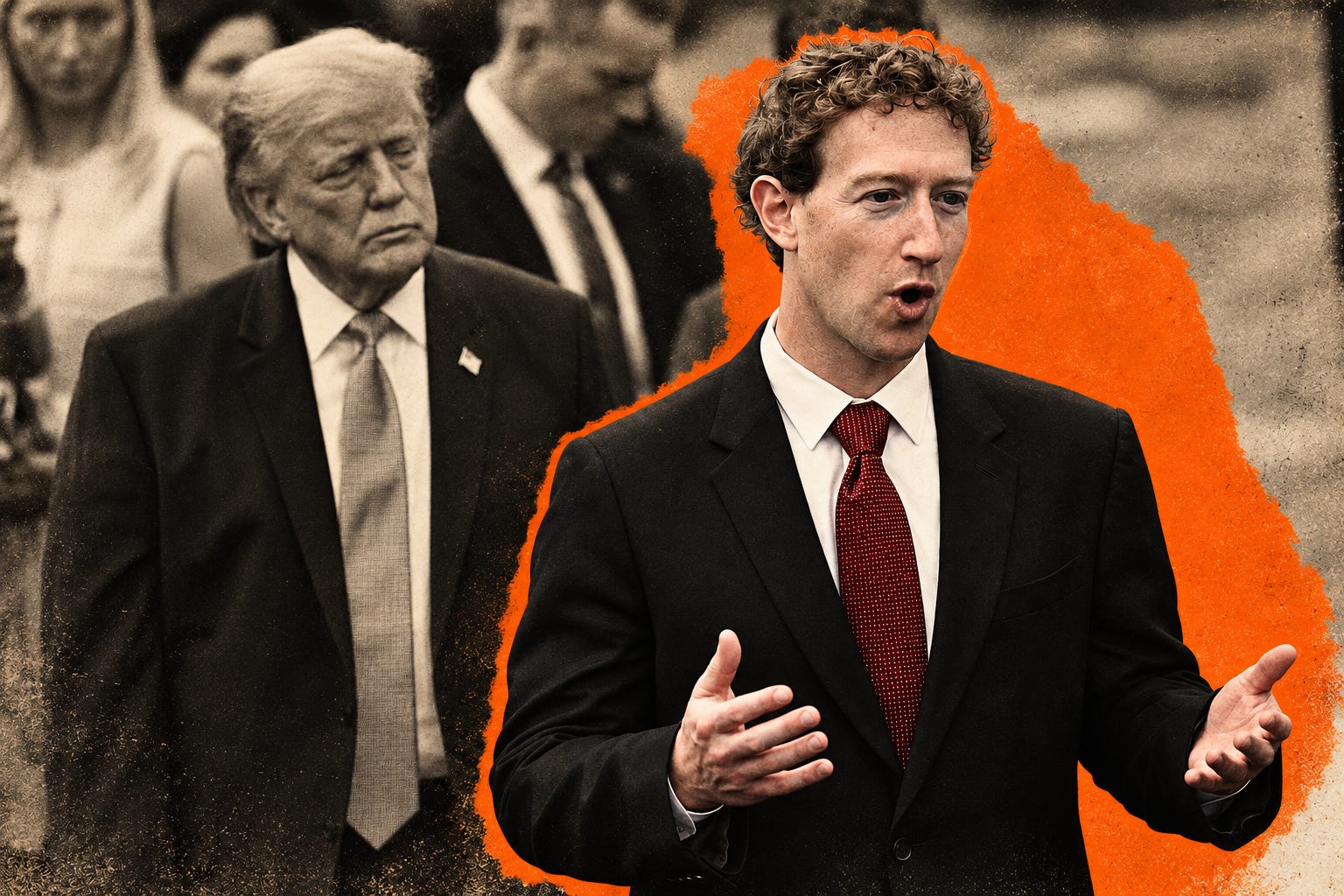
In September, OpenAI CEO Sam Altman, Anthropic CEO Dario Amodei, and xAI CEO Elon Musk all called for “pacing” AI development amid growing fears about the technology going rogue. One voice was conspicuously absent from this chorus: Mark Zuckerberg.
Altman and Amodei spent the 2010s publicly worrying about the right way to safeguard against runaway AI. Whether you consider them compromised by their business interests or not, they at least have a long record of concern.
Zuckerberg is a different case. He spent that decade turning up the dial on political extremism and addicting teens to his social media platforms with little apparent thought for the consequences. At various times, he would justify his decisions with high-minded rhetoric, depending on which way the political winds were blowing, pivoting multiple times between an avowed commitment to policing misinformation and vague paeans to “free expression.”
Now Zuckerberg is bringing the same flightiness to an even more consequential technology. In September, he argued that markets create perfectly fine incentives for AI companies to keep their products under control. And in an August essay, “The Future is for Everyone,” Zuckerberg reached for uplifting rhetoric about the decentralizing forces of technology without any sense of irony about the fact that his company is one of just five that own two-thirds of all the compute in the world.
His support for a freewheeling approach to AI oversight might have been inconsequential at an earlier time, when Meta was seen as lagging behind its AI competitors. But Zuckerberg has since spent billions of dollars to reorganize the company’s AI division, and those efforts have just started to pay off. In September, Meta released one of the first popular AI personal assistants. And last month, Meta’s newest model release — Muse Wonder — was rated one of the top models in terms of capability.
Zuckerberg has also had the ear of the second Trump administration. In fact, he was the author of the toothless AI safety statement the lab CEOs signed at the White House in September, which President Donald Trump called “morally binding” at the announcement.
AI progress is, for better or worse, a race. For years, Anthropic’s strategy has been to make it a “race to the top.” By developing the best AI systems with the highest standards, Anthropic is betting that it can make safety a competitive standard that other companies have to match. If a major rival can gain ground by prioritizing speed and scale over safeguards, companies that try to commit to safety risk falling behind.
Meta is now capable enough to create precisely that pressure, and its unscrupulous founder seems poised to pull us in another direction.
Zuckerberg’s war of all against all
Whenever Zuckerberg muses about high-minded concepts — like free expression or the decentralizing force of technology — it always seems to carry the whiff of both teenage naivete and minimally concealed business interest.
He began 2018 with a promise to fix Facebook by taking a more active role in cleaning up abuse and defending the platform from foreign political influence. By 2019, he had already pivoted to a different argument: that the real threat to free expression was platforms like Facebook taking too much responsibility for deciding what people could say. He retroactively rationalized this about-face in a rare speech at Georgetown University, in which he laughably recast the company’s roots. Instead of Facebook arising out of Facemash, a site Zuckerberg designed as a Harvard sophomore to allow his peers to rate each other’s attractiveness (the true story), he claimed the company was inspired by his feeling that open debate might have stopped the Iraq War (what?).
“I remember feeling that if more people had a voice to share their experiences, maybe things would have gone differently,” he mused vaguely.
Now, in the thick of the AI era, Zuckerberg has latched onto a new stock phrase from the democratic lexicon to justify Meta’s actions: “checks and balances.”
“People and institutions with competing interests naturally check and balance each other to lead towards positive outcomes,” Zuckerberg wrote in “The Future Is for Everyone” this August, asserting that “the best and most realistic path to building a positive AI future is by delivering superintelligence to everyone.”
In other words, what will keep us safe is the fact that everyone — good, evil, or ambivalent — will have something like a machine god in their pockets.
As with his 2019 “free expression” speech, there are at least two ways one can read Zuckerberg’s new essay: as a cynical cover for his business interests or a sincere but misguided expression of confused values.