

Join The Argument for a live event on Oct. 8 in Washington, D.C.!
Jerusalem Demsas will be interviewing Princeton economist Owen Zidar about his new book (co-written with Eric Zwick), The Everywhere Millionaire: Who Is Really Rich in America and How They Got There.
Drawing on a decade of research with IRS data, Owen explains who America’s millionaires actually are. Spoiler: They’re mostly not tech founders or Wall Street titans. They’re the people who own the car dealership, the beverage distributor, and the regional chain down the road. (Yes, boring businesses can make you very, very rich.)
The doors open at 5:30 p.m. at the Princeton SPIA DC Center (1333 New Hampshire Ave. NW). [Details here].
This year, about one-fifth of all U.S. GDP growth has been tied to investment in the AI industry. At the same time, safety concerns are taking center stage: Figures as disparate as Anthropic CEO Dario Amodei, Elon Musk, and Sen. Bernie Sanders agree that we should “pace” or pause frontier AI development. Meanwhile, tech industry boosters — particularly those connected to President Donald Trump, like venture capitalist David Sacks — argue that prioritizing AI safety means forgoing economic growth.
The boosters are wrong. Their worries about undercutting the economy stem from a basic misunderstanding: If we create oversight measures that slow down the pace of new model releases, that does not mean we are slowing down all AI-driven innovation.
The central issue is that the anti-AI-safety crowd appears to assume that all AI innovation comes from the so-called frontier development of the most powerful models at companies like OpenAI and Anthropic. But frontier AI is not all AI.
Policymakers need to be able to distinguish between the lofty technological promises made by frontier AI companies and the potentially very large innovation-driven growth that could happen just through the widespread adoption of current models. If they don’t, they will be overly reluctant to tap the brakes even if frontier AI poses real safety risks — as it already has in multiple instances of autonomous hacking “swarms.” They will, like Senate Majority Leader John Thune, insist upon a “light touch.” They will view safety and growth as a trade-off, when it mostly isn’t.
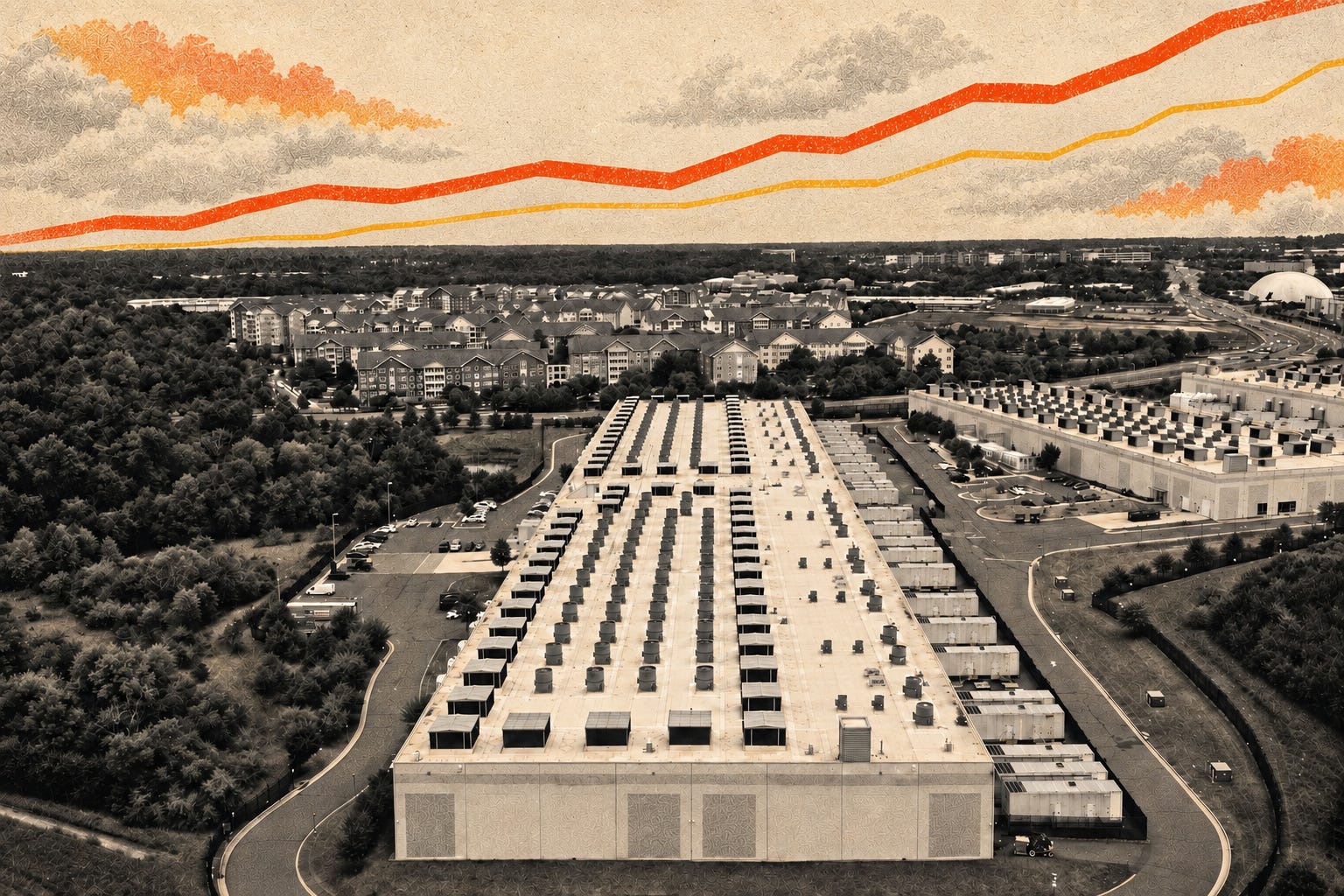
Yes, hyperscalers like Alphabet and Microsoft need their investments in data centers to pay off. But that revenue could come from people and businesses using any model — new or old, proprietary or even open models, which are free to download and modify but still need to run on chips somewhere. As long as more and more people and businesses are running new queries, then AI can continue to drive meaningful economic growth. And if those queries make those people and businesses more efficient at whatever economic activity they’re doing, that will drive even more growth.
The central requirement is just that there is enough demand for AI in the future to make use of the build-out. That primarily depends on all of society finding more and more uses for the technology. It depends, largely, on diffusion.
AI diffusion is just starting
“Diffusion” is a word that makes sense to economists, but it’s quite hard to get a picture of in your mind. It’s not like Thomas Edison inventing the lightbulb. Instead, it’s a wide variety of people and businesses spending years figuring out how to use a technology in new ways. It may only become clear in retrospect.