

You may have heard that Texas went blue last week.
While some of my Texan friends are delighted, the Texans I follow through my work as an education reporter are miserable.
“They’re overthrowing school choice in Texas,” mourned National Review’s Caroline Downey. “The ONE policy that is the best shot we have at reversing abysmal education outcomes. It’s literally a civil rights issue.”
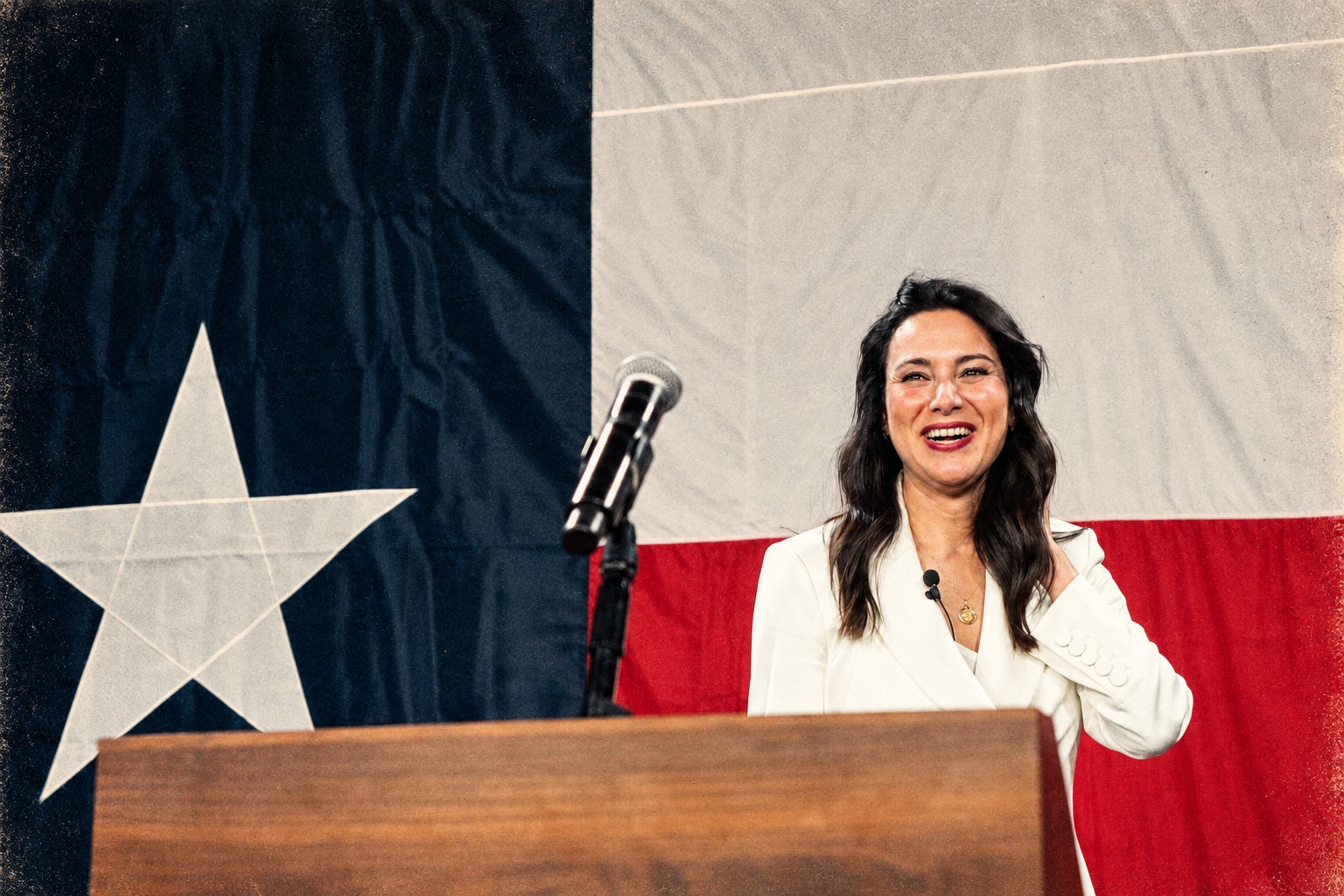
Downey was responding to Democratic Gov.-elect Gina Hinojosa’s victory speech, in which she promised to fire the Republican-appointed commissioner of the Texas Education Agency, Mike Morath, on her first day in office. She also suggested she would end a $1 billion voucher program to help Texans pay for private school.
“On Day One, I will fire Mike Morath and we will work tirelessly to repair the damage of the Texas vouchers scam and end an era in which our schools are sold for parts,” Hinojosa said.
Now, I don’t think that Downey is right that school choice is the one policy that improves educational outcomes — and I don’t think Texas’ voucher program was a particularly good way of providing school choice. But I agree that poor educational outcomes are a civil rights issue, and that some kind of school choice program can offer a remedy.
So while I am not very enthusiastic about what Texas has done to date, I think it’s incredibly important that the Democratic Party have an alternative positive vision, rather than just an opposition to programs that were supported by Texas Republicans.
Democrats and Republicans are both guilty of frequently putting ideology above results for children: Democrats by opposing any way to check whether kids are learning, and Republicans by mixing their good ideas (such as knowledge-rich curricula) with illiberal ones (such as insisting on putting the Ten Commandments on the walls of classrooms and finding reasons for all Islamic schools to be ineligible for the voucher program).1
Hinojosa and the (likely) new Democratic majority on the Texas State Board of Education have the opportunity to do this right. They should build a pluralistic and liberal school system, rather than just rolling back the ways that Republicans built an illiberal one. And while the voucher program itself might be too expensive and unpopular to maintain, they should keep in mind that it’s a real injustice if rich families have educational options and poor families don’t.
Public schools can still offer choice
The hottest topic in Texas education for the last year has been vouchers. In 2025, Gov. Greg Abbott got a $1 billion state voucher program passed by the state Legislature; it gives low- and moderate-income Texas families around $10,000 per child to spend on private school.
Critics have pointed out that most of the families that took it were already sending their children to private schools, and only 17% had transferred from public schools; Hinojosa campaigned on ending the voucher program and said she would block its proposed expansion. She could also veto voucher funding in the next state budget.
I’ve always had mixed feelings about vouchers. Private schools are not, on average, better than public schools at educating kids.2 Some liberals treat that as a knockdown argument against school choice, but I’m less convinced — after all, parents don’t care about average educational outcomes; they care about the outcomes of nearby schools they could plausibly send their kids to. If they have the choice of several schools, they will want to choose the best one available to them.
In this sense, public schools are always competing with homeschooling and private schools. The task of liberals is to make sure public schools are actually an appealing choice rather than a last resort.
I’ll go further: