

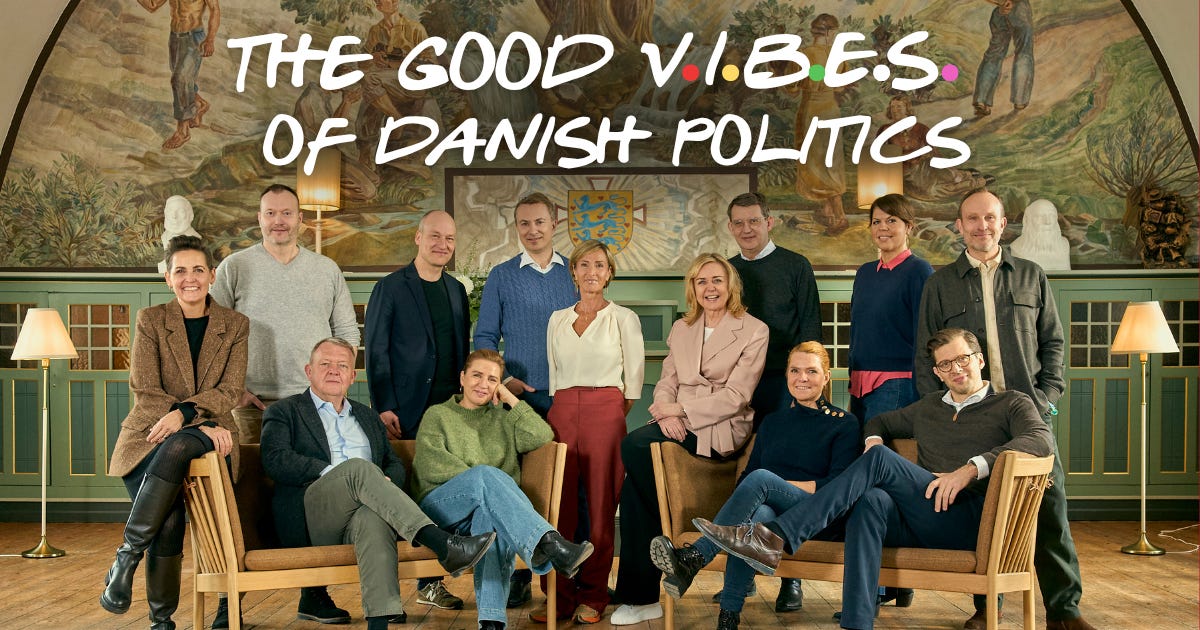
As a Dane living in the U.S., the view from the States can feel naive: Free health care. Polite and conflict-free politics. And tall, blonde people riding bikes.
It doesn’t help that yesterday’s general election was characterized by a reality TV show where the premise is that everyone — from the far-right populists to the socialists — can get along over beers.
Imagine the most powerful members of Congress gathering in the countryside to play games, walk their dogs, and discuss the future of America. All the heavy hitters are there: Bernie Sanders and AOC, Chuck Schumer and Hakeem Jefferies, but also Mike Johnson and Josh Hawley. Oh, and Donald Trump is there too. Stretch your imagination a little further and throw former president Joe Biden into the mix.
It’s an absurd thought experiment. Yet this is exactly what happened in Højskolen, a Danish reality show that aired on national television in the run-up to the election.1
The show’s four episodes followed the leaders of Denmark’s 12 distinct parties, including Prime Minister Mette Frederiksen of the Social Democrats and her predecessor Lars Løkke Rasmussen, who has since founded his own centrist offshoot. Over the course of a 24-hour retreat, the leaders participated in mini policy debates and casual social activities, like music trivia, billiards, and recreational karate.
Højskolen held up Denmark as a poster child of democracy — a counterpoint to the political division and dysfunction of other countries.
But although the Danish microcosm offers many lessons in civil discourse and political decorum, consensus is not the antidote to polarization. Yes, it’s good that Danish politicians aren’t calling each other “crazed, crying lowlife[s]“ or referring to elected officials in wheelchairs as “Governor Hot Wheels,” but heralding civility as the ultimate political virtue comes with some costs.
The problem with Højskolen isn’t that politicians are being too nice to each other; it’s that being nice to each other isn’t a substitute for being honest with voters about what they actually plan to do and who they are willing to govern with.
Yesterday’s results bore this out. Neither the left-leaning nor right-leaning bloc won a majority. The Social Democrats—Frederiksen’s party—took the most seats but recorded their worst result in over a century. The Greenland unity narrative wasn’t enough to paper over the small nation’s policy disputes on immigration, the wealth tax, and the cost of living.
Denmark faces weeks of coalition negotiations, with voters no clearer on what kind of government their ballots will produce than they were before the election.