

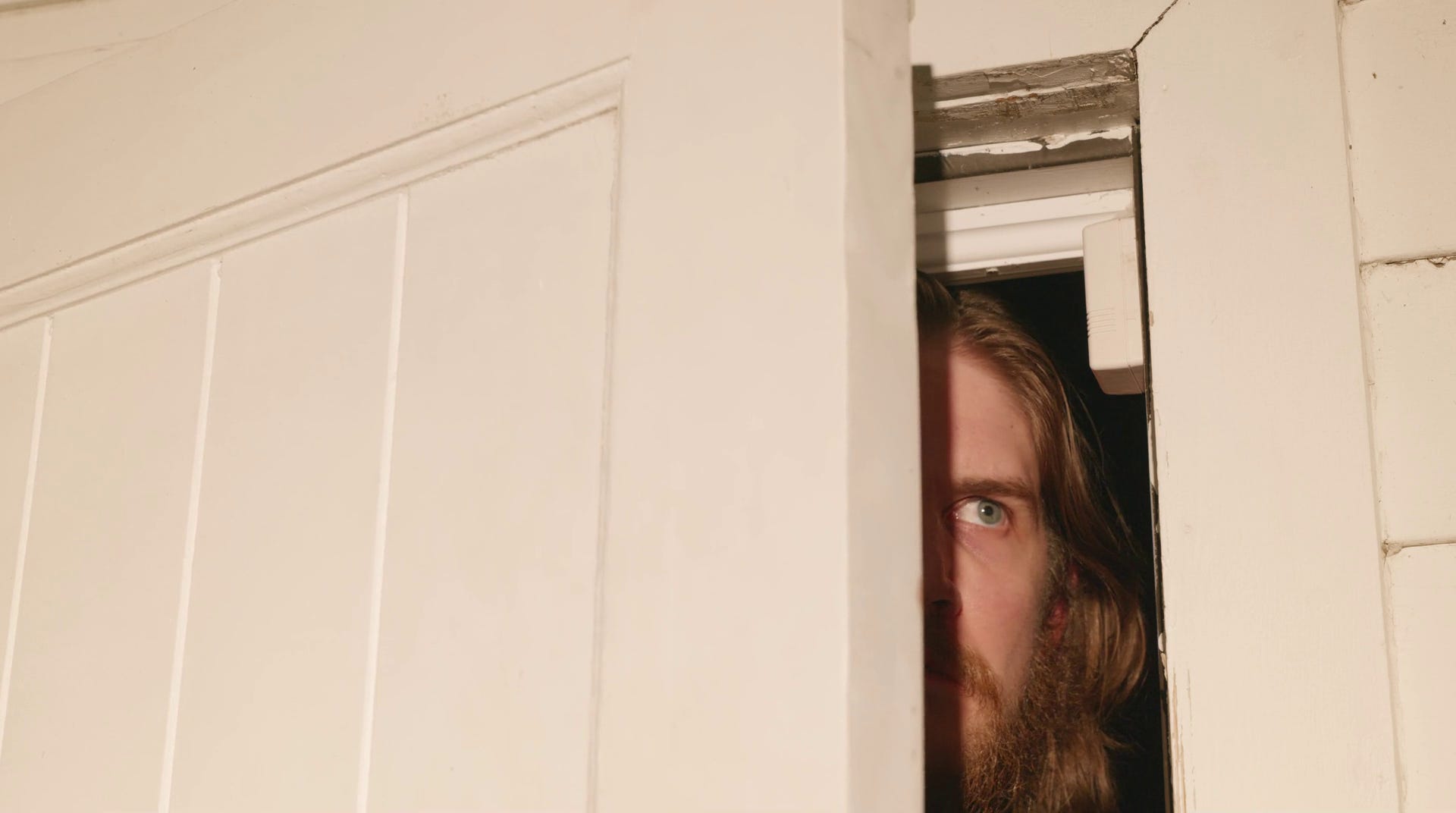
Five years ago, Bo Burnham released Inside on Netflix to near-universal acclaim. Inside is a fantastically rich comedy special and probably the single best piece of content made about the COVID-19 pandemic in any medium.
But looking back at it five years later, Inside feels like more than just a very good comedy set, more than just a statement about the pandemic. It feels, if you’ll forgive the pun, special.
It’s always a risk to call a race before we’ve reached the finish line, but with some trepidation, I’ll take that chance: Even though the decade isn’t over yet, the 2020s already have their definitive piece of art. And we got it in 2021.
A definitive piece of art needs to embody the main trends of its time. Its strengths and flaws should be the quintessential strengths and flaws of its era. It should ideally anticipate the trajectory society is headed in. And it hopefully has something meaningful to say about the technological, social, and cultural currents people are navigating.
Inside does all of these things better than anything else produced this decade.
When considering the 2020s, there’s a real temptation to choose a social media post or meme as the definitive piece of art. But with apologies to “My Weekend as a 28-year-old in Chicago,” “We Are Charlie Kirk,” and other worthy contenders, no single meme or post can capture an entire zeitgeist the way a longer production can.
A note on the time period: I’m going to play fast and loose with the definition of “2020s” here. In the same way that historians talk of a long 19th century that stretches from the French Revolution in 1789 to the outbreak of World War One in 1914, or a short 20th century that stretches from 1914 to the fall of the Soviet Union in 1991, the long 2020s start in 2016 and will likely end around 2028. This is the time period in which Donald Trump dominated American politics, when algorithmic feeds became the most important drivers of culture, when wokeness reigned and then caused a post-woke backlash.
Inside Bo Burnham
Bo Burnham catapulted to fame the way everyone catapults to fame these days: social media. In 2006, he was one of YouTube’s earliest viral creators, and his trajectory from awkward internet teen to global comedy star was essentially a straight line upward.
Hailed as a comedy prodigy, he toured internationally, appeared on Comedy Central, and released an EP all before turning 18. At 23, he released his second comedy special/album what. as an hour-long Netflix feature to widespread acclaim, then at age 25, released his third special Make Happy to even more widespread, near-universal critical praise.
But at the height of his success, Burnham began to have panic attacks on stage and for several years stopped performing live altogether.
During this time, he experimented with other work, acting in Emerald Fennell’s Promising Young Woman and directing his own film Eighth Grade. After the pandemic began in 2020, Burnham decided to work around his anxiety by upending the traditional live comedy format and creating a “comedy special” that was filmed in a single room with no audience.
Like so much art in the digital age, it’s difficult to perfectly categorize Inside. It’s a comedy special and it’s an album. It’s fictional, autobiographical, and autofictional all at once.
At times, Inside has the feel of a documentary or a behind-the-scenes making-of featurette. It was made for Netflix, but it was also clearly built for the social internet, designed to be chopped up for consumption on YouTube, TikTok, Spotify, and other platforms.
Like much of today’s independent media, Inside is an auteur production where Burnham acts as the writer, director, editor, and performer all at the same time. It’s a shapeshifting, genre-bending work that challenges your expectations for what a comedy special can be.
Inside is framed around Burnham’s experiences during the COVID pandemic, the single most important event of the long 2020s. While Inside never once explicitly mentions the pandemic, it’s a film about all the ways COVID transformed our relationship with technology and one another.
Burnham is uniquely well suited to diagnose the ways in which the internet has changed us all, as someone who was raised online and whose stardom was born there. The opening number is deliberately grating as Burnham croons about “content”:
Look I made you some content
Daddy made you your favorite, open wide
Here comes the content
It’s a beautiful day to stay inside
Burnham mocks the online world where every attempt at art, commentary, humor, and dialogue is flattened into the grotesque “content,” but he also helped create that world and now finds himself trapped in it.
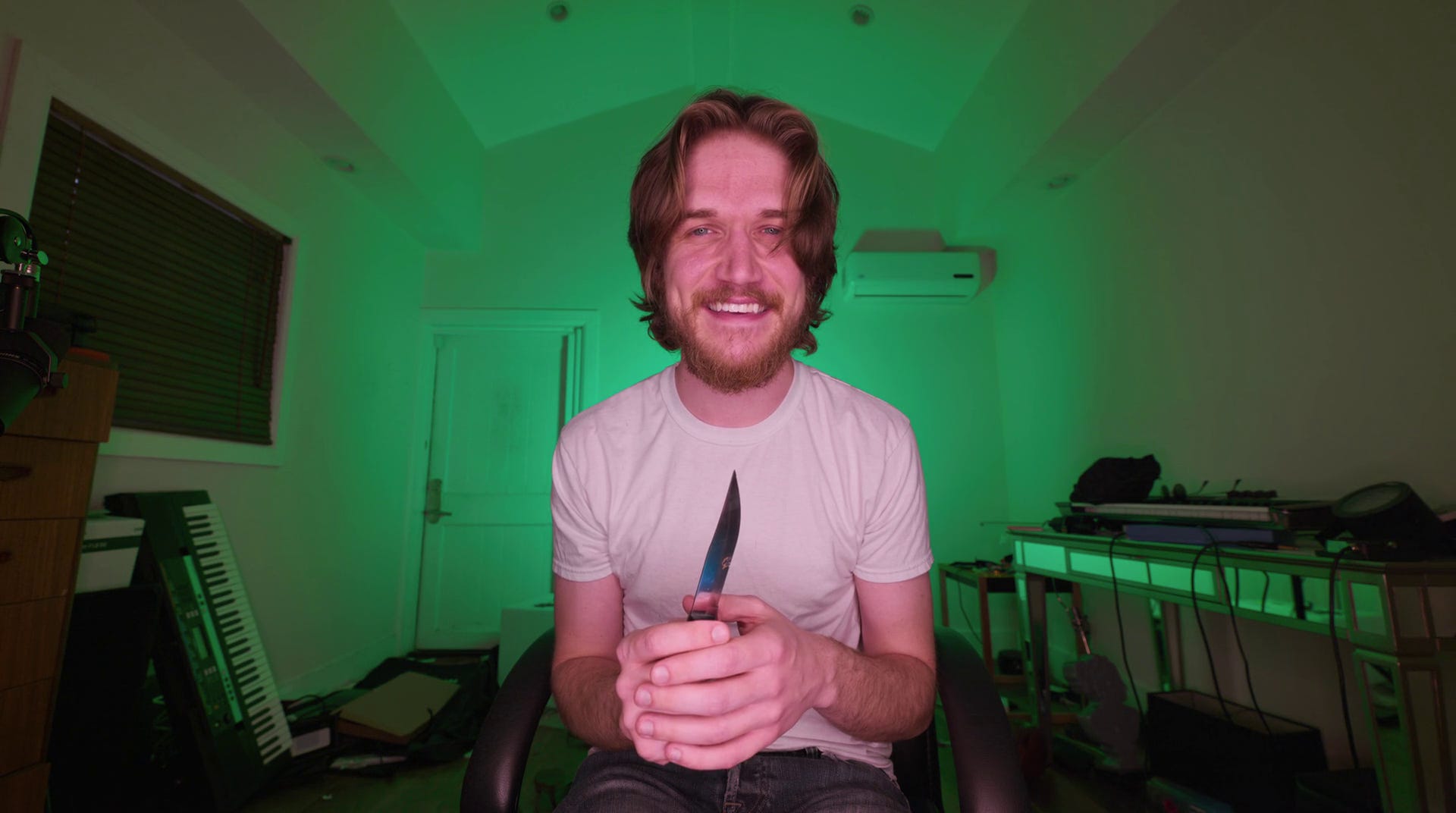
The word “content” appears frequently throughout the special, acting as a kind of brain-rotted leitmotif. In one unsettling interlude, Burnham appears as a YouTuber, saying “Thank you for watching my content!” while cheerily wielding a knife. “Keep watching, ‘cause there’s a lot more content where that came from.” he chirps, waving the knife at me through the screen, part promise, part threat.
The special’s first half is full of these little vivisections of online culture.
“FaceTime with My Mom (Tonight)” highlights the banal frustrations of trying to communicate with older relatives who are not digital natives.
“Sexting” captures the anxieties of someone who is stuck inside, who is still horny, and who desperately wants to be sexy through their phone, but is pathetically unable to actually make it happen.
“White Woman’s Instagram” skewers the performative femininity of female influencers, with Burnham re-creating dozens of popular Instagram shots.1

“Welcome to the Internet” may be the single best encapsulation of what it’s like to exist online ever made, with its demented, demonic narrator tempting you with “A little bit of everything, all of the time.” Burnham’s internet is one where the banal is juxtaposed with the horrible — “Which Power Ranger are you? Take this quirky quiz! Obama sent the immigrants to vaccinate your kids.”
Burnham believes we’re all trapped in a hellscape of our own making precisely because it’s so difficult to segment the useful ways of being online from the poisonous parts that are tearing apart society.
Inside’s commentary is especially pointed when it comes to the people and corporations manipulating the online world. While the flashy songs about Jeff Bezos get more attention, Burnham’s sketch about cynical, socially aware brand consultants is far more cutting:
There’s no sugarcoating it. The world is… fucked up. And you’ve got a choice as a brand. You can hide and bury your head in the sand and hope it fixes itself, or you can roll up your sleeves and get to work… and sell Butterfingers.
The special also takes time to satirize the worst, laziest types of online content like self-indulgent reaction videos, monotone gaming livestreams, and influencer culture. Even the cut-for-time sketches that only made it on the extended version of Inside are sharp.
In one, Burnham mocks vapid celebrity interview practices designed to create social media clips. In another — and it is practically criminal that this sketch was left out of the completed special — he goes after the absurdity of Joe Rogan’s podcast, showcasing two comedians who insist that they are being canceled by PC culture, that the things they say are just jokes, but also, that they are modern-day philosophers and artists, while “This episode is sponsored by Manstuff’s Dick SprayTM”2 scrolls along the bottom.
The best parodies work because the author has a deep connection to and appreciation for the subject being parodied. Burnham’s status as a digital native is what makes the social media commentary so sharp. The New Yorker’s Rachel Syme once described Burnham as one of the “leading auteurs of the mediated mind,” an expert on the consequences of perceiving the world (and being perceived) through a black screen.
There’s a psychic cost to being so online, and Burnham has certainly paid it. That makes Inside feel less like an outsider’s rant and more like an insider’s dispatch.
Bo Burnham is a rich white man
Inside is also representative of the worst excesses of 2020s culture. The special mocks influencers and celebrities for their narcissism, but it’s just as self-absorbed as any of them.
It’s overbearingly woke in that distinctive 2021 way. Burnham criticizes whiteness — either his own, someone else’s, or the general concept thereof — in not one, not two, but four different songs throughout the show. He apologizes, then apologizes that his apology probably isn’t woke enough. He agonizes over his past misdeeds3 and whether or not it’s even appropriate to do comedy during such awful times:
The world is so fucked up. Systematic oppression, income inequality,
the other stuff...
And there’s only one thing that I can do about it. While — while being paid and being the center of attention
It’s played as a joke, but Burnham really seems to struggle with the idea of a “white guy like me” doing flippant comedy rather than attending his local leftist book club.4 But his struggles never cohere into the sharp, targeted critiques he makes about internet culture and mental health, perhaps because his heart really isn’t in it.
As noted by user Seattle Stone on Twitter, Burnham is “vaguely depressed, vaguely guilty about being white, vaguely angry about capitalism, convinced the world has gone to hell but somewhat aware that it’s just because he’s spending too much time online.”
Inside embraces a vaguely defined leftist politics that is severely critical of whiteness, maleness, and capitalism. But, too often, it has little coherent to say about what precisely is wrong with those concepts, and instead relies on trite buzzwords (neoliberal fascism!) to make its point.
This anti-capitalist message echoes through many of the special’s songs. “That Funny Feeling” is a fantastically constructed ode to the ambient sense of dread social media produces when you scroll for too long. It juxtaposes the dead-eyed slop culture produced by social media with the ways in which Burnham believes the world is falling apart. “Carpool Karaoke, Steve Aoki, Logan Paul. A gift shop at the gun range, a mass shooting at the mall.”
It sends the message that the world is ending, and soon — the ocean is at your door, civil war might break out, civilization has seven years to go. None of these statements are actually true, but scrolling through your feed makes them feel true. They’re emotionally resonant, as long as you don’t think very hard. The special is a perfect encapsulation of 2020s millennial leftism.
Inside also indulges in one of the worst habits of modern discourse — the use of self-criticism as a shield.
And I’ve been totally awful
My closet is chock-full of stuff that is vaguely shitty
All of it was perfectly lawful
Just not very thoughtful at all and just really shitty
Yes, Burnham is a white man doing comedy in a time when white men are being asked to take a back seat… but he’s aware! He tells jokes about how he’s aware but doing it anyway!
This is the entire conceit of songs like “Comedy” or “Problematic.” Sure, Burnham is a straight cis white guy, but he’s one of the good ones. He’s so sorry for his past!
This may be the single most prevalent and annoying practice of the woke era — privileged people treating their apologies as meaningful political acts. It’s aggravating on multiple levels. First, that anyone needs to apologize for being white. But second, if we take Burnham’s premise, which is that his whiteness is something worthy of criticism, it’s equally absurd that he gets to duck that criticism simply by pointing out he’s aware of it.
Likewise, Burnham’s critiques of capitalism are somewhat softened by his acknowledgment that he’s still a rich guy getting paid to do this special. But recognizing cognitive dissonance doesn’t resolve it.
While making Inside, Burnham was many times over a millionaire. He lived in a multimillion-dollar house with his famous millionaire girlfriend. And, upon finishing the special, Netflix paid him $3.9 million for the right to stream it.
I don’t happen to think there’s anything wrong with being a white male millionaire, but Burnham sure seems to imply there is — or maybe he knows the part he’s expected to play, and his answer is to write a song joking about the contradictions between his inner feelings and his bank account, while doing nothing to substantially change those contradictions.
To quote Burnham himself, in his spoof of reaction videos: “Self-awareness does not absolve anybody of anything.”
The funniest thing happened (a global pandemic)
Inside embodies many of the flaws of 2020s culture, but those flaws don’t detract from its brilliance.
Famous comedians have admitted to freaking out about how good it was, wondering how they could possibly top it. It won a Grammy, a Peabody, and three Emmys — that’s not something comedy specials do! Finding out that a self-made comedy special filmed alone in an empty room won those awards is like finding out your gas station sushi somehow won a Michelin star.
Inside is filled with trenchant observations about life online, but what elevates it beyond Burnham’s previous work is its surprising level of emotional depth. “White Woman’s Instagram” spends most of its time sneering at its subject: Overwrought inspirational quotes! Tiny pumpkins! Latte foam art! But the song takes a sudden turn halfway through, as the specific woman he’s been mocking begins posting about something less frivolous:
Her favorite photo of her mom
The caption says: “I can’t believe it
It’s been a decade since you’ve been gone.
Mama, I miss you
I miss sitting with you in the front yard
Still figuring out how to keep living without you
It’s got a little better, but it’s still hard
Burnham’s effort to humanize his subjects even as he mocks them is one of his strongest instincts. After laughing at this hypothetical basic white woman, we’re forced to remember that she exists in the same world we do. This annoying woman who lives in a small box in our pockets is actually a real person who experiences love and tragedy just the same way we do. Maybe she, like anyone else, just wants to feel seen and understood, and we should stop making fun of her latte foam art and kindly shut the fuck up.
Most of the song is framed in an Instagram-style square, but during this section, the aspect ratio widens to the full screen, asking us to expand our perspective as he literally expands the visual perspective.
For those who may have lost a parent, this song hits like a freight train. It’s one of several moments in Inside I’ve watched reduce people to tears.
If the first half of the special is filled with breezy satires of social media and joking commentary about whiteness and capitalism, the second half is a much darker journey into Burnham’s declining psyche. He laments his fear of turning 30, compares himself to a bag of shit, and repeatedly muses about killing himself before clarifying he’d only like to be dead for a little while: “If I could kill myself today and be dead until like 18 months from now, I would do it.”
His societal critiques turn heavier and more somber, as in “That Funny Feeling,” whose critique of modernity feels far more fatalistic than the zany skits that came before. Even his sketches take a dark turn — in a segment that parodies gaming livestreamers, he controls a character (himself) whose only user inputs are playing music, pacing, and weeping. There are scenes of him setting up shots and editing where his mental state is visibly deteriorating, seemingly unable to cope.
Burnham’s breakdown culminates with a scene of him admitting he is not well, after which he collapses into tears as the camera slowly zooms and transitions into the song “All Eyes on Me.”
The song, which won Burnham his Grammy, is a banger in its own right. But halfway through, he gives a short monologue to a background of enthusiastic fake crowd noise about how we got here. He reveals that he had been struggling with panic attacks, took time away from the spotlight, and managed to get better mentally — until, in January 2020, he felt ready to start performing live again. And then, he tells us, “the funniest thing happened…”
Then Burnham grabs the viewer. After an hour of not moving, in the second half of “All Eyes on Me,” he proceeds to violently wrench the camera out of its stand and drag the viewer across the room with him, wildly careening around the space.
For essentially the entire special, Burnham used a stationary camera. The background may have creative visual effects, but the camera is fully static and locked into a single frontal point of view.
The sudden change is jarring and viscerally uncomfortable. And it’s the emotional peak of an already heavy production, destabilizing the viewer with manic energy in much the same way Burnham’s mental health has come undone.5
Is any of this even real?
Inside anticipates our current vibecession discourse several years ahead of time. Burnham is a man who has literally everything going for him. On top of being a rich, famous, and beloved straight white man, he’s even six feet, five inches tall and dates pop stars. But he’s still convinced the world is ending, and he is so miserable he’s at real risk of killing himself.
But for all that the above themes matter, there’s one final factor that truly makes Inside the definitive piece of 2020s art. Inside, like most of Burnham’s work, is about the nature of performance itself. And nobody can seem to agree on how real any of it is.
Sometimes, when I come across an emotional influencer video, I can’t help but notice certain things. I’ll notice that the influencer in question selected a very put-together, on-trend outfit. They clearly just did a full face of makeup, and they have perfectly styled hair. The lighting is immaculate, and, as always, the camera is catching them at the perfect angle. And I imagine them getting dressed, carefully finishing the touches on their makeup, setting up the lighting, patiently getting their A/V equipment ready, hitting record, and only then breaking down in tears about whatever’s ailing them.
Does this make the emotion they’re displaying fake? Not necessarily! But it does illustrate that there is a difference between reality and the performance of reality, and the second one is all we’re really able to get through a screen.
This is the feeling I get when watching Inside. Burnham’s history with panic attacks is real and has been documented for years. And I have no trouble believing that he spent a great deal of 2020 and 2021 in a depressive funk. But he crafts the story of his own mental health decline so exquisitely that many of his fans don’t seem to realize that, when he’s on screen, he is in fact acting.
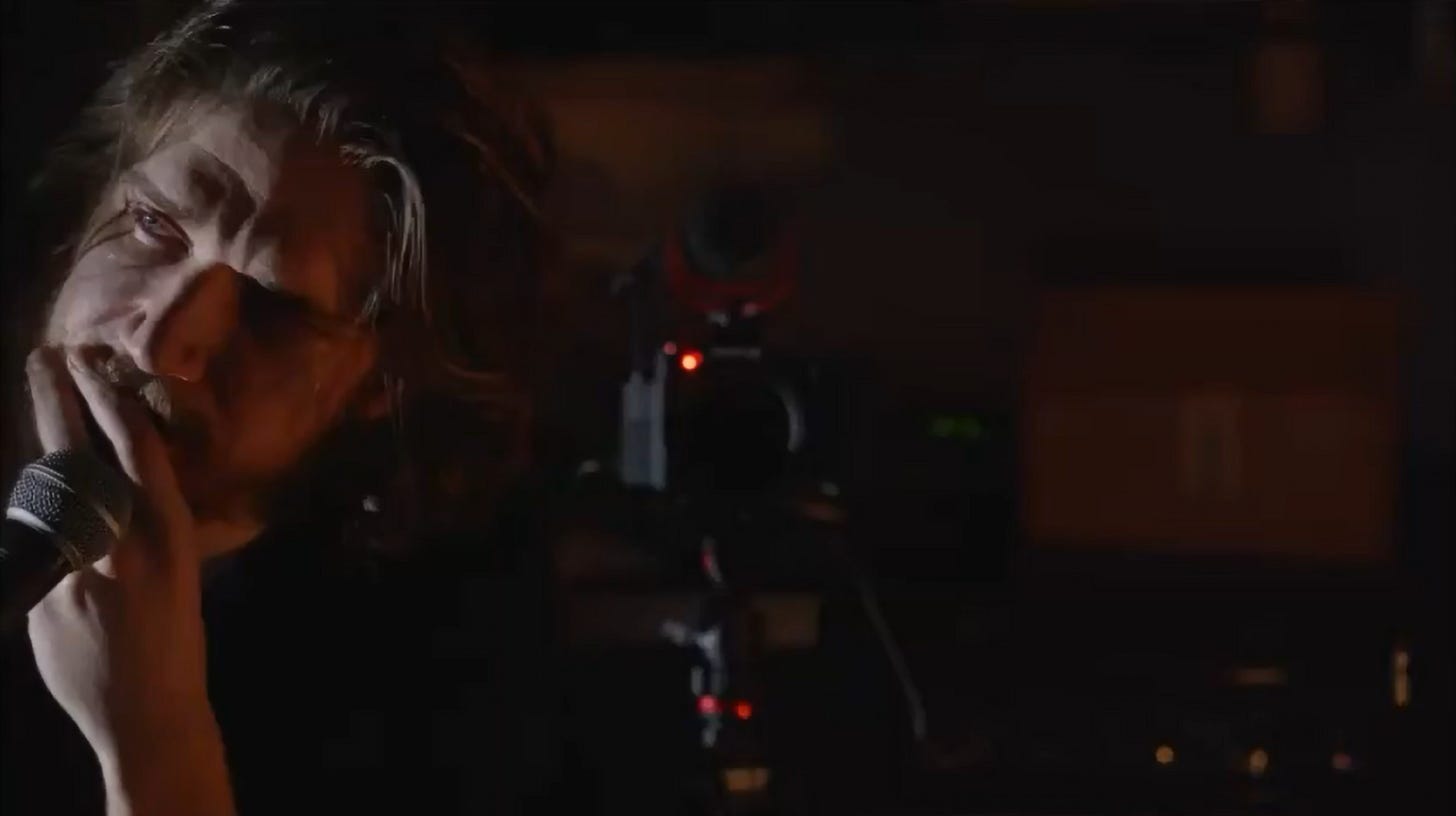
Inside is, above all else, a story. It was scripted, written, directed, and edited toward a single purpose — supporting a specific narrative journey that Burnham wants to take the viewer on.
When Burnham admitted he was not well, that shot was not filmed spontaneously. It was deliberately staged, lit, and framed.6 His breakdown, even if there are elements of truth to it, is not something we’re actually witnessing in real time.
What we see is a carefully choreographed simulacrum of a breakdown. The scenes where he’s visibly upset with himself and unable to carry on were likely filmed multiple times.
Inside even gives us peeks behind the curtain, filming Burnham in silence as he puts up lights, rerecords takes, or edits a song we’ve just finished listening to. He’s telling us this is all constructed.
And yet, when the special was released, there was a great deal of critical praise from fans and even some critics who treated the special as real. “Burnham comes mighty close to amusing himself to death,” wrote IndieWire. And, sure, the character on screen does — but is that what Burnham himself did?
I was recently struck by the rounds of discourse around the medical drama The Pitt, where it seems like many fans experience the show not as a fictional plot but as reality. They judge the show’s creative choices as if they were real events happening in a real hospital. They judge characters as if they were real people making bad choices and sometimes struggle to separate the actors from their characters.
The Pitt is a famously realistic medical drama, which likely plays a role in explaining why its fans act as though it’s real. And Inside, which deliberately blurs the lines between performance and reality, suffers from the same dynamic.
The special is autobiographical, and emotions Burnham acts out on camera come from a real place. But the audience’s inability to grasp that Burnham is acting is a sign of the times.
Social media has blurred the lines between our real lives and the performance of our lives so thoroughly that many of us no longer recognize performance when we see it. We’re left only with a work’s emotional resonance, and so many people connected with Burnham’s struggle on such a deep level that they chose to believe.
That blurring between performance and reality is a defining feature of our age, and it’s why there’s no better piece of art to define the 2020s.
Well, well
Look who’s inside again
Went out to look for a reason to hide again
Well, well
Buddy, you found it
Now, come out with your hands up
We’ve got you surrounded
Recommended reading:

Medieval kings would envy you

Almost every single human who has ever lived was very poor by today's standards.
Someone made an Instagram account for all of Burnham’s carefully composed Instagram shots: @goatcheesesalad
Copy: “Does your junk go skunk? Use one of ManStuff’s patented spray-on Dickoderants.”
Including heinous crimes such as “wearing an Aladdin costume as a teenager”
The comedy is almost certainly more useful.
Another example of Burnham’s talent for visual details complementing his storytelling: The visual effect on the back wall shows a faux-camcorder interface, and for most of the song the battery icon is full. But directly before Burnham loses his cool and grabs the camera, we see it blinking on empty.
Note the dark shadows artfully covering one half of Burnham’s face as he admits “I am not well,” and how they’re emanating from the direction of the camera, which is perfectly centered behind him, looming as a dark metaphor for what’s driving his breakdown. I promise you that a director as talented as Burnham considered all of these things before hitting record. None of it is a coincidence.

thank you so so much for this piece. It gives me a framing to express what I've loved about this special so much. You noticed the exact same beats about White Woman's Instagram that make it such a beautiful song.
BTW the songs are available on Spotify, unlike in Make Happy
I find the Socko character endlessly interesting. Personally, I think Burham uses Socko not as a pure stand-in for the kind of leftist politics that he agrees with, but rather as a mixed take where the useful ideas blend into conspiracy theory, self-defeating moves, and buzzwords (like you said, "neoliberal fascism," which is basically nonsensical and I don't think Burnham is stupid enough to think it's a useful construct).
I get this sense because it aligns with a focus of Inside: that particular important truths about the world (e.g., climate change exists and is dangerous) become unhealthy and self-defeating in the context of our overconnected, ragebaiting, exhausting, polarized society. Here's the canonical lyric from All Eyes on Me:
"You say the ocean's rising like I give a shit
"You say the whole world's ending, honey, it already did
"You're not gonna slow it, Heaven knows you tried
"Got it? Good, now get inside
This song is certainly a critique of leftist doomerism. Compare this to the part in How the World Works just after Socko explains all the problems:
Burnham: "What can I do to help?"
Socko: "Read a book or something, I don't know. Just don't burden me with the responsibility of educating you. It's incredibly exhausting!"
Burnham has straightforwardly offered to take action, but Socko shuts him down and shifts the dialogue back to Socko's own *feelings*. Burnham clearly knows that feeling miserable is seductive—in some ways, making yourself feel miserable is a way to exert some control over your life in a world that feels so out of control. It's easier to stay inside (your feelings) than go outside (and engage with others, doing something).