

The thing about being a college-educated American millennial is that, for the most part, decisions are pretty low-stakes. Even the ones we agonize over.
At 22, fresh out of college, I had signed on to be a community organizer in Richmond, Virginia. Mere weeks before I was set to move, I received word that the grant funding my application had fallen through and my options were to either move to Fort Lauderdale, Florida or find another job.
I was tortured over what to do.
At various points in my career I’ve had to make what felt at the time to be hugely consequential decisions, but in hindsight, the stakes were decidedly low.
Last year, when I was considering leaving The Atlantic, I was talking to my father who, sensing my nerves, asked me to describe the worst that could reasonably happen. That is, what would failure even really mean to someone privileged enough to have the education, community support, and financial stability of a high-income American?
My dad isn’t the kind of person who would even intimate this but there was a real “Kim, there’s people that are dying“ implication to his question.
When talking with friends, family, or young would-be journalists and policy wonks about their careers or life decisions, I often come across this same sort of phenomenon: A person agonizing between decisions where, to be completely honest, even choosing “badly” would probably be fine.
That is, anything that could go truly wrong would still not be that bad and most risks seemed equally probable in either scenario (like having a sadistic boss or mass layoffs due to AI).
And yet, we are meaning-makers, so we torment ourselves.
In reality, there’s just one, common, high-stakes decision left for people like me: The decision whether or not to have children.
We may dither over whether to go to law school or delay getting married into our 30s, but no decision can produce more back-and-forth than the one raised by the question of whether to have children.
Such conversations range from fears around maternal mortality and the long-term health consequences of pregnancy to the unknown unknowns of who one’s child will be.
In this essay, I’m largely speaking about young, college-educated Americans, but not only about them. For whatever reason—probably the spread of economic growth and ideas like women’s equality—fertility choices and frameworks are contagious across class and national boundaries.
Modern-day agita over the choice to have a child is the object of much derision: Your ancestors had it way harder than you and they still had kids! But I think this misunderstands the source of my generation’s noted ambivalence towards parenthood.
Millennials aren’t uniquely bad at assessing risk or particularly historically illiterate; rather we’ve come of age at a time where progress has made parenthood optional just as it has eliminated all the ways we might practice making irreversible, high-variance decisions.1
The big decisions of our lives—marriage, jobs, moving—are either totally recoverable or can be heavily mitigated. Divorce, moving back home, and switching career paths are all options much more readily available to modern Americans than they were in the past. But there’s no such thing as returning a child.
So, it’s no surprise that we freeze when confronted with a single decision where the potential outcomes range from absolute misery, pain, and turmoil to what I hear is the greatest joy life can provide.
The high-variance world of Regency England
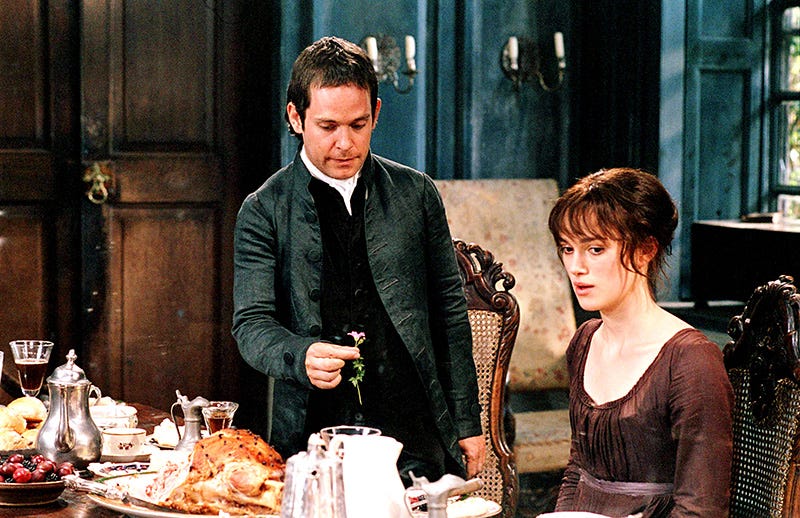
I’ve been on a Jane Austen kick recently and—even though the subjects of her books are a highly selected set of wealthy and well-connected people—the decisions her characters’ lives revolve around are extremely high-variance.
Austen’s best-known work, Pride and Prejudice, revolves around a family of five daughters whose father’s estate is entailed away to a male cousin. As a result, once their father meets his inevitable death—an ominous event that hangs like the sword of Damocles over the head of the mother, Mrs. Bennet, throughout the novel—the women of the Bennet family will have nowhere to live.
Despite Mrs. Bennet’s absurd and counterproductive behavior throughout the novel, her nerves about this impending catastrophe are incredibly reasonable. When the eldest daughter, Jane, loses the attention of the rich Mr. Bingley, it is not merely sad because of the dashed hopes of young love, it’s devastating because it means a potential lifeline has disappeared.
Another critical moment is when Elizabeth Bennet refuses to marry her cousin, Mr. Collins—the man who will inherit her father’s estate. Lizzy’s choice is simultaneously brave and incredibly selfish.
Imagine, for a moment, that maintaining your would-be partner’s affections was not just a matter of your own personal happiness, but could also save your entire family from financial ruin. This is what’s called a high-variance decision.
Variance is a statistical measure that quantifies how spread out values within a given data set are. (You may have learned about variance in high school with this popular dartboard/target practice example.)
Statisticians usually depict variance using what’s called a normal distribution, pictured below:
Life has gotten loads better since Regency-era England. People are richer, healthier, and we’ve eliminated large sources of suffering.
Progress is often described as a process of shifting the mean to the right—that is, the average life getting better and better—but less remarked on is that it also has been a process of reducing the variance of outcomes.
Health is the obvious example.
Improvements in pharmacology and medicine are most often credited with shifting curves to the right. Now, instead of a life expectancy of 32, the global average is in the 70s. But part of why that average has shifted is because the variance has shrunk.
In the Victorian era, if you stripped out child mortality, life expectancy was in the 70s.
It’s not just that the average has shifted right, the distribution is compressed as well, particularly on the low end.
Health insurance and social welfare programs are essentially variance-reducing machines.
The last high-variance decision
It’s not just life used to be more dangerous, it’s that people had to regularly make decisions where the stakes wereenormous.
When I was considering moving to Fort Lauderdale, I wasn’t weighing the risks of a long, dangerous journey where I could catch scurvy or whatever else it is people died of in Florida. I wasn’t risking losing touch with all my family and friends or confining myself to a visit every few years and letters in-between.
A few hundred years ago, urbanization meant risking cholera, typhus, and violence as well as economic opportunity. The urban mortality penalty used to be enormous – there was a sizeable life expectancy gap between the country and London, even when looking at highly selected populations and murder was far more common.
Without an easy path to divorce or a fair and safe way to earn a living, marriage for women could mean trapping yourself in an abusive partnership with no way out.
Of course, having a child has also become lower-variance: According to Our World in Data, for most of human history, roughly 1 in every 2 newborns died before reaching the age of 15. By 1950, roughly 1 in 4 newborns died by 15 and by 2020 just 4% did.
Data from Sweden suggests that throughout the 19th century, most parents saw at least one of their children die.
Even with these gains, there is no other single decision that immediately opens you up to the type of risks that becoming a mother does from long-term health consequences to economic consequences to a loss of freedom. Fathers, too, face an immediate shift in responsibilities, expectations, and identity that can happen, quite literally, overnight.
And while technology and political progress could continue to improve some of these downside risks by expanding health care, providing more social welfare benefits for children, and eliminating more childhood illnesses, you can’t actually eliminate the variance of adding a new person into your life.
People are high variance. They can be kind and cruel in measure. They can be creative and stifling. They can be witty and lazy. And they can be all these things at once and they can change over time. Even if it were possible to compress such a rationality-defying truth, it would be awfully sad to see it happen.
The risks we don’t remember taking
When I first ran this idea by my editor and chief of staff, Kate Crawford, she was a bit down on it.
Kate, who actually has a kid, correctly argued that modern life is actually full of high-variance decisions, even if we pretend they are not.
And she’s right: Decisions like who you marry or even mundane ones like getting into a car, actually carry a lot more downside risk than we tend to admit.
The difference is twofold. First is that many high-risk decisions remain so normalized as to not really be decisions. If you live in most parts of the United States, getting around requires driving. It’s possible that widespread self-driving cars could produce more ambivalence about human driving in general.
But more importantly, having a child concentrates an entire lifetime of risk into one decision point whereas other decisions tend to obscure the risks over long periods of time.
For instance, maternal mortality in the U.S. is estimated at 17.9 deaths per 100,000 births which means one’s chance of dying in childbirth is roughly 1 in 5,600.
My back-of-the-envelope calculation indicates that your odds of dying on an average (12.6 mile) car trip is roughly 1 in 6 million.
This, of course, illustrates why things like pregnancy loom so large in our brains. As a single-event, it is far riskier than getting in a car. But that obscures the nature of the decision to become car-dependent.
While your odds of dying each time you get into a car are low, cumulatively over the course of your life, the odds are not great. According to the National Safety Council one’s lifetime risk of dying in a car crash is 1 in 101.
I don’t want to turn back the clock on progress. We need a world where being a parent is an option and one where people are practiced and ready to make high-variance decisions. After all, the alternative is that time will make it for them.
The idea that having a child is a choice at all is an invention of modernity. Contraception, economic growth, and feminism turned what was once socially compulsory into an option we can consider and weigh at our leisure. This is the paradox of progress: the safer life gets, the harder it is to choose anything that isn’t.
Update: This piece was originally missing a note on a graph explaining the makeup of the underlying data. That graph — “Explaining Mrs. Bennet’s nerves” — has been updated.
Recommended reading from The Argument:

How getting richer made teenagers less free

"In the last 100 years, we gave our children better and safer childhoods. Now it’s time to give them the teen years they deserve."
If we are able to one day create a world where everyone has access to basic freedoms and a quality education, that will mean having eliminated high-variance decisions for more and more people.
Most of the things Millennials fear about having children—loss of freedom and identity, loss of free time and personal time, not coming first—turn out to be very good for us.
This is what people don’t get until they have children. Focusing on yourself all the time, not having any urgent survival needs, and not having anyone depend on us, is actually brutal for mental health. We’re the most prosperous and comfortable people to ever live, and we spend our lives trying to understand why we’re so anxious and unhappy.
When you have a child, you don’t have time to sit around pondering, “who am I” or “what is my purpose” — and these questions have been answered, definitively, by the little being you love more than life, who needs you for everything.
The variance of having a child can be really unforgiving. I have 2 kids. The older one has serious mental health issues that really surfaced after the younger one was born. It both has essentially ended my outside-of-family life and also affects both the older one's future in unpredictable ways and the younger one's experience of normality. It's really fucking hard and you don't get a day off ever.
That said I would still have taken the black box. I know people who delayed parenting until it was too late and are filled with regret. I think I would be too because I remember what I felt when waiting for their conception and births. But it's really fucking hard and you don't get a day off ever.