

Growing up in a household where both of my parents had graduate degrees, I got one piece of emphatic advice about graduate school: I should only do a program that would pay me, not one that wanted me to pay (with the exceptions of law and medical school). If you’re paying, I was told, you’re the product.
I never did go to grad school.
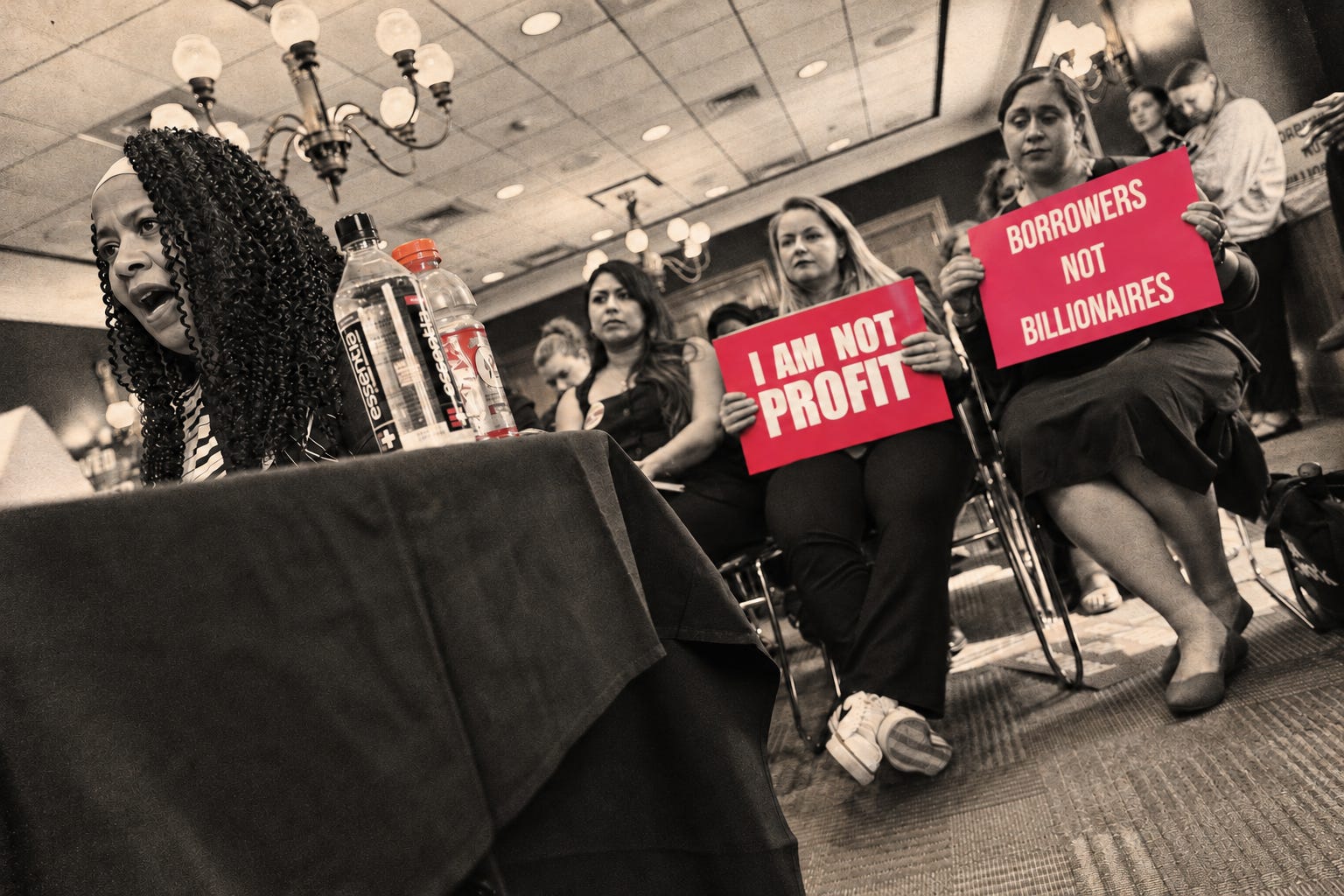
When I read about the Americans taking on life-ruining amounts of debt to do advanced degree programs from which many of them never graduate, I was struck by how often they are first-generation college students from working-class families — no one told them how to tell whether a graduate program was worth it. The rule my parents gave me would have served them well.
The Trump administration’s changes to federal student loan eligibility rules have been described as part of the president’s broader war on American universities. But as The Argument columnist Matt Yglesias argued in his newsletter, the new regulations prevent the federal government from subsidizing loans for programs that leave graduates financially worse off than they would be without the degree. This helps protect the very students least likely to have the kind of information my parents gave me.

Critics of the move don’t seem to understand that it will actually have very little impact on most undergraduate degrees. In general, studying art history or philosophy at your state’s flagship university will increase your income relative to having only a high school diploma.
And where the regulations will have an impact — mostly on low-end cosmetology programs and some master’s programs in low-earning fields — I’m prepared to argue it will be a good one.
Trump’s new rules apply only in cases where the graduates of a particular school’s degree program do not have a higher income than people without a degree at that level. So if there’s an economic case for the degree, student loans for it will still be available. And when there’s no economic case for the degree, the students are often being exploited to pay the institution’s bills.
Another problem comes when there is an economic case for a questionable degree — but that case is an arbitrary result of bad regulation. And that’s a problem that it will take much more than common sense rules about federal loan subsidies to solve.
A tale of two degrees
In general, the discourse about student loans seems to me to be profoundly confused, suffering from a lack of clarity about what they are and what purpose we want them to serve. Private companies will, of course, give you a loan if they expect you to pay it back. Federal student loans are preferable to private ones because they are cheaper — but this is a government subsidy for education. It’s being offered presumably because the government thinks that education is valuable and would be underprovided by the market.
But in that case, the government should, in fact, make sure both that what it’s subsidizing is valuable and that a loan is a good way to subsidize it. That’s why the Obama administration was also involved in cracking down on student loans to for-profit colleges. Obama officials seemed to understand that, if you can get a huge loan to go to any degree program at all, some unscrupulous schools will try to sign up students who won’t actually benefit from the program in any way, collecting the government’s money and leaving the students in debt.
ProPublica reported in 2016 on one such college, which signed up homeless participants, saddled them with thousands in student loan debt, and advertised programs like “ultrasound tech school” that it didn’t even offer. In other cases, for-profit colleges advised students on how to qualify for aid, including sometimes advising them to lie; the schools didn’t care if students were left with unmanageable debt, having already collected their pay.
Surely we can all get behind cutting this kind of program off from federal student loans. In a case this extreme, it’s clear that banning federal student loans isn’t about devaluing education; it’s about ensuring that programs don’t have reason to go out and recruit unqualified students who won’t benefit.
But those tactics are hardly limited to the for-profit sector.