

Editor’s note: The first essay The Argument ever published asked, “How do we live with each other?” To mark our first anniversary, we’re returning to that founding question with a series about what we owe people whose beliefs and choices we may find difficult to accept or even understand. Over the next few weeks, familiar voices at The Argument and new voices alike will approach that question from different angles.
Leah Libresco Sargeant is a sharp writer and policy wonk whose core arguments center on family, feminism and religion. In today’s essay, Sargeant, who is a pro-life feminist, considers what we owe the growing number of frozen embryos left behind or discarded. She pushes readers to question whether we have any obligations at all to potential future children and sketches out a view of future pro-life politics shaped around the advancement of reproductive technology.
To receive every essay in this series, subscribe today.
- Jerusalem Demsas
Four years after the Dobbs v. Jackson Women’s Health Organization decision, America has settled into an abortion détente. Blue states are abortion oases, in some cases removing any limits on abortion by gestational age. Red states set limits that are highly restrictive on paper, but, due to mail-order abortion pills, possible to evade in practice. The bans are most restrictive for women who learn they are pregnant outside the window for medication abortions and who don’t have the funds or flexibility to travel out of state.
The détente seems to suit both parties’ leadership (though not activists on either side of the issue). Democrats get to talk about restoring Roe v. Wade, but (as with many issues) they are in no danger of having the majorities needed to deliver. The Republicans, led by Trump, have declared “Mission Accomplished” and scolded pro-life activists seeking federal action.
Even for the most engaged activists, the rise of medication abortion is turning down temperatures on the ground. A woman seeking a medication abortion may never need to visit a clinic in person at all. The pro-life activists hoping to make contact and persuade her to let her baby live will never see her. The clinic escorts will still find opponents to engage with, but the stakes of their fight will be lower. There will be fewer clinics to protest at, even in blue states, as the rise of telehealth medication abortions prompts in-person clinics to close.
Abortion has become, in practice as well as in rhetoric, between a woman and her doctor.
How do we live with each other? For now, like this: with no constitutional protection for abortion access or for life in the womb. With activists on both sides of the issue sliding down their party’s prioritization list. With at least 3,000 abortions daily — a number that represents a 9/11 every day for pro-lifers and which falls short of what pro-choicers view as demonstrated need.
What has the potential to jar us out of this new normal? The boosters of artificial wombs, a hypothetical technology that could allow a fetus to develop outside a woman’s body, hope it could separate pregnancy from a particular mother without abortion. I’m extremely bearish on the potential of this type of technology to allow gestation without women. Might medical advances allow babies to survive outside the womb at 20 weeks, or even 18 weeks, in my lifetime? Perhaps. But I’d be happy to bet that 50 years from now, we still won’t be able to take a 12-week-old baby out of the womb and sustain its development safely.
Even more modest advances might not upend today’s political settlement. Under Planned Parenthood v. Casey, states could prohibit abortion after viability — the moment at which a baby could survive outside the mother. Moving viability earlier under that framework would have allowed states to ban abortion earlier in pregnancy. But the shift to abortion on demand, without apology, and after viability in blue states suggests moving the viability line wouldn’t destabilize abortion compromises.
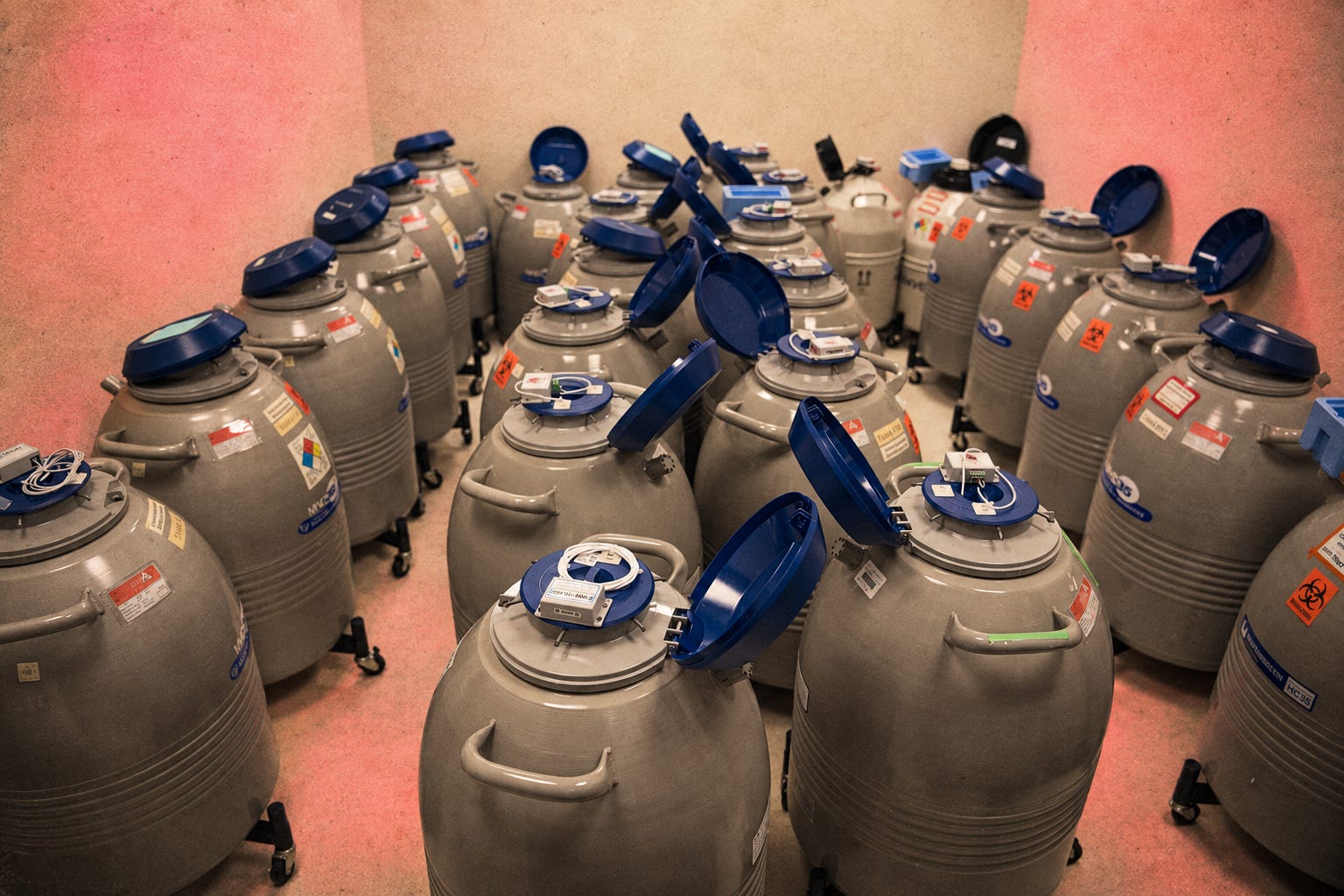
But I do believe that one technological advance is creating new fault lines in reproductive justice: the ever-growing number of embryos on ice with the rise of in vitro fertilization (IVF). IVF itself is popular, and its prevalence is likely to keep it politically untouchable.
In 2024, 1 in 36 babies born in America was conceived through IVF — almost everyone has someone they love who exists because of this procedure. But as IVF becomes more widely used, there will be more and more uncomfortable questions about whether the embryos on ice are property or people.
