

This week on The Argument podcast, Matt Yglesias and I are joined by ChinaTalk’s Jordan Schneider to discuss all things China and AI. Paid subscribers can watch or listen to the episode ad free here and read the transcript at the end of this post. Free subscribers can watch the episode on YouTube here or listen wherever you get your podcasts.
Subscribe: Apple Podcasts | Spotify | YouTube | Overcast | Pocket Casts
Can we cure human frailty?
As we discover treatments for various diseases that used to reliably cut us down, humans are living longer than ever. The real question is whether curing all diseases would mean we get to live forever.
Before doing research for this essay, I believed that sometimes people just died of old age — that is, the human body is frail and just sort of stops working. That could mean cells stop replicating or become less functional, tissue loses its ability to repair everyday damage, or some other breakdown.
However, I was surprised to learn that there’s a lot of controversy over this common intuition.
“Do centenarians die healthy?” is a study of 40 very old people. Researchers conducted autopsies to determine if there was some hidden cause of death, even if the deceased was described as healthy beforehand. In every single case, the doctors were able to attribute death to disease — usually cardiovascular or respiratory conditions. It’s not certain that those diseases were the cause of death, but it does cast doubt on the accepted folk wisdom about death from old age. Several independent autopsy studies found a similar pattern.
It seems at least theoretically possible to achieve immortality by preventing all diseases and replacing organs as they fail — though that proposition will get increasingly difficult as transplants extend to brains.
Actual immortality may be unlikely, but could humans eventually figure out how to keep our bodies going for a couple hundred years? That seems entirely plausible — but a world in which people can live for centuries is also one in which dictators can rule for centuries.
The undead dictator
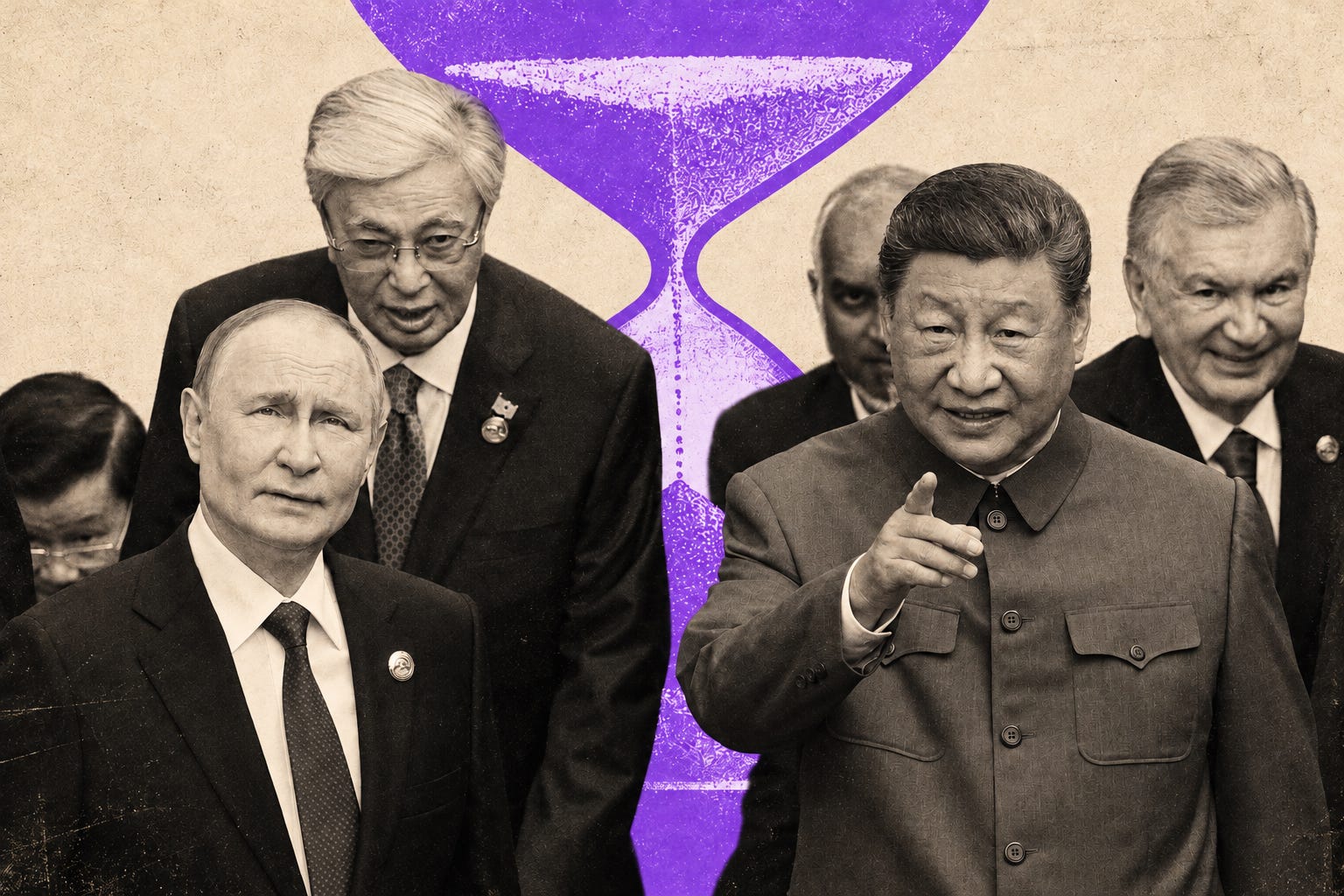
Immortality may be the last thing you want to hear a dictator contemplate, but last year, Xi Jinping and Vladimir Putin were overheard on a hot mic discussing just that.
“Before it’s said to be very rare to live up to 70, and now it’s said that you are still a child at 70,” said Xi (through an interpreter).
“In a few decades, as biotechnology continues to develop, human organs will continue to be transplanted and people will become younger and perhaps even achieve immortality,” noted Putin, also through an interpreter.
Xi later mused on predictions that humans “may be able to live up to 150 years old.”
World leaders are getting older. This is in part a function of aging electorates, but one report by the European Bank for Reconstruction and Development showed that in autocracies, leaders were 26 years older than the median adult in 2023, compared to just 19 years in 1960. (Democracies saw no meaningful change.)
The explanation centers on turnover: The average tenure for an autocrat rose from roughly four years to over 10 over the last century, whereas for democratic leaders, tenure has fallen.
Recently, Xi came to Washington to meet with President Donald Trump. While little of substance seems to have emerged, ChinaTalk’s Jordan Schneider joined the latest episode of The Argument podcast to discuss the visit and its implications.
One takeaway was the visual evidence of human frailty on display between the two leaders: “Two most powerful countries in the world are ruled by one guy who’s 73 and one guy who’s 80. And they kind of don’t walk great anymore and need naps,” said Schneider.
When the end of one life feels like the end of history
There are many reasons the West rejected authoritarian governing models, but one core reason is that even if you get a very good king, there’s always the problem of succession.1
Aristotle questioned, “even if one held that royal government is best for states, what is to be the position as regards the king’s children?” After praising Rome’s comparatively good emperors, Edward Gibbon, in his canonical work The History of the Decline and Fall of the Roman Empire, observed: “They must often have recollected the instability of a happiness which depended on the character of a single man.”
Natural death is a stabilizing force. For hungry would-be leaders waiting in the wings, the inevitable death of the leader reduces the incentive for assassination.
We see a version of this dynamic mirrored in democracies as well — particularly in the “gerontocracy” discourse. As the average age of tenured faculty and politicians in key leadership roles has gone up, those waiting in the wings have grown increasingly restless. American universities removed mandatory retirement policies for tenured faculty in 1994, which sharply reduced retirement rates. As Yale Law professor Samuel Moyn characterized the situation, “younger academics today regard those elders much as serfs on the brink of the French Revolution saw the noble lords.” (A bit hyperbolic, but I take his core point.)
In 2018, a rebellion of young House Democrats led by Reps. Seth Moulton and Tim Ryan was trying to prevent then-78-year-old Nancy Pelosi’s return as speaker. In order to gain support, Pelosi acquiesced to term limits and described herself as the “bridge to the next generation of leaders.”

Natural death is also a solution for the subjects of tyrants. Revolt and exit are costly and sometimes ineffective — but if your autocrat is old enough, maybe you can just wait him out. Two of the worst dictators of the 20th century, Mao Zedong and Joseph Stalin, died to their nations’ great relief.
Ismikhan Rahimov, an Azerbaijani teacher sentenced to 25 years in the Gulag, later told his story in a magazine, writing that he held onto the expectation of Stalin’s death:
“I was convinced that as soon as Stalin died, a new policy would take effect in Russia. That’s the way it had always been throughout Russia’s entire history. When the Czar was overthrown, a new policy was established. Besides, Stalin was already 70 years old at the time I was arrested. I knew his end was coming. So I knew that we would come back. Little did I know, however, how long it would take, and what difficult circumstances I would have to live through, until that day.”
One month after Mao’s death in 1976, his successors arrested Mao’s proteges — the Gang of Four — marking the end of the Cultural Revolution. They were charged with many crimes that Mao himself was also responsible for, including “keeping a nation of 800 million living in constant fear” and “ruining the education system” and “preventing a single poem or play from being printed much less published without their approval.”
In many ways, they were forced to pay for their own crimes as well as Mao’s.
The Chinese Communist Party’s 1981 historical resolution acknowledged Mao’s ultimate responsibility, but immediately after doing so, it argued that Mao’s dark age was “the error of a great proletarian revolutionary.” While the chairman “paid constant attention to overcoming shortcomings in the life of the Party and state,” late in life he “confused right and wrong and the people with the enemy.”
Meanwhile, the Gang of Four were accused of “taking advantage of Comrade Mao Zedong’s errors [and] committ[ing] many crimes behind his back, bringing disaster to the country and the people.” Mao’s death gave his successors room to abandon some of his most disastrous policies while continuing to celebrate him as a great revolutionary.
While Mao’s death famously did not pave the road to democracy in China, there are more hopeful examples. According to one historian, opposition to Francisco Franco’s dictatorial regime in Spain was willing to wait for Franco’s death, much to the chagrin of young Basque activists. Franco’s opponents could hope to outlast him even if they could not overthrow him. That calculation looks very different if a dictator can expect another century in power.
Of course, death is not a panacea.
Many dictators die, and their countries fall into chaos and civil war or peacefully transition to another dictator. But a dictator’s death does create an opening to escape that particular ruler’s regime.
Some autocrats are in fact better than others. China is not some paragon of liberalism and democracy, but life for everyday people became substantially better after Mao’s death — political persecution declined significantly and Deng Xiaoping’s eventual ascendancy ushered in an era of economic growth that raised living standards more than any other event in human history.
Do you want to live forever?
Dictators are a highly selected bunch and probably score higher in areas like megalomania than the rest of us — but nevertheless, I am curious how readers of The Argument score on whether or not they want to live forever!
In a 2015 YouGov poll of British adults, just 28% of people said they would like to live forever if they could. In a 2025 Pew poll, Americans were asked how long they would live if they could choose, and the average age was 91; just 7% said they would like to live to 120 or beyond. (Forever was not offered as an option.)
Part of what’s going on here is that some people don’t want to live a long time if they’re living diminished lives in poor health. Another is that one’s friends and family don’t always get to come along. Other survey evidence indicates that if one or both of those matters were squared away, higher numbers of people would take the longevity pill.
An extra century with the people you love seems great — as long as it’s not another century under autocratic rule.
Today’s podcast with Schneider and my co-host Matt Yglesias ranges far afield from longevity. We get into how Chinese and American political leaders are using AI and how the technology is shaping geopolitical crises. It’s a really fun episode, and it’s great to have a bona fide expert on to gab with us about geopolitics.
Download wherever you get your podcasts!
The Argument. Libbing out.
Paying subscribers can find the transcript for this post beneath the paywall.
New episodes post every Thursday.
For an ad-free version and full transcript, subscribe at TheArgumentMag.com.
Corrections and clarifications:
Around 21:35, Jordan references the “seven other parties in China.” There are eight subordinate satellite parties in China in addition to the CCP.
Around 26:15, Jordan says China was growing at a rate of 8% to 9% in the 2000s, 5% to 6% in the 2010s, and between 0.5% and 1.5% for the past six years. According to the Federal Reserve Bank of St. Louis, the country grew at a rate of 8.3% to 14.2% in the 2000s, 6.1% to 10.6% in the 2010s, and 2.3% to 8.6% in the 2020s.
Around 27:50, Jordan says the U.S. has an unemployment rate of 3%. According to the Bureau of Labor Statistics’ latest report, the unemployment rate reached 4.2% in September.
Around 49:40, Jordan suggests 50 million people died in the Chinese Cultural Revolution. According to scholar Song Yongyi, estimates range from 500,000 to 8 million.
Around 1:04:00, Jordan says AI is polling at 14%. A July 2026 survey by HarrisX showed 56% of U.S. voters with a favorable view of AI. The Argument has not polled this question specifically, but in Sept. 2025, 43% of voters said AI has had a positive impact on their own life and 32% said it has a positive impact on society. In July 2026, 55% said they at least somewhat enjoyed using AI.
Show notes:
ChinaTalk, blog and podcast founded by guest Jordan Schneider: ChinaTalk
“Global Attitudes on AI 2026: The Wonder vs. Worry Divide Deepens,” polling referenced by Jerusalem: Ipsos post
“The biggest issue in American politics doesn’t exist yet,” poll release by Lakshya Jain referenced by Jerusalem: The Argument article
“AI and the Fall? of the Creative Class,” article by Joseph Politano referenced by Jerusalem: Apricitas Economics article
Crisis of the Common Good: The Fight for Meaning and Connection in a Broken America, book by Sen. Chris Murphy, referenced by Matt: Goodreads page
Snyder v. United States, court case about corruption referenced by Jerusalem: Justia page
Peer Review: “Like a Good Neighbor: Childhood Neighbors Influence Occupation Choice,” study by Michael J. Andrews, Ryan R. Hill, Joseph Price, and Riley Wilson: NBER working paper
“Who Becomes an Inventor in America? The Importance of Exposure to Innovation,” study by Alexander M. Bell, Raj Chetty, Xavier Jaravel, Neviana Petkova, and John Van Reenen referenced by Matt: NBER study
“Was Jane Jacobs the first NIMBY?” podcast episode reviewing Jane Jacobs’ The Death and Life of Great American Cities: The Argument podcast
Transcript:
Western nations that keep their royal families around to the tune of millions are truly an embarrassment to the liberal democratic tradition.
I'll take as much life as you got on offer.
When I think about the future, I think about how much better extreme old age is going to be. I have no doubt we're going to get drugs that can stimulate the brain enough to not spend all day dozing in a quiet haze. While on the other side, old folks who grew up with the internet will know exactly how to spend their time when their bodies get too frail to move around a lot. So yes, centenarians alternating posting online, watching video essays, and playing Stellaris all day long. And maybe, just maybe, some of them will be tempted to write and share some history of their own.
Dictators living longer is an unfortunate side effect, but 20 billion extra years of life for human beings on one side (a billion people, 20 years each that is) has got to balance having dictators maybe last an additional 20 years.
I have enough aches and pains at 50 that I can’t imagine wanting to live past 80. Like a Numenorean, I think we should be content with the time we have and not seek to continually extend it. Each generation defines itself in part by coming of age in tension with the generation that preceded it, and ultimately replacing it. Our lives may lengthen but our youth will not.