

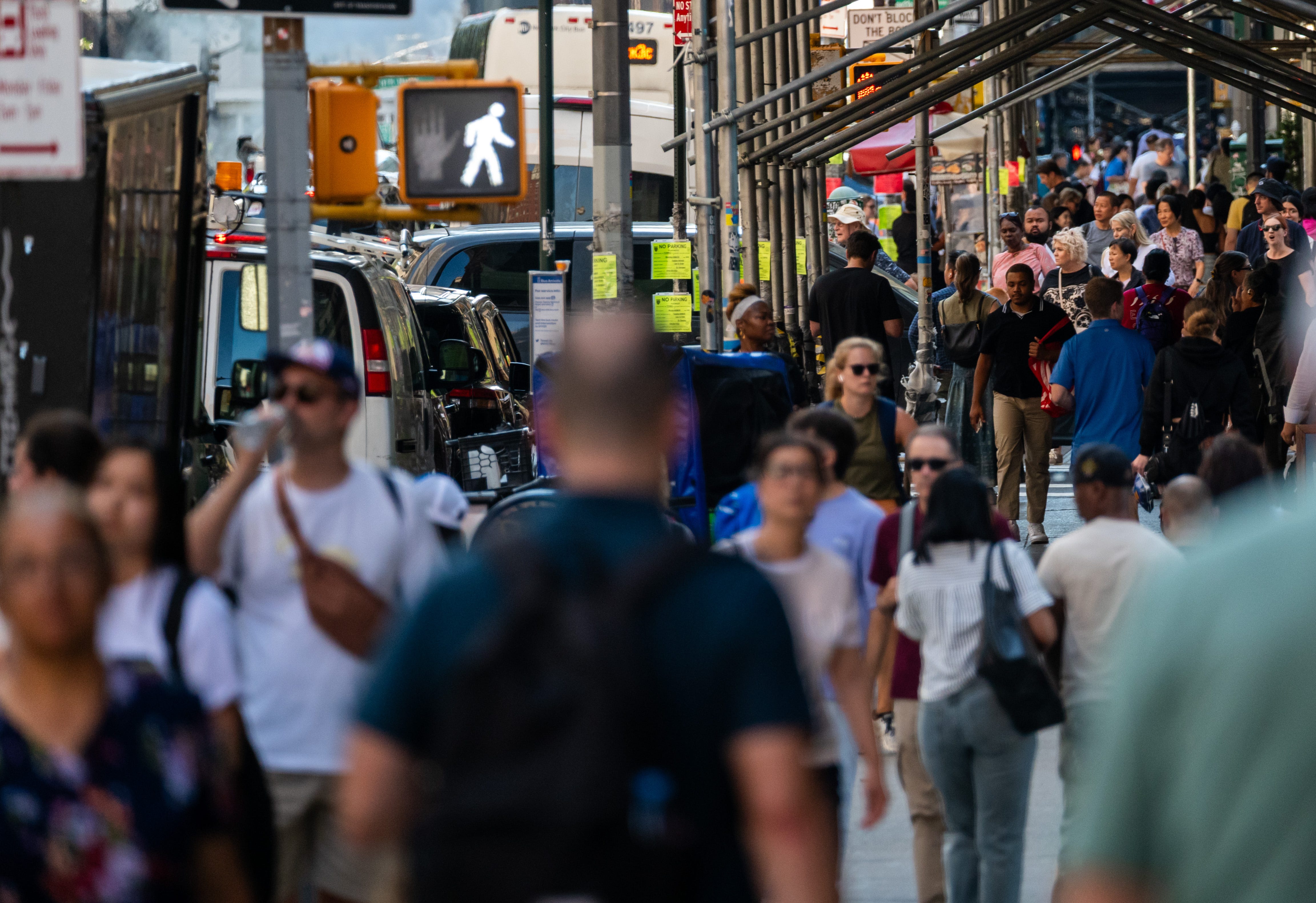
In Canada, if you ask people what they think of their countrymen’s morals, 92% of them say good. In Indonesia, same thing. The Swedes (88%) and Japanese (83%) are right behind them. Even in countries riven by political crises—Hungary, Argentina, Israel—solid majorities say their fellow citizens are, on the whole, morally decent people.
Bully for them, but unfortunately it seems like there’s something particularly wrong with the United States.
Of the 25 countries polled by Pew Research Center, the U.S. is the only one where the majority of people rated the morality of people in their country as bad. We lost to the usuals: Sweden and Canada but also to countries you might not expect like Indonesia, India, Mexico, Spain, Poland, Hungary, and Israel. Also the other 16 countries polled.
The 25 countries aren’t randomly selected, but they do run the gamut from majority-Muslim to secular, from quasi-authoritarian to liberal democracy, and from Asia to South America (the long way).
I don’t think this is what American exceptionalism was supposed to mean.
I’m a big fan of America, so I’ll be honest, I wouldn’t have called this. And when I dug into Pew’s crosstabs, the puzzle grew. Americans are not especially moralistic. We’re not the most religious country, or the most traditional, or the most anything. And yet, we’re the only country surveyed that looks at its neighbors and concludes: These People Are Bad.
The key to understanding this puzzle is what I call the Morality-Trust Gap—the distance between thinking your neighbors are moral and actually trusting them.
Pew’s question about morality has a cousin in the World Values Survey (WVS), which, for decades, has been asking people around the world a broader question: “Generally speaking, would you say that most people can be trusted or that you need to be very careful in dealing with people?” This is the standard measure of generalized social trust in political science.
Take Indonesia. A stunning 92% of Indonesians told Pew that their fellow citizens have good morals. But in response to WVS’ question in 2022 about whether most people can be trusted, just 4.6% said yes. Indonesians almost universally believe their neighbors are moral and they almost universally don’t trust them.
Indonesia is an outlier but the answers to WVS’ broader question are systematically lower than answers to Pew’s morality question. Take Canada which ranks highly in both measures. While 92% of Canadians think their countrymen have good morals, just 46.7% say that most people can be trusted (that is one of the highest trust scores in the world).
There was only a weak (statistically insignificant, I might add) correlation between the two lists. That is, having a high ranking on the social-trust measure tells you surprisingly little about whether people will rate their fellow citizens as moral.
This strikes at the heart of a broader debate happening within many countries: Are liberal cosmopolitan values like tolerance and multiculturalism to blame for declining trust in government and declining social fabric? Does having a shared moral worldview with your fellow countrymen translate into a high trust society?
The answer to both of these questions is no. The countries with the strongest shared moral codes have the lowest trust while the countries that leave morality to the individual have the highest.
Liberal individualism, we are so back.
Highbrow xenophobia
That diversity is the reason for declining trust is a load-bearing belief of the postliberal right. It’s what I like to call highbrow xenophobia.