

Consider the sticky situation of Sophie Baek, the heroine of Bridgerton’s fourth season. Despite being but a lowly housemaid, she and the aristocratic Benedict Bridgerton fall in love. One night, fire in their loins, they get carried away. The sex is passionate and consensual, but entirely verboten by Regency-era social norms: No lawful heir will come out of their cross-class, premarital affair.
This leaves Sophie in a state of terrible torment as she waits for her period. A swollen belly would be evidence of her transgression and leave her a ruined woman, not to mention a single mother.
While sexual norms have ebbed and flowed over the past 200 years, the dominant understanding of the social function of sex was pretty straightforward until relatively recently: Sex was for procreation. More precisely, it was for the procreation of legitimate children born within wedlock. This meant that sex was also for a very narrow segment of the population: married men and women.
If you weren’t having sex for the straightforwardly practical purpose of reproduction, then it meant you were doing it in the much more awkward, socially unproductive, and spiritually contentious pursuit of pleasure.
Since the 1960s, it has become much easier to decouple sex from procreation. That was when birth control, a technology that might have saved 19th-century women like Sophie from pregnancy scares, became widely available in the United States, bringing with it new conventions around sex.
Today, most men will still marry you even if you’re not a virgin. Thanks to the technological and cultural intervention of the sexual revolution, the majority of Americans now have the freedom to think of pregnancy as an optional outcome of sex, rather than its primary function, which has opened the door to conversations about what else sex might be for. The relevant question for many women has become “Am I enjoying this?” instead of “Would my life be over if I got pregnant with this man’s baby?”
Not everyone views this as progress.
In The Case Against the Sexual Revolution, Louise Perry, a British columnist at The Wall Street Journal, argued that women were better off before contraception removed the risk of pregnancy. In her telling, decoupling sex from reproduction has produced a culture where men feel entitled to demand sex from women and women feel like they have no excuse not to give it to them.
Mary Harrington, contributing editor at Unherd and an intellectual ally of Perry’s, made the same point in her book Feminism Against Progress: “a woman who refuses birth control will be highly motivated to be choosy about her partners. Pregnancy risk is, after all, a cast-iron reason to reject having sex with anyone out of politeness.”
In short, removing procreation from the equation turned men into louts and women into pushovers. At a moment when young people really do seem to be struggling with romantic connection, this account has intuitive appeal. If men and women can’t even ask each other out on dates, how can they be expected to communicate their most intimate preferences and boundaries? It’s a daunting question.
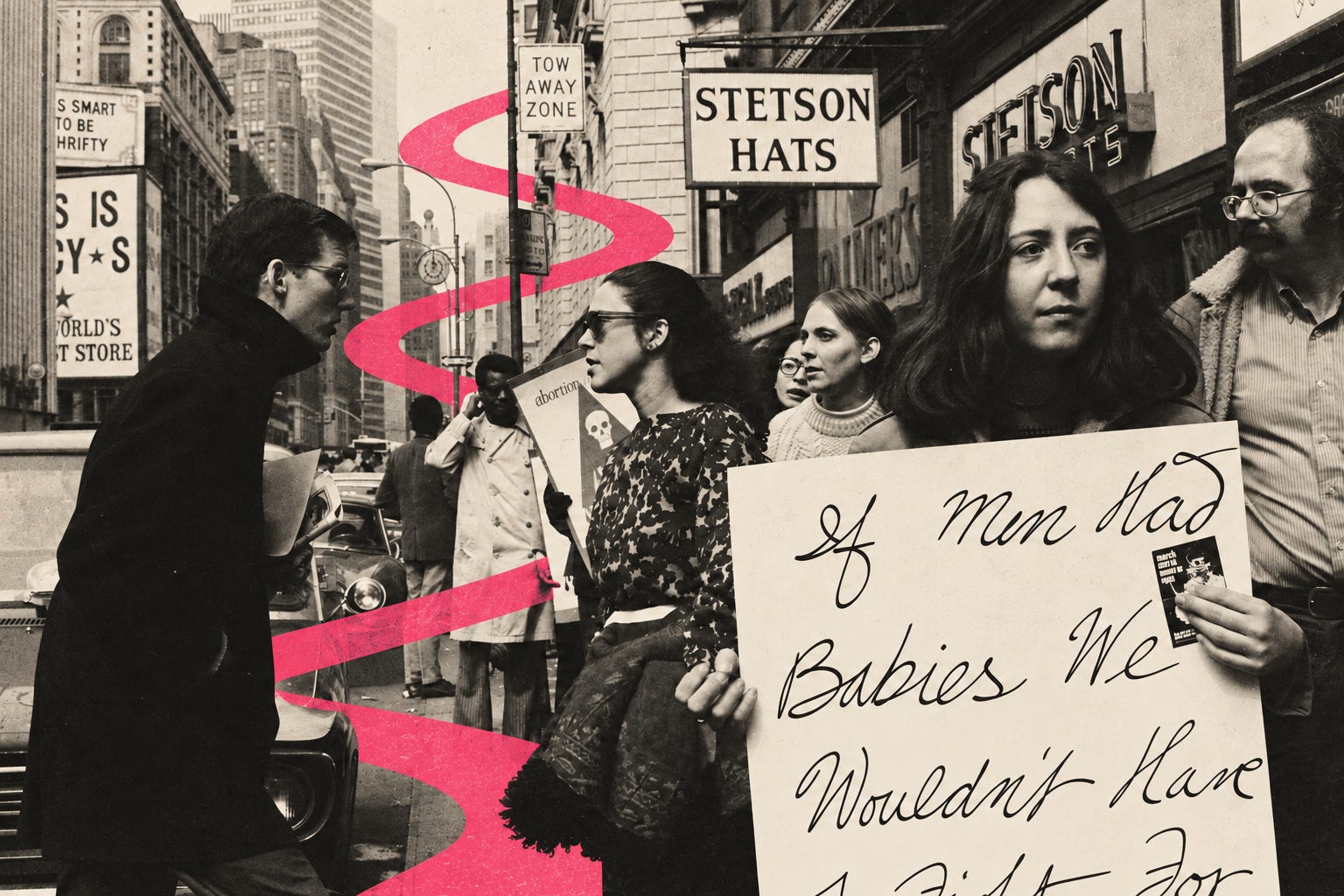
But the answer does not lie in the past. If you take a longer view of gender relations, back to before the pill and the normalization of premarital sex, you will not find a golden age of mutually consensual and pleasurable heterosexual intimacy. All of us, most of all women, are better off when our sex lives are governed by consent and pleasure than by procreation and marital obligation.
Male entitlement existed before birth control
To critics of contraception and modern sex norms, the unfolding rape case at Cornell University — in which a college sophomore was allegedly pressured into taking drugs and then sexually assaulted by seven members of a fraternity — is further confirmation that the sexual revolution has paved the way for depraved men to have their way with hapless women.
In a recent essay in the Journal titled “How the Sexual Revolution Led to Cornell,” Perry wrote: “while the villains in this story are responsible for their own villainy, they were also set up to fail by a sexual culture that can’t help but produce tragedies like this.”
In other words: When you tell women that promiscuity is liberating and men that women are free to set the terms of their promiscuity, the outcome is a confused quagmire of coercion.
Perry advocates for the norms of the precontraception era, when “the community set restrictions on both male and female sexual behavior, not out of irrational prudishness or misogyny, but because unwise sexual encounters could very well lead to an unignorable outcome: the birth of a baby.” Even though technology has virtually eliminated that risk, it has not eliminated the need for a mechanism by which to protect women from men’s ravenous sexual appetites.
Here is where I agree with Harrington and Perry: Women should absolutely not be having sex out of politeness. Consent is clearly a necessary but insufficient arbiter of morally acceptable sex, as the Cornell case exemplifies. Even if the survivor in that case had verbally consented to the drugs and the group sex, that may not have exempted the household of men from moral wrongdoing. Power asymmetries always complicate the validity of consent.
Perry blames modern sex norms for what happened that night at the Chi Phi fraternity. To her, pamphlets on sexual pleasure and “workshops on sex toys” are part of the problem, for they contribute to the illusion that women have enough agency, and men enough self-control, to handle their own sexual freedom.
But to the extent that women still feel that they owe men sex, that is not the fault of the sexual revolution. If you want to talk about imperfect consent, then consider the sex that was had within lifelong marriages from roughly the Reformation to the mid-20th century.
With divorce being difficult, expensive, and a recipe for social ruin, women had very little leverage to shape their marriages’ sexual terms. And it wasn’t until 1993 that marital rape was outlawed in all 50 states. To be clear, that meant that, in states where it was legal, a husband legally could not be charged with raping his wife.
Perry acknowledged this in her column: “of course rape still sometimes happened, including within marriage and within the family, since there has never been a culture free from sexual violence.”
This is an understatement. The position of the state was that women had no grounds to reject sex within marriage because procreation was the entire purpose of sex. Whether or not birth control emboldened some men to be more demanding of sex, pre-sexual-revolution marital rape laws legally entitled men to it.
Unlike Perry, I am not ready to give up on female agency — or male self-control, for that matter. Especially because I do not buy the story that the last six decades have been a failure on either front. When asked about their first sexual intercourse, the percentage of women who say they “really wanted it to happen at the time” rose from 34% in 2002 to 42% in 2011 to 2015.
Today there is at least some precedent for asking women what they want — and an increased propensity among men to respect it. Between 1995 and 2010, the rate of rape or sexual assault fell by well over half.
What conservatives owe the sexual revolution
A number of social conservatives anxious about the declining marriage rate have now taken to making the argument that married Americans have better sex than unmarried Americans. Brad Wilcox and Grant Bailey, who run the Get Married Initiative at the Institute for Family Studies, will have you know that “no group of Americans seems to be having more sex—and more satisfying sex—than married men and women who regularly attend a place of worship.” Similarly, Harrington contends that sex within marriage is better for women because the alternative is “casual hook-ups with a 10 percent chance of orgasm.”
The fact that right-wing intellectuals care about women reaching orgasm is wonderful. But that argument only has purchase because we are all fortunate enough to live in the aftermath of the sexual revolution.
Harrington makes the fair point that lifelong partners are more likely to care about “mutual pleasure.” But that is not a concept from the procreative lexicon for the simple reason that sex geared toward procreation does not require mutual pleasure. From a conception standpoint, the female orgasm serves absolutely no reproductive purpose.
At the risk of sounding uncouth: To say that sex is for having children within marriage is to say that sex is for male ejaculation.
The language of sexual satisfaction doesn’t come from scripture or evolutionary science. In large part, it comes from the people for whom sex was never procreative to begin with. Gay and lesbian Americans have always had sex for reasons other than conception or marital consummation. While socially sanctioned heterosexual intercourse could always occur under the pretext of reproduction, homosexuality has had no such cover.
To have gay sex is to have sex for pleasure. So when women started to seriously make the case for their right to have sex on their own terms, not out of politeness or wifely duty or biological destiny, they joined a battle that queer people had long been fighting.
It is no coincidence that the sexual traditionalism proposed by Perry and Harrington has gained traction in the same period that acceptance of homosexuality has fallen. Since 2022, the share of Republicans who view gay and lesbian relations as morally acceptable has dropped by 21 percentage points. Same-sex intercourse, BDSM, kink, and pornography are increasingly conflated into one unholy attack on traditional marriage.
Perry and Harrington, to their credit, have not called for prohibitions on any of these activities (except pornography). But it’s hard to imagine returning to a procreation-oriented sexual paradigm without them. And under that framework, straight men (married or not) have tended to derive the greater share of satisfaction.
It is only under the most recent paradigm that the rest of us have had a shot.
Recommended reading:
Why Americans think other Americans are bad people

The people blaming immigration and multiculturalism for the trust crisis have the story almost exactly backward.
The case for staying on Twitter

For Twitter refugees, the question is not whether you leave for another public square — it’s whether you participate in one at all.
Surprised that you left out another objection: to argue that pregnancy is a sufficient deterrent to sex is to assume that vaginal intercourse is the only kind of sex.
Agree with most of this but I wouldn’t be so sure that women’s orgasm doesn’t have anything to do with reproduction. After all, it has survived over the millennia of evolution - presumably women who were capable of orgasms were somewhat more likely to reproduce (for whatever reason) hence why we have this trait at all.