


Welcome to The Closing Argument, our verdict on the news, plus everything The Argument published and appeared in this week.
The Verdict, by Jerusalem Demsas
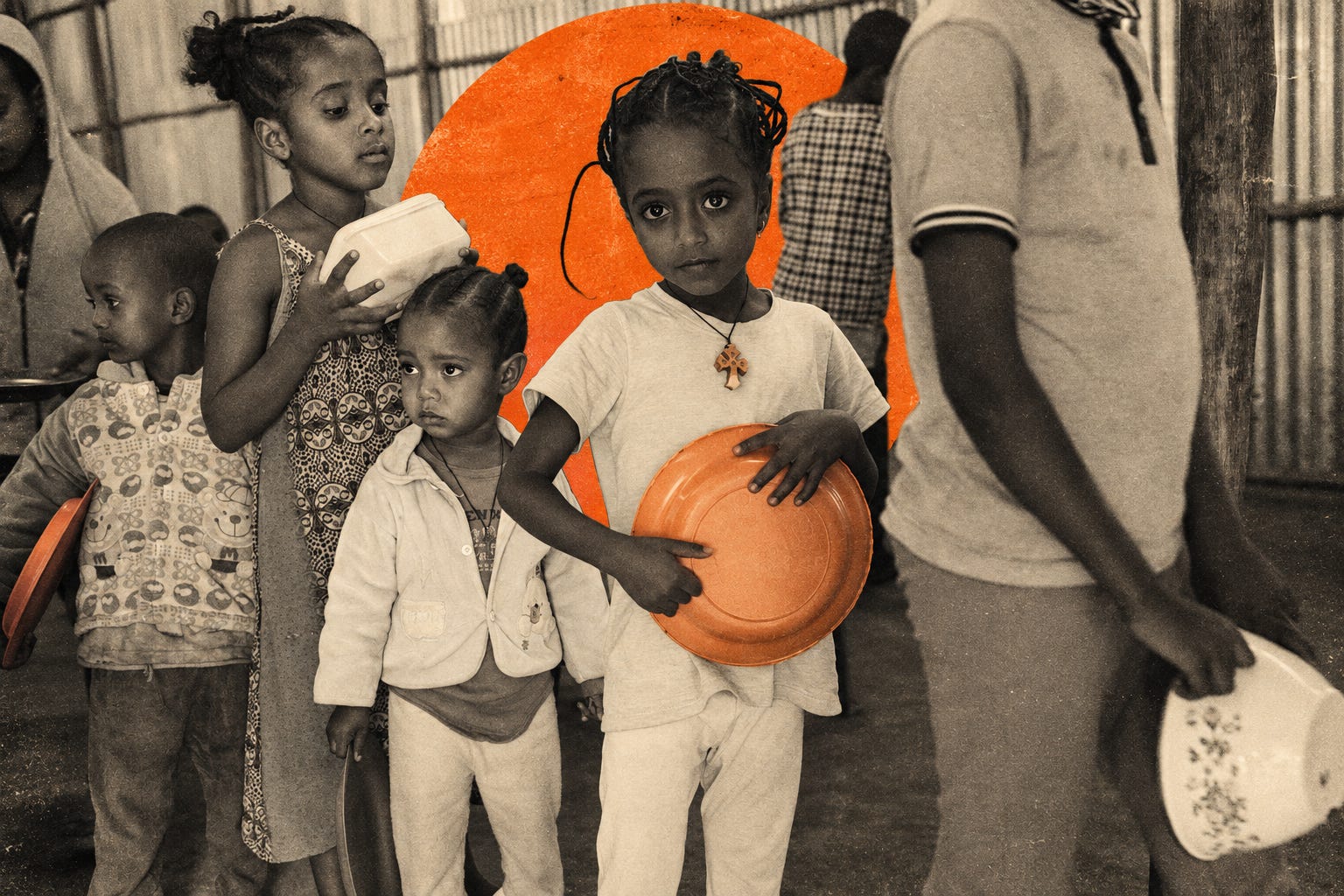
The Tigray war, one of this century’s deadliest conflicts, killed an estimated 600,000 people from 2020 to 2022, and that may have only been the beginning.
At a very basic level, the Tigray War is a dispute between the Tigrayan People’s Liberation Front (TPLF) and the Ethiopian federal government, led by Prime Minister Abiy Ahmed, over regional autonomy and political power. The TPLF and other subnational groups want to get rid of Abiy because of his efforts to centralize power. Some of these groups are divided over territory, even as they unite to oppose the federal government.
Hundreds of thousands of people died when the TPLF and the Ethiopian government went to war in 2020; while the Pretoria agreement negotiated in South Africa led to a short peace, key underlying disputes remain unresolved. They appear to be flaring up again now as both the federal government and the TPLF accuse each other of instigating the latest round of clashes this week. Even if the subnational groups succeed in getting rid of Prime Minister Abiy, the internal tensions are so strong that a brutal civil war is a likely outcome.
Most people know very little about the Tigray War. I would probably be one of them, except for the fact that I myself am ethnically Tigrayan. I was born just a few hundred miles away from Tigray’s capital, and when I look at the faces of the people involved — both those doing the killing and those being brutalized — they look like me.
At the same time, I live in the United States, speak broken Tigrinya in an inextinguishable American accent, and have no memories of my country of origin. Still, I have particular ties to the region and its people, so I care and know much more about Ethiopia than I otherwise would.
But you probably don’t. Many prominent political figures think this is good. While what’s happening in Ethiopia may be tragic, they argue, human beings are socially embedded creatures, which means that our obligations to other people are determined by the proximity of our relationships to them.
In January 2025, Vice President JD Vance sparked controversy by invoking the theological concept of ordo amoris (Latin for “order of love”) to claim that there is a hierarchy of obligation that requires you to care most about the people closest to you, in particular your family. Then, if there’s any room left over, you can give some consideration to people really far away from you. Vance argued that the far left has inverted this natural hierarchy to care more about people from other countries than people in its own — including, of course, migrants.
Pope Francis responded to this controversy by reaffirming the Catholic Church’s commitment to moral universalism: “Christians know very well that it is only by affirming the infinite dignity of all that our own identity as persons and as communities reaches its maturity. Christian love is not a concentric expansion of interests that little by little extend to other persons and groups.”
As a Protestant, I can empathize with Vance’s frustration at a man 4,500 miles away schooling him on his own religion, but I also think that’s exactly what you sign up for when you convert to Catholicism.
Alongside Vance-like arguments that we have few or no obligations to people outside our own communities is the argument that even empathizing with these people can be harmful. In The Atlantic, the Catholic writer Elizabeth Bruenig describes a growing right-wing literature warning against “toxic” and “suicidal” empathy. These books argue that indulging our empathy induces us to help vulnerable people at the expense of societal cohesion. As Bruenig points out, these books are targeted at conservatives who are torn between their concern for the poor and immigrants, on one hand, and their affiliation with a political party that increasingly rejects any obligation to marginalized groups on the other. It’s notable that some of the most active civil-society institutions aiding migrants are Christian organizations.
Empathy is a tool that helps us recognize the innate moral worth of every individual person, so it’s no surprise that people who seek to reject this moral fact are hostile to its power. However, it’s true that empathy can’t settle all our obligations. Because the world contains billions of people, my attention is selective. I pay attention to the Tigray War in part because I see my own features reflected in the faces of the participants. But that’s not the basis for a just or functional society.
There’s a soft form of particularism that is obviously true. I am a person who was born to a specific family in a specific place and therefore have special obligations to those people. If my father gets sick, my obligation to take care of him is greater than anyone else’s.
But when we move from explaining our duties to family and friends to relieving ourselves of obligations to other people, the particularist argument breaks down. If I were helping my dad deliver a package and a stranger collapsed in front of me, I think everyone would find it quite strange if I decided to ignore the dying man because of my preexisting duty to my family. In short, my obligation to care for my father does not, by itself, settle what I owe a stranger in desperate need.
Of course, recognizing that we owe something to strangers doesn’t tell us exactly what we owe them. I care a lot about what’s happening in Tigray, but that empathy doesn’t contain the answers to what the optimal immigration, foreign policy, or charitable arrangements are to relieve the suffering.
I don’t expect you to follow what happens in the Horn of Africa as closely as I do, nor does your lack of attention mean that you’re a bad, unempathetic person. Our personal connections can help us notice things that deserve everyone’s attention. My connection to Tigray helps explain why I know about its suffering, but the sheer scale of that suffering — hundreds of thousands of individual lives, each with innate moral worth — is the reason why it matters.
Midterm update
Lakshya Jain, our director of political data, uses data from The Argument’s polling operation to inform the Split Ticket 2026 House and Senate models. These models update every day; bookmark this page to see the odds of each party taking the House and the Senate.
Top stories this week, by Kobe Yank-Jacobs
What do Hasan Piker, Hunter Biden’s memecoin, and convicted FTX fraudster Caroline Ellison’s return to the philanthropic world all have in common? They all suggest that society may be losing a useful taboo against associating with public figures who have demonstrated questionable ethics and judgment. This week, staff writer Jeremiah Johnson argues that we need to bring that taboo back.

The shift from phone- to web-based opinion polling has made high-integrity polling harder to do. It’s also made bad or outright fake polls far, far easier to produce. The result? Havoc in the epistemic commons. Pollster Charlotte Swasey analyzes the past decade in her industry so you can better understand your political news.

Should we be nice to AI? Personally, I think it’s worth trying, even if the odds are low that an AI is the kind of thing we owe moral consideration. But if we do want to be nice to AI, what thing should we even be kind to? The chatbot? The chips? It’s hard to know because “Claude” is really only the seamless orchestration of disparate unseen processes, just like a film is a bunch of still frames sped up past the point where we can see the gaps. Take a tour of an AI mind (if, indeed, such a mind exists) in my entry in our one-year anniversary series.

🌟Abundance Wins of the Week🌟
The Food and Drug Administration (FDA) finalized the design of a pilot process to speed up drug development. The program will pair drug makers with qualified research institutions to support their applications for first-in-human trials of new drugs. Instead of waiting for completed applications, the FDA will review application components piece by piece. The hope is to bring trial time down from its current two-year average and get closer to the faster timelines seen in China and Australia.
The United States Department of Energy selected 21 projects for up to $99 million in funding to explore next-generation geothermal drilling technology. One recipient is Fervo Energy, a company that also recently struck a deal with Google for the largest-ever geothermal project. So-called enhanced geothermal could provide abundant around-the-clock clean energy without the intermittent availability of solar and wind.
Just across the state line north of The Argument’s Washington, DC, headquarters, Maryland’s Montgomery County introduced a bill to make it easier to construct Accessory Dwelling Units (ADUs). If passed, the law would remove both an owner-occupancy requirement and certain fees relating to ADU construction.
Worth watching…
Matt Yglesias is worried about AI doom. Jerusalem thinks that Terminator-style scenarios can distract us from more practical AI-related concerns, such as cybersecurity risk, economic fallout, and biological weapons. In other words, worrying about the end times might prevent us from seeing all the harms AI could cause along the way. So how much should you worry? And what exactly should you worry about? Tune in to sort it out for yourself.
Lakshya Jain, The Argument’s Director of Polling & Data, recently sat down with Adam Carlson from the polling firm Zenith Research to discuss projections for the upcoming midterms. Right now, all signs point to a massive swing toward Democrats. “I think earlier in the cycle, I was thinking a lot of things have to go right for Democrats,” Carlson told Jain. “Now I’m almost thinking the opposite, where a lot of things have to go well for Republicans to kind of keep this [blue wave] at bay.” Watch below to learn more.
In 2025, AI couldn’t beat the top high school students in the International Mathematical Olympiad, but this year, it’s solving open problems that no human mathematician has ever solved. Kai Williams, a reporter at Understanding AI, sat down with me discuss what this means not only for math but also for human achievement in other fields, as AI overtakes human abilities in new domains. Watch to find out.
What’s News with The Argument
The Argument recommends, by Kobe Yank-Jacobs
Lately, these recommendation sections have had a consistent theme: Dolly Parton for the week of her passing; “birthdays” for the week of The Argument’s one-year anniversary. I greatly enjoyed the prompts, but I also thought it was time to pop the top button of the shirt collar, get loose, and leave things open-ended once again.
I asked my colleagues for “a recommendation,” plain and simple.
I did not expect the avalanche that would follow. My dear colleague Milan Singh, who’d just come back from a stint working from home, unleashed a torrent of kitchen-related recommendations. In a long string of Slack messages, he insisted on the centrality of the whetstone to the kitchen arsenal.
“Learn how to sharpen your knives in the kitchen!!” he implored.
Angela Tracy also spent time in the kitchen, but her recommendation came through with the cutting parsimony of a Han Shan poem: “pickling a bunch of stuff at home.”
At this point, I realized a theme was emerging, despite my best intentions to suppress it. How do people work in unstructured space?
Justin Zuckerman aligned with Angela’s exactness. He plucked out the very first line of the opening edition of a 1980s literary magazine he’s reading right now, called The Quarterly.
“The year I began to say vahz instead of vase,” its inaugural story, “The Harvest,” begins, “a man I barely knew nearly accidentally killed me.”
Maibritt Henkel tended toward Milan’s overflowing grandeur in her assessment of the recent television series Furious. “I think a lot about gender — I’m the Gender & Culture fellow — but I think we all got desensitized to what sex trafficking really means in the post-Epstein era, and this show has called me out on how little I have conceptualized the actual crime,” she told me.
Jeremiah Johnson then tumbled into the chat, like a kid trying out his cannonball at the pool for the very first time.
“The End of Oak Street” he decreed. “It’s the Year of [Anne] Hathaway, so if you’re a Hathaway completist you need to see it!”
The Argument contributor Joseph Politano chimed in to recommend Ghost in the Shell (“best movie about an AI safety incident!”) while his fellow Substacker Michaela Jameson lamented that Mad Men didn’t top Breaking Bad on the recent New York Times list of the top 100 TV shows of this century.
After all this, you may find the title of this week’s final recommendation, Stephen King’s Misery, to be fitting.
In the novel, a psychotic fan both rescues and tortures her favorite author. Jerusalem told us she “enjoyed King’s exploration of the writer’s desire to be taken seriously.” She thought King would portray the novel that Paul, the writer, wrote while being held captive by this super-fan as a bad work of art, “but the fact it produced a good novel says a lot about what [King] thinks keeps popular writers honest.”
There it was, an implicit exhortation to mind the ultimate judge, the ultimate jury, the ultimate constraint on open-ended-ness: the loyal fans (and readers) who keep you honest.
We have merch!
We have quarter-zips, keychains, hats, and stickers. Each one is a great conversation starter in its own way. Buy them here.
More to read:
How to kill housing with paperwork

In the time it takes for a developer in Boston to get permission to build a house, a developer in Indianapolis has not only secured permits, hired construction workers, and bought materials — they’ve also finished building the house.
Some Ethiopian activists/protestors fully stopped traffic on highway 5 in Seattle a few years ago to bring attention to this war. They said they were genuinely sorry for the trouble it caused, but they didn't regret it because they felt people needed to know about it and they didn't know what else to do to help their families there. It's the only reason I know about the war at all.
I'd love to hear more about Jerusalem's Protestantism. I know that there is an Ethiopian Orthodox Church that is very old. ChatGPT tells me that the vast majority of Tigray people belong to that denomination. Around 95%?
Great read