

In May, a trio of Yale professors made a splashy announcement in The New York Times that they were leaving the United States for Canada.
Two of them, Marci Shore and Jason Stanley, explicitly left because of the Trump administration. “I want Americans to realize that this is a democratic emergency,” Stanley said. “The lesson of 1933 is you get out sooner rather than later,” Shore added.1
I was immediately irritated by this video.
At a gut level, I was put off by the gall of Yale professors smugly warning the rest of us about the threat of authoritarianism as they secured coveted positions at a prestigious Canadian university. But more than that, I’ve become worried about the level of public fatalism from anti-Trump voices. Instead of concentrating our public efforts toward effective democratic strategies, this nihilism has spawned anticipatory obedience, institutional self-censorship, and preemptive compliance.
What was the purpose of this video? The caption described it as a “warning and a call to action.”
What action? Very few people can simply up and leave for Canada. But even if they did, would that be desirable? Why would you want a mass exodus of the very people concerned with democratic decline? The very people who make up the universities, media, and justice system that Stanley argued in the video are essential? It’s a nonsensical message.
There’s no obvious line where running from a political situation goes from premature to rational, but I don’t think we’re there yet.2 At this point, speaking out against the administration is not only possible, it is common. Investigative journalists, political pundits, opposition political voices, academics, celebrities, and millions of people marching in the street prove that freedom of expression is still alive.
I want to be clear: I agree that the Trump administration poses a serious threat to democracy, the rule of law, equality, and liberalism. It is this fear that spurred me to found The Argument as a place to work through what the alternative to the ascendant postliberal right can and should look like.
And as an Eritrean asylum seeker who fled persecution by the Ethiopian government, I’m acutely aware of the need to get out when things get dicey. In my family’s case, the threat was that we were going to have everything we owned stripped from us, including our Ethiopian citizenship, after which we could be dumped ceremoniously at the Eritrean-Ethiopian border and forced to walk all the way to Asmara. A very short time after we left, we were, in fact, made persona non grata.
Nor am I opposed to mobility. Far from it. Go to where you are happiest, most productive, and most free. If these professors had quietly moved to Toronto without casting their decision as the rational response to Trump’s reelection, that would be fine.
But there is a real risk of creating a sense of inevitability when it comes to democratic decline. Since Trump’s reelection, nihilism has flooded the ranks of pro-democracy voices. Whereas the first Trump term was defined by resistance, the second has been defined by preemptive capitulation.
There’s an optimal amount of concern people should display about democratic decline. Display too little, and people don’t take the necessary steps to safeguard our institutions. Display too much, and you can actually make the problem worse.
Just compare how differently institutions reacted to Trump’s 2016 victory and his 2024 victory. In 2017, widespread resistance from businesses, civil society organizations, and high-profile individuals gummed up the administration’s agenda and undermined its legitimacy.
This time, despite widespread nonviolent protests, our former Yalies aren’t the only ones to flee the arena. Large law firms have backed off challenging the administration and even committed to doing nearly a billion dollars in free work. Paramount caved and agreed to pay Trump millions over a bogus, clearly winnable lawsuit over the “edited” Kamala Harris interview. Meta, Twitter, and YouTube also settled quickly with Trump rather than anger the administration with ongoing litigation.
Stop acting like we’ve already lost. Millions of people have protested in anti-authoritarianism demonstrations across the U.S. and Trump is losing in court. Over and over and over.
Of course it is happening inside your head, but why on Earth should that mean that it is not real?3
I’m not going to pretend I fully understand quantum superposition, but apparently some particles cannot actually be defined until they are observed. Before observation, these particles are in an undefined state called superposition. Erwin Schrödinger posited a famous thought experiment that is only a little helpful in understanding the concept:
Imagine putting a cat in a steel chamber along with a Geiger counter, a small amount of radioactive matter, and a poisoned flask. If the radioactive matter decays — which the scenario gives a precise 50% probability — the Geiger counter will detect that and shatter the poisoned flask, killing the cat. If it doesn’t, then the cat lives. Quantum theory tells us that the wave function describing this experiment is a superposition of these two possibilities and that it doesn’t collapse into one possibility or the other until we observe it — that is, lift the lid and look at the cat.
American democracy is in a state of superposition. Will Trump’s second term be the end of liberal democracy in the U.S., or is it a dark moment the nation can fight its way out of?
The future is unknown and difficult to predict. Businesses, families, opposition movements, and parties have to make decisions about how to act in a world where democracy may be alive or dead, but it’s not yet known.
But our actions can have an effect on the survival of our democracy; we have to believe that the cat is alive.
Believing that you live in a democracy is actually a crucial part of sustaining it. Imagine the extreme case: Everyone in the U.S. suddenly believes that elections will no longer be free and fair and that Trump is going to automatically run for a third term. What would happen?
First, it would depress voter turnout and political engagement. The single most important thing to prevent the ongoing deterioration of American democracy is electing as many pro-democracy leaders into as many offices as possible. There’s good evidence that people are just less likely to vote if they think their vote doesn’t matter.
Second, businesses and civil-society organizations will curb any resistance for fear of being targeted by the regime. This is already happening to some extent (see settlements by Paramount, YouTube, and Big Law).
Snyder, one of the departed professors, has a popular book On Tyranny that explains clearly how this preemptive surrender can embolden authoritarians: “Most of the power of authoritarianism is freely given. In times like these, individuals think ahead about what a more repressive government will want, and then offer themselves without being asked. A citizen who adapts in this way is teaching power what it can do.”
Third, opposition parties would crater in support. Who would want to be seen fighting for, donating to, or working with a doomed opposition? People like to be on the winning side, and if leaders sense that the population is already acclimated to the end of democracy, that emboldens them.
For those of you who think democracy is already dead, consider this: Even in authoritarian governments, leaders worry about pushing their population too far, lest they lose their legitimacy. China backed off of zero-COVID policies after its populace came to the edge of revolt over strict lockdowns; after a 30-year dictatorship, Indonesia’s Suharto stepped down following civil unrest and protests; Tsar Nicholas II extended civil liberties to the Russian people following the Russian Revolution of 1905.
All of this puts those of us worried about the looming fascist threat in a weird spot. Even if the cat is dead, our efforts are not in vain.
Democracy is all in your head. You should act like you live in one, right up until the end.
Every time you talk about politics, you are promoting either action or inaction.
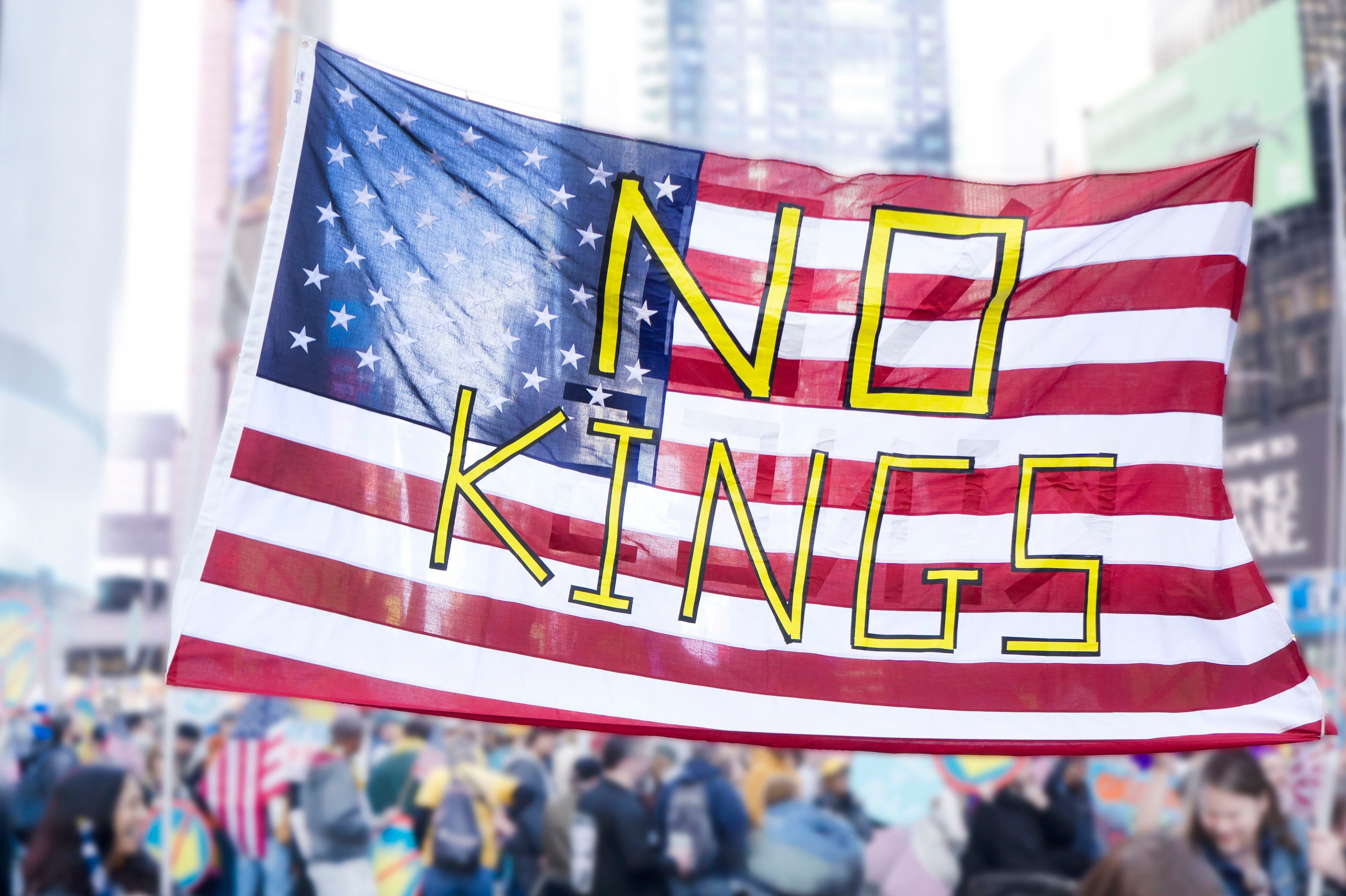
So, really think back over the last year: What has your politics consisted of? Joining the “No Kings” marches? Donating to pro-democracy candidates? Great. Arguing that Trump is obviously going to run for a third term? That he’s going to rig the midterms? Not so much.
Rather than serving as a warning, forecasting doom about democracy actually saps the citizenry of strength by increasing cynicism about voting and contempt for incremental victories. When the stakes are as big as “fascism,” everything else feels meaningless. Who cares about housing policy, energy policy, or the Affordable Care Act when we’re losing the rule of law?
But these policy wins create momentum. And research indicates that just “a small fraction of Americans prioritize democratic principles in their electoral choices.” I think there will be reasonably free and fair elections next year, and when they come, I hope that Democrats continue talking about health care, pitching real plans for housing affordability, and fighting against unpopular undemocratic actions by the Trump administration.
We tend to conflate fatalism for intellectual depth. Dooming is smart, and pointing out all the ways things are going wrong is a great way of signaling that you’re a Serious Person Who Gets It.
I’ve also noticed that many political prognosticators tend to be more interested in being right about what happens than actually helping shore up our democratic institutions.
Cards on the table, if the U.S. descends into fascism, I’m not sure I’ll care who called it.
The third, Timothy Snyder, is the only one of the trio who doesn’t totally embarrass himself. He explicitly states that he was not fleeing Trump. He is married to Shore, though, so I am a bit unsure what to make of this couple’s stated reasons.
I make an exception for immigrants concerned about being detained by ICE.
Every millennial writer gets one Harry Potter reference a year, this is mine.
Great essay to remind us about the danger of self-fulfilling prophecies. The 2026 midterms could be a huge victory for democracy. But we have to vote! And encourage others to do the same.
People think political cynicism protects them. What they don't often realize is that the line between "I know better than to expect better" and "I don't deserve better" is thinner than it looks.