


We’re hiring for a senior editor. The perfect person can read a social science paper and know what’s wrong with it, can bring out a writer’s voice in even the most technical commentary, and most importantly understands The Argument’s mission. If that’s you, apply! Even if you haven’t worked in traditional media before, don’t let that stop you, we hire from far and wide.
There’s a very funny paper about how many urbanist scholars themselves live in gentrifying areas, a phenomenon that the authors call “the elephant sitting in the academic corner.” Emily Badger, one of the best journalists on cities and urbanism, wryly pointed out that while the researchers were focused on the academic context, “the charge could reasonably be applied more broadly.”
From how much gentrification figures in our public discourse, one would think it was a leading problem plaguing urban neighborhoods. Even putting aside the contested question of whether gentrification is per se bad, the evidence we have suggests that it affects a tiny minority of places. The most recent research suggests that just 15% of urban neighborhoods (not even all neighborhoods) “show indications of gentrification.”
This overemphasis is a huge problem, because the biggest problem facing most poor people in cities is that their neighborhoods have too little investment, not too much. Moreover, while the classic story of gentrification — white yuppies displacing Black residents — has happened in some places, one would think a report subtitled “Fifty years of gentrification and Black cultural displacement in U.S. cities” would reveal that exact dynamic.
Instead, the report shows something quite different: From 1980 to 2020, the Black population in “gentrifying neighborhoods” went from 3.8 million to 3.3 million, the white population went from 6.3 million to 6.5 million.
The big changes are that the Hispanic population went from 1.9 million to 4.5 million and the Asian population went from 262,000 to 1.3 million. This is largely a positive story of immigration and urbanization producing even more diverse neighborhoods.
Media criticism these days is usually focused on ideological bias. The right argues the media is full of left-wing hacks, and the left points out that many media moguls are right-wingers. But I actually find ideological bias to be less concerning than the more fundamental problem that the class of people who determine the boundaries of debate share a set of demographic and experiential traits that they don’t recognize as distinctive.
This class of people includes journalists, yes, but also people who work in the tech industry, academics, nonprofit leaders, influencers, and those who work in politics. From now on, I’ll refer to this group broadly as “the messenger class.”
The messenger class’s distinctive experiences — like living in downtown Washington, D.C., or living in one of the parts of New York highlighted in red — shape the boundaries of normal in ways harder to counteract than pure ideological or partisan bias.
The messenger class plays a fundamental role in any democracy. Democratic self-governance requires not just fair procedures for making decisions but an accurate and shared picture of social reality to reason about. That picture is revealed through the communicated experiences of citizens, filtered through the messenger class, which decides which experiences are urgent and require intervention.
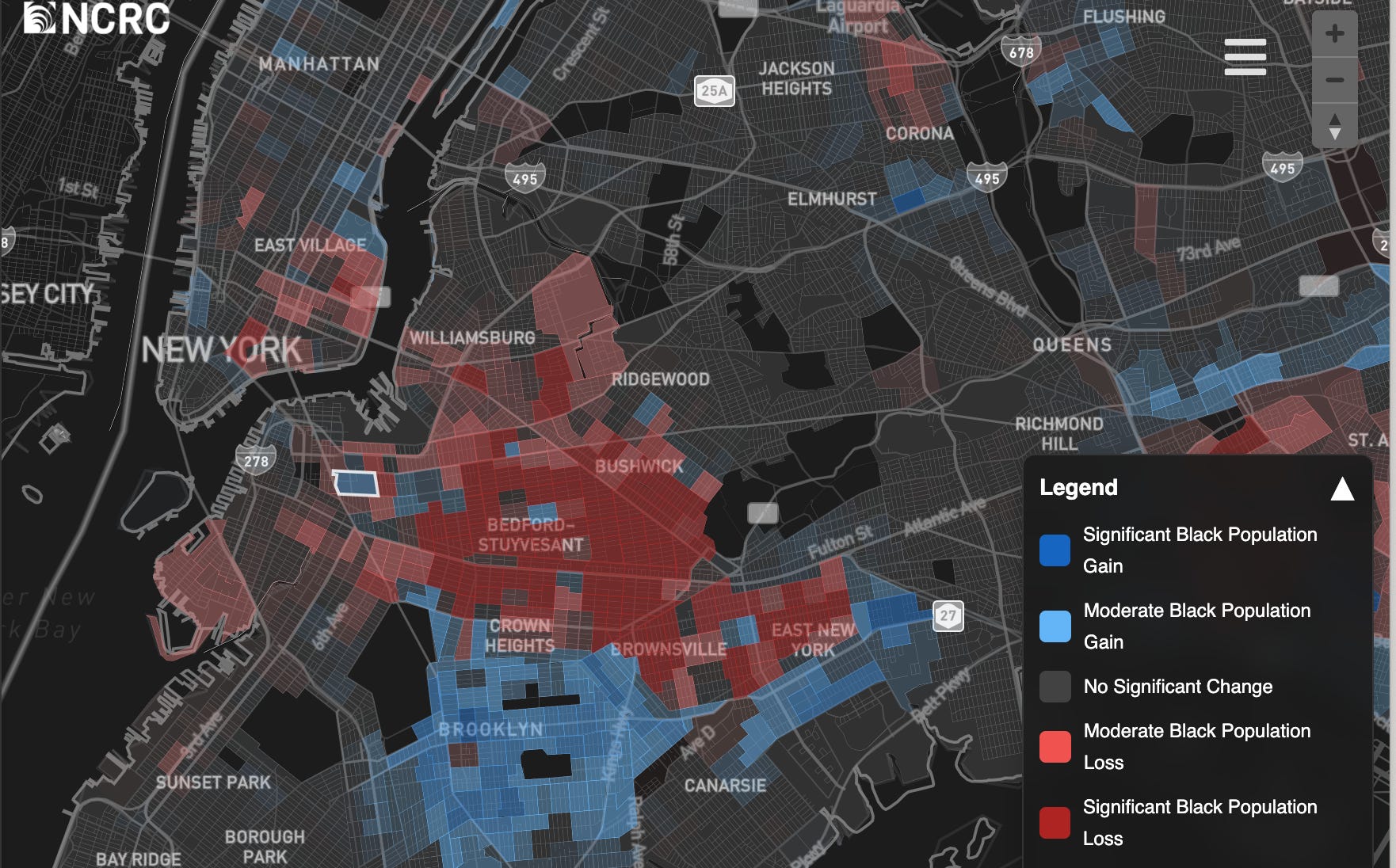
But if our mediating institutions are all staffed by people drawn from the same narrow demographic band, then the picture they produce will be skewed in ways nobody intends and few notice. This isn’t about whether the messenger class is full of bad people — it’s largely not — it’s about whether it’s even possible to know when you’re acting as a mirror to society, or a spotlight on what you personally happen to care about.
The opioid epidemic (some) media missed
Economists Carolina Arteaga and Victoria Barone recently published a study in the Quarterly Journal of Economics showing that the opioid epidemic — one of the most devastating public health crises in modern American history — drove a significant political realignment toward the Republican Party in the communities it hit hardest.
But the media coverage finding buried in their paper is just as important: Left-leaning media was notably less responsive to the crisis.
Higher rates of opioid-related deaths led to higher rates of coverage in right-leaning outlets, but not on the left.
Using data that places hundreds of local newspapers on a political spectrum, Arteaga and Barone found that right-leaning local papers covered the crisis more, and their coverage tracked local opioid deaths, that is, if there were more deaths in the community, then there were more stories in those papers.
Left-leaning local papers not only covered it less, but their coverage actually bore no statistical relationship to local conditions. The crisis could be devastating a community and the liberal-leaning paper serving that community would not increase its coverage.
At the national level, Fox News covered the opioid epidemic at 1.5 times the rate of CNN and 1.7 times that of MSNBC, but the local newspaper finding is in some ways more damning.
The epidemic was being discovered piecemeal, community by community, anecdote by anecdote. There was no comprehensive dataset or peer-reviewed study in a top economics journal you could pull up in 2002 that would tell you OxyContin was destroying Appalachian towns.
The signal was in the stories that local people told, the patterns that local reporters noticed, the community meetings where parents described losing their children.
It was exactly the kind of knowledge that democracies are supposed to surface through their mediating institutions — the communicated experiences of citizens filtering upward into public awareness.
Not every job is coding or writing articles
AI-driven job displacement is not a fake concern, but I’m convinced that the overrepresentation of software engineers and, to a lesser extent, journalists, is driving the discourse’s fever pitch.
Whenever I talk with software engineers who are terrified of AI, they exhibit a lot of fear about AI taking over the entire white collar job market. But not all jobs are primarily coding, and AI companies are, to a large extent, building digital machines that can code and write.
Anthropic’s own labor market research found that Claude currently covers just 33% of all tasks in the Computer & Math category, followed by office and administrative roles and business and finance. Arts and media occupations are also in the top tier. In other words, the industries producing the discourse about AI displacement are among the industries most exposed to AI. The people writing the stories are writing about themselves.
The most recent BLS data is from May 2024, and it shows that the most common occupations are home health and personal care aides, retail salespersons, fast-food and counter workers, general and operations managers, and registered nurses.
Chatbots and AI agents may one day be able to replace some of these jobs, but without large advances in robotics — which may never materialize — it’s strange to talk about an AI job apocalypse without acknowledging how unrepresentative our jobs are.
None of this means AI won’t be disruptive. But the current intensity of the discourse is mostly because the messenger class is experiencing anxiety about its own professional future and projecting that experience onto the entire economy. The country is not, in fact, undergoing a jobs apocalypse. Media and tech are having a rough few years. These are different things, but from inside the spotlight they look the same.1
The union revival that wasn’t
Starting around 2015, digital newsrooms across the country began unionizing at a remarkable pace. Gawker went first, but within a few years more than 100 media organizations had followed. The NewsGuild alone added more than 7,300 members.
Coverage of the labor movement surged. One journalist at The Los Angeles Times said that going through the organizing process made him “significantly more aware of potential labor angles to stories that he might have otherwise overlooked.” Another journalist switched her beat from heavy metal criticism to labor reporting after unionizing at Vice.
But instead of covering this phenomenon as a relatively small shift in a country that makes unionizing very difficult, reporters took their own experience, slapped on a couple of similar examples, and a labor revival was born. At least in headlines.
“Employees everywhere are organizing,” one CNBC headline read.
Another from ABC News proclaimed, “Amazon and Starbucks workers led a union resurgence in 2022.”
The New York Times wrote that “organized labor may be on the verge of a resurgence.”
It’s not that there was no labor activity to report on: Starbucks workers, Amazon warehouse employees, graduate students.
But the broader picture was much more pessimistic for labor: Union density remained near historic lows even during the recent burst of organizing. At the height of the so-called labor revival (2021-2023) the unionization rate actually went down.
The messenger class experienced a union wave within its own industry and covered it as a national phenomenon. Before 2015, when the messenger class was not unionized, a study of broadcast networks found that just 0.3% of stories covered unions at all. The spotlight moved not because the underlying reality changed, but because the spotlight operator’s personal experience did.
The psychology of projection
There is a name for what’s happening here. Psychologists call it the false consensus effect — the tendency to overestimate how much others share your beliefs, behaviors, and experiences.
First established by Ross, Greene, and House in 1977, it has been confirmed in a meta-analysis of 115 hypothesis tests and found to be a robust, moderate-sized effect. Later research shows that it persists even when people are warned about it.
Neuroimaging research has shown that projecting your views onto others activates the brain’s reward centers; it feels good to believe everyone is like you. And a 2021 study found that social media use amplifies the effect: The more time you spend in an environment where your views are echoed back to you, the more convinced you become that those views are universal.
The false consensus effect is usually studied at the individual level. But what I’m describing is a class-wide and industry-wide version.
It’s not just that any one journalist overestimates how representative her experience is; it’s that an entire class of professionals shares a similar set of experiences, confirms those experiences with each other on the same platforms, and then produces a body of public knowledge that reflects those experiences as though they were the norm.
And even when people from nontraditional backgrounds join the fray, they are incentivized to conform through social media, company cohesion, editorial norms, and the normal human urge to get along with your peers and be taken seriously by the people you respect.
So many problems, so little time
Agenda-setting is zero-sum.
There’s only so much time elected officials, charities, nonprofits, or businesses have to respond to the public’s needs. So if something is getting more coverage than may be warranted, that means other things are getting less. And that means fewer solutions are being explored.
Remember that gentrification report? It found that 15% of urban neighborhoods showed signs of gentrification over 50 years, while 26% experienced substantial population decline.
The far more common trajectory for a poor urban neighborhood is not invasion by white yuppies — it’s continued segregation, disinvestment, and deteriorating housing stock. But that story doesn’t get told with anywhere near the same intensity.
The same asymmetry shows up in the AI conversation. The workers most likely to struggle if displaced by AI are not the ones getting the most ink.
A Brookings analysis found that roughly 6.1 million workers face both high AI exposure and low adaptive capacity — limited savings, advanced age, narrow skill sets, scarce local opportunities. Eighty-six percent of these workers are women, and they’re concentrated in clerical and administrative roles in smaller metro areas.
I’m not arguing that journalists are dishonest, that scholars are corrupt, or that the messenger class is engaged in some conspiracy to distort public reality. The people I’m describing are, by and large, doing their best to tell the truth about the world.
The problem is that they’re drawing on their own experiences, their own social networks, and their own platform ecosystems as raw material — and those inputs are unrepresentative in ways they have no easy mechanism for detecting.
Part of this could be resolved with an increased fluency with quantitative data. But that’s not actually enough. Many stories — like the opioid epidemic — are ones that require journalists to respond to anecdotes before the quantitative data has been assembled, analyzed, and produced by the academy.
You may notice that all the examples I’ve picked are basically neutral for my particular worldview — abundance liberalism. I racked my brain for an example that would implicate me, but I couldn’t come up with one and at some point you have to just publish the story.2
This is where I’m supposed to come up with a solution.
One of the most amusing things about my infrequent visits to the Bay Area is how every single person has the same heterodox takes at the same time. All of them are reading the same people, the same off-the-wall phrase gets greenlit at the same time (remember when half of tech added e/acc to their Twitter bios? Or started saying “retarded”), it’s all genuinely funny to observe.
Until, of course, you realize you’re just as much part of a subculture as everyone else.
I don’t really know how you fix a problem like this, particularly because “being a part of a subculture” is just a normal part of existing in the world.
But we should be clear about what’s at stake if we fail. The messenger class spends a lot of time worrying about the threats of disinformation and misinformation but, other than a brief moment from 2020 to 2024 when newsrooms cared narrowly about racial diversity, not a lot of time thinking about how their own positions blind them to new stories.
If democracy requires an accurate picture of social reality to reason from, and the people who produce that picture exert a gravitational force pulling each other to look at the same things in the same ways, then the picture will always be wrong in ways that not even the best New Yorker fact checker can correct.
More from The Argument:
How the opioid crisis turned places Republican

The opioid epidemic is responsible for more than 800,000 deaths in the U.S. alone. Arguably the single best policy r…
Jon Stewart has become his own worst nightmare

Last week, comedian and political commentator Jon Stewart published an interview with Nobel Prize-winning economist Richard Thaler where Stewart revealed that despite his nearly 30 years as a prominent commentator on American politics and policy, he has…
I have the greatest pause with this section. Maybe the messenger class’s priorities are correct on the merits and a strictly representational chattering class would simply miss the fact that AI was about to destroy the labor market. Just putting this footnote here so in case that happens and none of us have jobs anymore I can tell my kids I hedged.
This just makes me more certain I’m right. If it were so easy to see one’s own blind spots, they, uh, would be called something else.
Isn't the Abundance version of this bias the fact that Abundance is extremely focused on the problems plaguing wealthy, coastal, blue-state cities? Abundance doesn't have much to say about the problems of red state governance.
Perhaps the solution is to replicate successes.
What are some cases when the messenger class managed to elevate an issue that wasn't part of their personal experience? How did it happen and how can it happen again?