

There is a curious polling phenomenon where a nontrivial share of respondents falsely claim to have voted for the winner of the last election. Whether they’re lying, misremembering, or rewriting history, “winner’s recall” is common enough that many reputable pollsters have observed it in past elections.
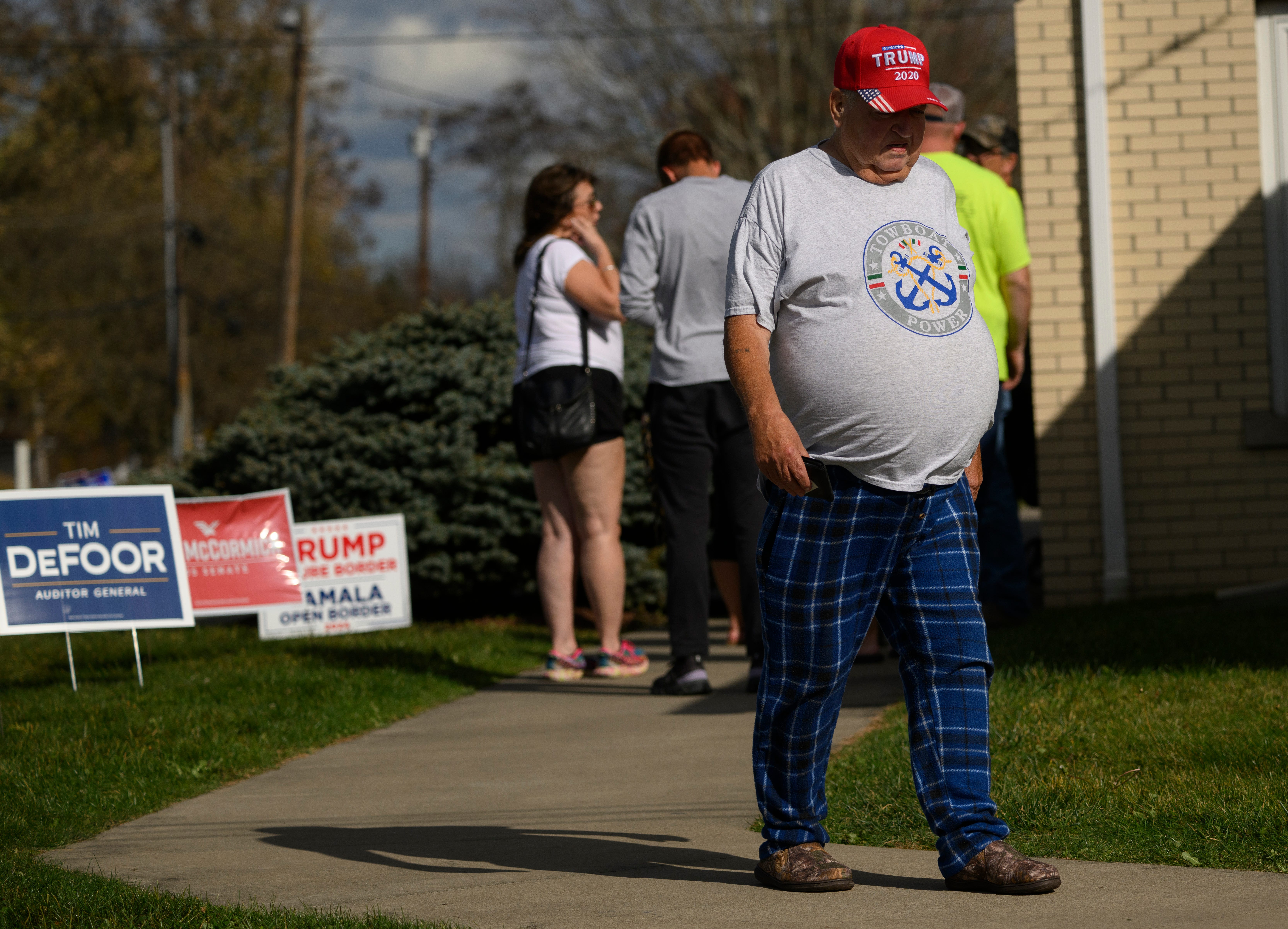
In our national polling of registered voters, though, we’re finding something different: a nontrivial chunk of people who are mad at Trump seem to suddenly have amnesia and no longer admit to having voted for him in 2024.
Voters abandoning the winning candidate is a pretty big reversal of a well-established phenomenon. But we now have enough data to suggest that it’s both real and the direct result of Trump’s unpopularity.
Let’s back up for a second. How do we even know who people voted for in the first place?
The day after the 2024 election, our polling partner Verasight collected data from every respondent in its panel about whom they voted for. For each new recruit who joined its pool post-2024, it asked for 2024 vote choice as part of the signup process.
In other words, a respondent’s 2024 vote is recorded as part of their profile at a time when it was fresh in their memory. As Nate Cohn of The New York Times explained, this kind of logging of past vote is more reliable (and significantly less noisy) than asking someone who they voted for months (or even years) down the line.1
But every survey, we also separately ask respondents whom they voted for so that we can see how people’s responses and memories drift and diverge from reality over time.
Here’s what we’re finding: six percent of Trump voters — as determined by the recorded vote data we have, which we’ll treat as the ground truth — don’t even admit to voting for him in the last election.
The evidence suggests that unhappiness with Trump’s performance in office is the reason these voters don’t admit to having voted for him any longer.
Approximately 15% of Trump’s 2024 voters disapproved of his job performance. Among this group, almost one in four didn’t admit to having voted for the president. Thirteen percent even falsely claimed to have voted for Kamala Harris, while 12% claimed they actually didn’t vote at all.
But among the 84% who voted for Trump and still approve of him, 98% correctly recalled having voted for him.
So we know that if a Trump voter disapproves of Trump, they’re more likely to (incorrectly) say they never voted for him in the first place.
I suspect this is down to respondents attempting to reconcile their memory of their previous vote with the way they feel right now. I call this “preference reconciliation,” and there’s a good amount of research to reinforce this theory.
Pollsters have previously observed voters abandoning their candidate in recalled vote. Back in 2024, when Biden was the unpopular presidential incumbent, Cohn told me that Trump was “occasionally do[ing] better on recall vote than the actual 2020 result.”
Back then, it wasn’t necessarily clear what this was down to. The Times/Siena poll certainly didn’t see this effect in 2020, and in past cycles, the recalled vote metric tended to overestimate support for the winner. This time, however, we’re seeing more confirmation of a suspected pattern: when voters really dislike the incumbent, they tend to claim that they never chose them in the first place.
Here’s more proof the effect is real: it also holds for Harris voters, as well as for nonvoters and third-party voters. For example, of the Harris voters who approve of Trump, 18% falsely recalled voting for him, while among Harris voters who disapprove of Trump, this number was just 0.4%.
And looking at respondents who didn’t vote for either Harris or Trump in 2024, those who approved of him wrongly claimed they voted for him over Harris by a margin of 43 percentage points to five, whereas those who disapproved of him reported voting for Harris over Trump by a margin of 19 points to five.
In other words, the evidence in favor of “preference reconciliation” is clear, consistent, and highly observable across every stripe of partisanship: Trump voters who dislike Trump are less likely to admit to voting for him, and non-Trump voters who like him are more likely to incorrectly claim they supported him.
You can imagine that at the start of his second term, when his political strength was arguably at its peak, this effect would have inflated Trump’s recalled vote share quite a bit. Now, the effect is the opposite; with the president’s approval rating sitting at a whopping -15 points in our most recent poll, there is no appetite among the electorate to align with Trump.
This doesn’t change anything about our polling, of course, because we don’t rely on this question. We’ve known for a while that asking people whom they voted for can be an unreliable metric, especially when the question is asked years from the day of the actual election. That’s why we rely on (and will continue to rely on) recorded vote instead.
But the effect is still important. When it comes to the recent and rapid decline in Trump’s support, this is probably one of the larger red flags we’ve seen. A small (but statistically significant) share of Trump’s own supporters don’t want to associate with him any longer due to dissatisfaction with his performance.
So much for the vibe shift.
More polling:
Immigration is turning into a disaster for Trump

The Minneapolis immigration raids have been a complete and unmitigated disaster for the Trump administration. Our latest poll, fielded in the days after the shooting of Alex Pretti in Minneapolis by immigration enforcement officers (Jan. 26 to 27, 2026) revealed a distrusting public increasingly souring on the administration’s handling of Minneapolis.
Trump is losing the working class

Donald Trump and the Republicans are losing their newest voters at alarmingly fast rates, leading to the rapid emergence of one of the worst political environments Republicans have seen in years.
This is also what we weight our surveys by.
This presumably causes problems for pollsters that weight on recalled vote and don't have the earlier panel data. I wonder if this phenomenon helps explain some of the swings in pollster accuracy by the newer polling firms that seemed to favor Trump heavily.
I've always wondered about what Trump voters will have to say in 10-20 years. I guess we know now.