

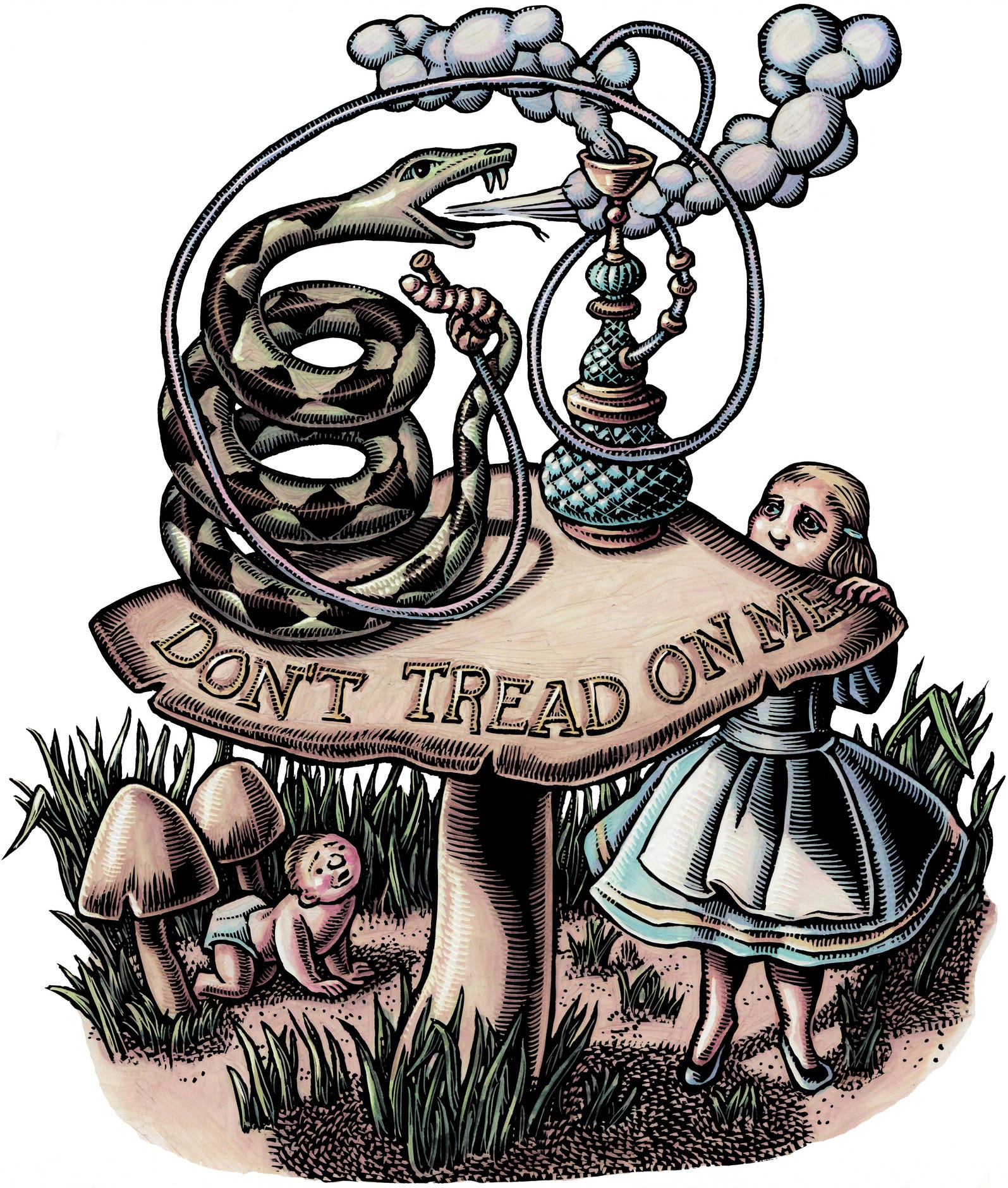
In America, while some classical liberals have called the Republican Party home, liberalism has largely been a Democratic Party project. So much so that it’s often confusing to refer to someone as “liberal” because everyone assumes you just mean left-wing or progressive.
But that’s not always the case. For instance, in Australia and Japan, the liberal parties are pretty conservative, and in many European countries like Germany, the Netherlands, and Belgium, the classically liberal party is center right.
All this is to say: Where various ideologies end up within a nation’s partisan governing system is contingent on history, legal frameworks, and constitutional design.
That libertarians ended up in the Republican Party was a concerted effort by people like William F. Buckley, founder and editor in chief of National Review, who sought to tie social conservatives and libertarians together under the banner of anti-communism.
Communism is less of a threat today. The real threat is the growing worldwide illiberalism, which is mostly right-wing (Russia) and authoritarian (China) in nature — though, through less official state apparatuses, it has undermined left-leaning movements as well.
In the U.S., the Republican Party has genuinely been taken over by the MAGA movement, which is illiberal on economics, culture, and politics. The Democratic Party is more of a mixed bag, with some new strains of classically liberal thinking popping up — including this magazine, as well as the burgeoning abundance movement, which largely springs out of the earlier YIMBY pro-housing movement.
In a recent essay for Reason, Ilya Somin offered friendly critiques of abundance liberals (including me by name) from a libertarian perspective. Somin welcomed the growing appreciation of a deregulatory approach to housing but pushed left-liberals to apply that same frame essentially across the entire economy. That is, become more libertarian.