

Welcome back to The Argument’s poll series, where we survey Americans on the issues everyone’s fighting about. Our full crosstabs are available below the paywall at the end of this post. Our last surveys have asked about AI, crime, gender issues, immigration and much more.
You can see every single poll published by The Argument here.
Our full methodology can be read here.
Who’s responsible for the war with Iran? The elites. Who pushed for “woke” ideology and paper straws? Same answer. Who drove Graham Platner’s self-implosion? Take a guess.
But who are the elites?
If you ask The Manhattan Institute’s Christopher Rufo or the proponents of the Department of Government Efficiency (DOGE), the elites are university professors, government employees, and college-educated voters. Disconnected and out of touch, these are the groups who leveraged their immense cultural power to push “woke ideology” onto children, students, and society alike, prompting the largest culture-war backlash of the modern era. If there is an “elite” in American society, these groups would be it.
But our survey research suggests that voters don’t agree at all. In our latest poll of 3,000 registered voters, fielded nationally between July 20 and 26, the electorate wasn’t remotely sympathetic to the right-coded view of elites that has dominated the social media airwaves over the last few years.
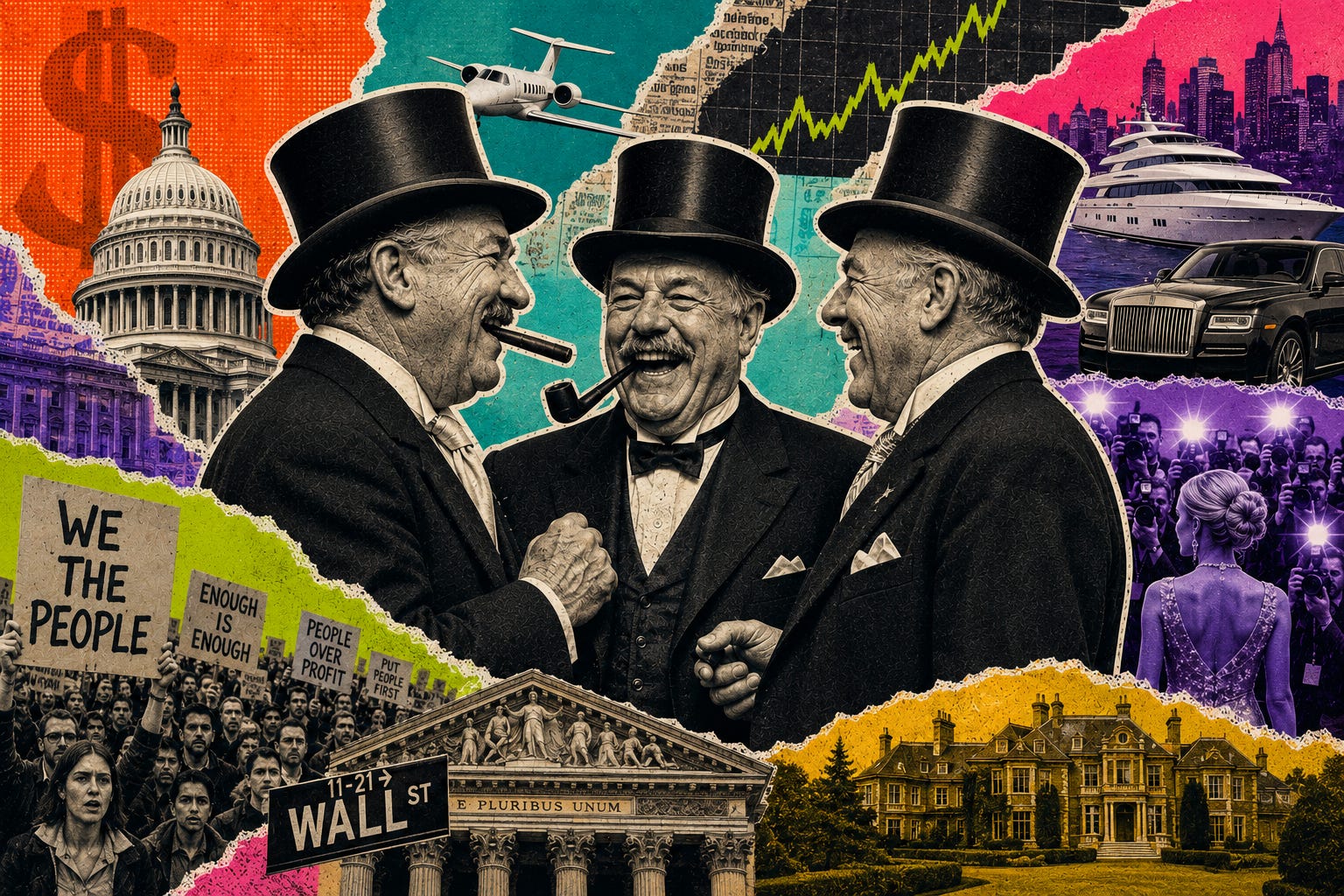
In other words, vanishingly few actually believe the Rufo or DOGE-centric view of who commands status. Voters don’t think college professors, journalists, and academics are actually among the elite. Instead, that label is reserved primarily for billionaires and celebrities, with significant agreement for grouping “elected officials” and “business executives” among them as well.
That view of elites is far more aligned with the Democratic rhetoric of 2026, where billionaires have become the left’s favorite target in ads and campaign speeches. I think this also helps explain why this specific message (billionaires are bad) has gathered so much more electoral power than the Democratic campaign rhetoric of 2020, which was centered on Medicare for All and left-wing social justice movements.
After all, Americans are angry at the status quo, and when that kind of ire is raised, it naturally gets aimed at the groups that people think hold the power to shape society.
If you’re a political party, it’s surprisingly potent for the public to agree with your definition of who an “elite” actually is. Because one thing is clear in our poll: Americans overwhelmingly think elites — whoever they are — don’t share their values.
For example, we found broad support for free trade, increased funding for public schools, and a government-provided form of universal health care.
While voters claimed that they wanted these things — and believed that the majority of Americans agreed with them — they also overwhelmingly felt that elites were much more likely to disagree.
I am good, most Americans are good, and the elites suck
In addition to asking people what they think about elites, we also asked them what views they think elites hold as well as what views they think the American public at large holds. The pattern that emerged was clear: Most people think their fellow Americans agree with them while elites disagree with them.
While voters’ view of who elites are is consistent, voters’ perception of elite ideology is not.
When asked about government ownership of businesses, voters were overwhelmingly in opposition, but a sizable minority believed that elites were far more favorable toward such left-wing policies. However, when asked about increased public school funding, for instance, voters mostly held the traditionally supportive liberal view, while a plurality perceived elites to have the more right-wing opposing stance.
Put another way, if you take these results at face value, then a large chunk of the electorate seems to reflexively think that the elites are simultaneously more liberal and more conservative compared to them (and to the majority of Americans) all at once.
The more cohesive interpretation is that the electorate sees elites as believing in everything that ordinary people don’t agree with. To be elite is to be the opposite of the average American.
This goes far beyond policy. The disconnect with “elites” isn’t limited to a difference of opinion on political preferences or desired governmental outcomes. Voters overwhelmingly believe that elites just don’t see the world in the same way, that they are nothing like them (or the rest of America).
Even when it came to macro views about the world, voters felt that elites were far different across a host of topics. For instance, most voters opposed the idea that men should be breadwinners, agreed that women and men were equally suited to leadership, and thought that society was harsher on women than men.
These views were broadly in line with what voters thought the majority of Americans believed.
They were notably different from what voters felt elites in America believed.
One obvious retort to this is to cite “social desirability bias.” Perhaps many voters do hold traditional views about gender roles but simply don’t want to share them with a pollster. While some voters may be lying (both to pollsters and maybe even to themselves) about their views, I don’t think this explains the source of the disconnect. Voters don’t just think elites are different from them; they think elites are very different from the majority of Americans.
The billionaire, celebrity, politician, business executive is quite unpopular
So, voters understand elites to be different from both themselves and the majority of Americans. What does that mean for anti-elite politics in the Democratic and Republican parties?
Here’s how I see things: There’s a very clear opening for Democrats to take an anti-elite lane because the public agrees with them on who those people actually are.
Meanwhile, much of the right is obsessed with casting liberal institutions as the real elite. Rufo, a prominent anti-DEI advocate, characterized “the elites who are undermining our country” as “a small number of people with influence in the knowledge-based institutions” like schools, universities, churches, and the media.
Patrick Deneen, the postliberal-right author of Why Liberalism Failed, characterized elites as the “laptop class.”
But voters clearly don’t agree with this definition. Voters don’t think journalists, college professors, government employees, or white-collar professionals with graduate degrees constitute the elite. They do, however, think that billionaires, celebrities, and, to a lesser extent, business executives and politicians are a part of that. And that’s a problem for Republicans because the standard-bearer of their party right now is a billionaire, celebrity, and business executive who is openly profiting from the presidency.
Unsurprisingly, he is extremely unpopular.
I’m not saying that Donald Trump’s only Achilles’ heel is his corruption. Nor am I saying that voters are singularly focused on it.
After all, this is Trump’s second term in office, and his first wasn’t exactly ethically straightforward. So if we weren’t facing high-saliency issues ranging from cost of living to an overseas war, I might not think it matters as much.
But we are, and it does. Trump is more vulnerable than ever before, thanks to a host of self-inflicted wounds around policy and insider trading. And while you can’t get everyone to agree with you on policy, you probably can get most people to agree with you on a thesis like “the president shouldn’t flout the rules and profit from his office.”
That’s why I think the door is open for Democrats to prosecute a host of highly effective anti-elite campaigns and messages.
As The New York Times’ Nate Cohn has said, a clean campaign that effectively rages against the elites (like that of Paige Cognetti or Jon Ossoff?) might be one of the only credible ways remaining for Democrats to keep their base on board without engaging in costly ideological fights that tarnish the nominee’s appeal in a general election. Such a platform could be especially relevant in 2028, when the Democratic Party is almost certain to face incredibly disruptive debates over its future direction.
The broader thing that our poll suggests is that Republicans and conservatism are on track for a disastrous 2026 at all levels. Voters agree with Democrats on who the elites are, trust Democrats more on the most important issues, and are disgusted with the current administration.
Though I’ve said this several times, it still may come as a surprise to a lot of readers. After all, if you follow the headlines, you’ll struggle to see any good news for Democrats. The party, wracked by infighting and contentious primaries, has seen a string of incumbents lose their elections. And the DNC is deeply in debt and trails its Republican counterpart by over $100 million in cash.
So it might be surprising when I tell you that this is still perhaps the bluest electoral environment in two decades. And the reason is simple: People may not love Democrats, but right now, everyone hates the Republicans.
Consider three important electoral metrics from our new poll. To begin with, Democrats actually held an edge on party favorability. And while they’ve held this sort of edge for a while, this is the largest we’ve ever seen it in our polling.
More importantly, this is actually translating into both trust and votes. Democrats held a substantial trust edge on every single tested issue except crime. That includes traditionally Republican-friendly issues like the economy as well as traditionally Democratic issues like health care (the two of which were, by some distance, the most important issues to voters).
So, it shouldn’t be too surprising that the party remains in an exceptionally strong position to flip the House, while having a real decent shot of flipping the Senate. Our poll found Democrats with an 8-point lead on the generic ballot — a lead that expands to a gobsmacking 10 percentage points among voters who describe themselves as “likely to vote” or “very likely to vote” in 2026.
How is it that Democrats are in such a good position electorally, despite headlines showing disaster after disaster for the party? I think the answer is simple: Democrats may have their problems, but they’re not the ones exacerbating a cost-of-living crisis with a deeply unpopular war. That distinction goes to Trump, and it’s why he once again sits at a 60% disapproval rating, with nearly 50% of voters “strongly disapproving” of him.
In other words, people are angry, and they’re taking it out on Republicans.
METHODOLOGY
Our poll was fielded between July 20 and 26, 2026, and surveyed 3,000 registered voters across the nation. The sample was weighted to be representative of the universe of registered voters in the United States by race; age; gender; education; census region; race by gender; age by gender; race by education; modeled presidential partisanship by age, education, and gender; and 2024 vote choice. The margin of sampling error was plus or minus 1.8 percentage points. The design effect of the survey, which measures the loss of statistical precision due to weighting and design, was 1.20. Accounting for the design effect, the full margin of error was plus or minus 2.0 percentage points.
This survey was designed and weighted by The Argument. Data collection was performed by Verasight, and voter file data and weighting targets were obtained from Catalist. A full methodology statement is available on the last page of the survey PDF. A detailed explanation on how our surveys work is available here.
Thanks to Josh Kalla, Amanda Iovino, Guy Molyneux, and Carroll Doherty for reviewing this month’s polling language. As part of The Argument’s polling advisory committee, these experts have provided comments to ensure the rigor and objectivity of this polling project. They are not responsible for the ultimate language choices made by The Argument, and all errors are our own.
This is insane. What is making people think the elites support the government owning most businesses?
Great poll and article!!!
And I was gonna say it is very funny I gotta say a lot of billionaires larp as “anti elites” and then realized me growing up fairly privileged myself in Japan (my dad is a retired CEO of bookstore chain), that’s how I was told growing up too.
Like “we are merely middle class. Look at all those ppl who are richer than us”
I think this type or mentality where we draw the line for elite slightly above us is very common