

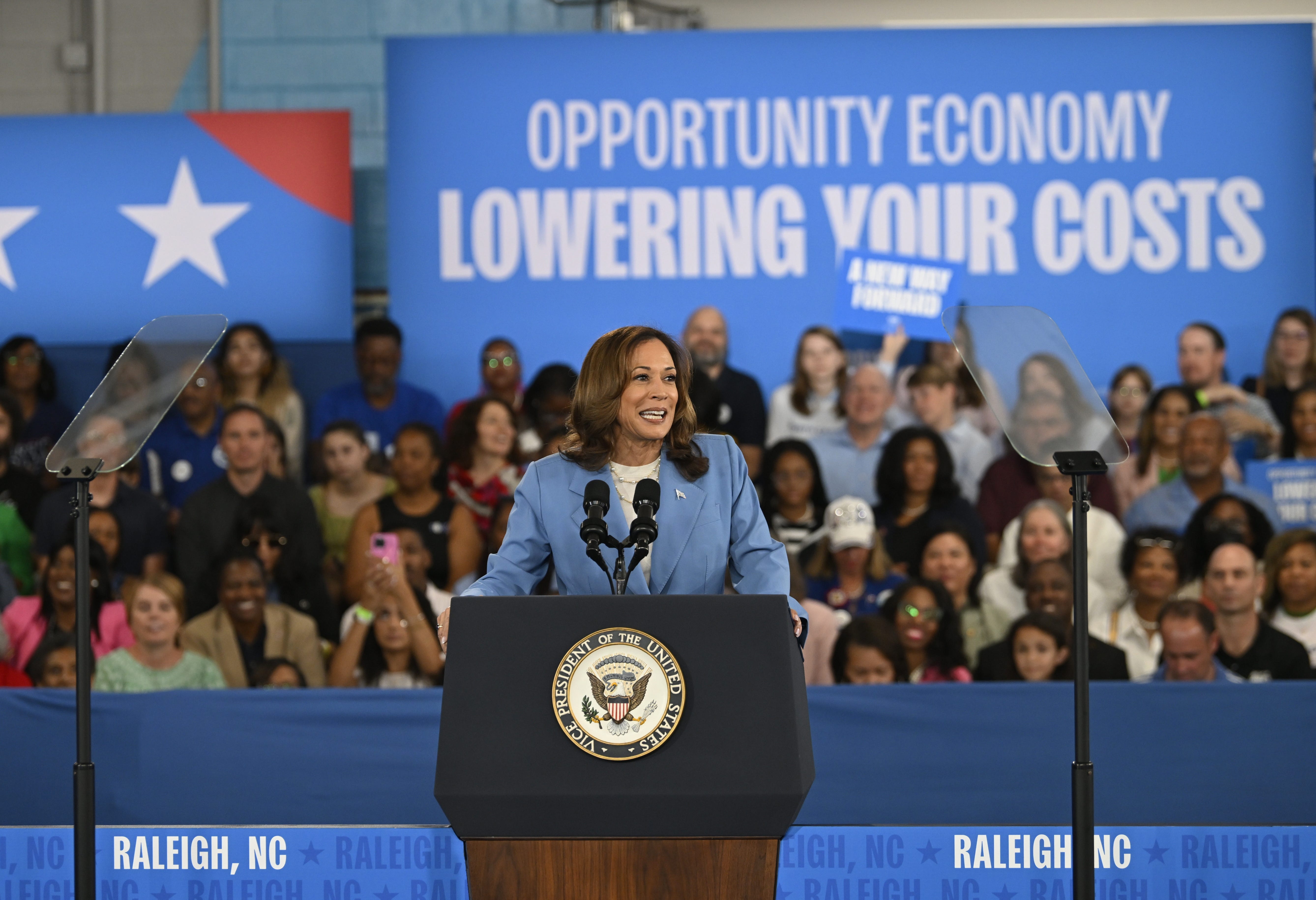
For years, poll after poll has said the same thing: Affordability dwarfs every other concern in American politics.
This is why Donald Trump’s horrific numbers on the economy are so alarming for Republicans. And they’re not unwarranted — Trump unilaterally raised tariffs and helped push prices higher, even as the public was stretched thin from the COVID-19-inflation years. Democrats have seized on the issue in response, making affordability the centerpiece of their rhetoric in the second Trump term.
If politics were easy, that might be the end of the story, where the party associated with making life more expensive would simply lose all of the voters upset about high prices. But that isn’t really what’s happening. A lot of voters who say they’re being crushed by prices, and who blame Trump for it, still aren’t willing to reward Democrats as a result of the pain.
First, a bit of context. It is hard to overstate just how important affordability is to voters. In The Argument’s most recent survey, a full 60% of respondents rated cost of living as one of their two most important issues. Nothing else even came close.
What’s more, it’s clear voters absolutely detest the way Trump is handling it. His inflation approval in Silver Bulletin’s tracker sits at -28, which is abysmal. And in our surveys, the president has lost the most ground (by far) among voters who rank cost of living as a top-two issue.1
So why aren’t Democrats doing better on the issue?
I know that sounds weird. After all, we just had an election cycle in which vastly different Democratic campaigns all said “affordability” nonstop en route to a wildly successful November. Whether it was Abigail Spanberger in Virginia, Mikie Sherrill in New Jersey, or Zohran Mamdani in New York, every Democrat hammered the theme nonstop.
The problem is that talking is only one part of the solution. Voters have to trust you on it too. And one thing is clear: A lot of voters don’t like the way Trump is handling the economy, but they simply aren’t sold on Democrats as the alternative. Among voters who care most about cost of living, Democrats win just 50% of the vote.
When it comes to people who disapprove of Trump for other, noneconomic reasons, Democrats have done a pretty good job of sealing the deal. Trump disapproval tracks very closely with Democratic vote share among people who don’t rate cost of living as a top-two issue. But when it comes to economy-focused voters, there is a fairly pronounced and unique gap between the two, as Democrats lag far behind Trump’s disapproval numbers.
Is it because these voters are simply unwinnable for the Democratic Party? I’m not so sure. When you split it out by ideology, you’ll see that Democrats actually have the most room to gain with self-identified moderates; although 65% of the economy-oriented moderates disapprove of Trump, just 55% intend on voting for Democrats in 2026. A similar pattern is observed among self-identified conservatives.
How does this square with the stories everyone has been reading? Keep in mind that most of the narratives that have dominated the media have been about the nonwhite “affordability voters.” Those are longtime Democratic voters that briefly swung to Trump in 2024 over inflation and the economy. And while it’s true that Democrats are doing well with those nonwhite voters, they’re also just doing very well among nonwhite voters in general.2
Meanwhile, Democrats are lagging significantly with white voters who prioritize cost of living. In fact, this is the single biggest untapped source of potential gains for them, where there are a massive number of Trump-disapproving voters who simply haven’t come around to voting for the Democrats yet. (This is especially important when you consider that roughly 70% of the electorate in America is white.)
Will these voters come around? Perhaps. We’ve already gone over a lot of data showing that as the midterms near, voters start warming to the opposition party. In many ways, these findings could also be viewed as especially rosy for Democrats, as they lead by 6% with registered voters in our most recent survey despite this dynamic. It’s certainly reasonable to predict that a lot of these voters (and especially the moderates) will come to their side as time passes, especially given Trump’s unpopularity and the horrible economic sentiment.
But it hasn’t happened yet, because a lot of white, moderate, and conservative voters alike simply aren’t buying the Democratic pitch on affordability at the moment. Whether it’s because of a lingering hangover from 2024, where a deeply unpopular Joe Biden presided over a 21.5% rise in prices, or because voters can simply observe that most of the highest-cost-of-living cities and states are run by Democrats, it’s going to take more than saying the word affordability five-times fast.
If the party does figure it out, however, their political ceiling is far higher than anyone — except maybe the most optimistic liberal — currently recognizes.
A note to readers: At this point, we are going to jump into our aggregated survey data, because the sample sizes are larger and lend themselves to more stable subgroup analysis. However, all of the trends discussed here hold for our most recent survey as well.
It will be interesting to see if voters in 2028 and 2032 have the same bias toward Republicans on the economy that characterized the early 21st century.
More pessimistically, the parties seem too optimized for Democrats to win a blowout victory on affordability. The party machines exist to extract concessions from the general public for their core voters as much as win elections, and if Democrats start to sense a blowout victory, they will probably adopt more extreme positions rather than run up the score. This in spite of the fact that structural factors (the Senate map, incumbency bias, etc) make the marginal benefit of winning more than a narrow victory pretty high.
I feel like I’m pretty informed on public policy and I’m genuinely not sure what the party pitch is on affordability. Like going all the way back to 22 it’s been hard to even get a clear explainable theory of how this gets solved.
Add to that that these kind of issues on social media don’t light up our brains the way social justice questions do and it seems bad.