


If you’ve been enjoying The Argument and would like to share it with friends and family for the holidays, you’re in luck! You can save 15% now through Dec. 24 when you gift a subscription to The Argument using the link below.
And for those of you looking for something more tangible, we’ve also got merch — our hats and “Libbing Out!” stickers are now online. Order ASAP to receive them before the end of the holiday season!
Gender essentialism is trendy again (although, of course, it never really went away).
In the 1990s, the Men Are from Mars, Women Are from Venus book series was inescapable. Marketed as a guide for confused spouses trying to figure out their partners, it asserted that the sexes think and communicate in wildly divergent ways.
The book became the best-selling nonfiction book of the entire decade, spent 121 weeks on The New York Times’ bestseller list, and spawned at least 14 follow-ups, including Mars and Venus in the Workplace and The Mars and Venus Diet and Exercise Solution, not to mention infomercials, dietary supplements, themed vacations, weekend seminars, and several touring stage shows.
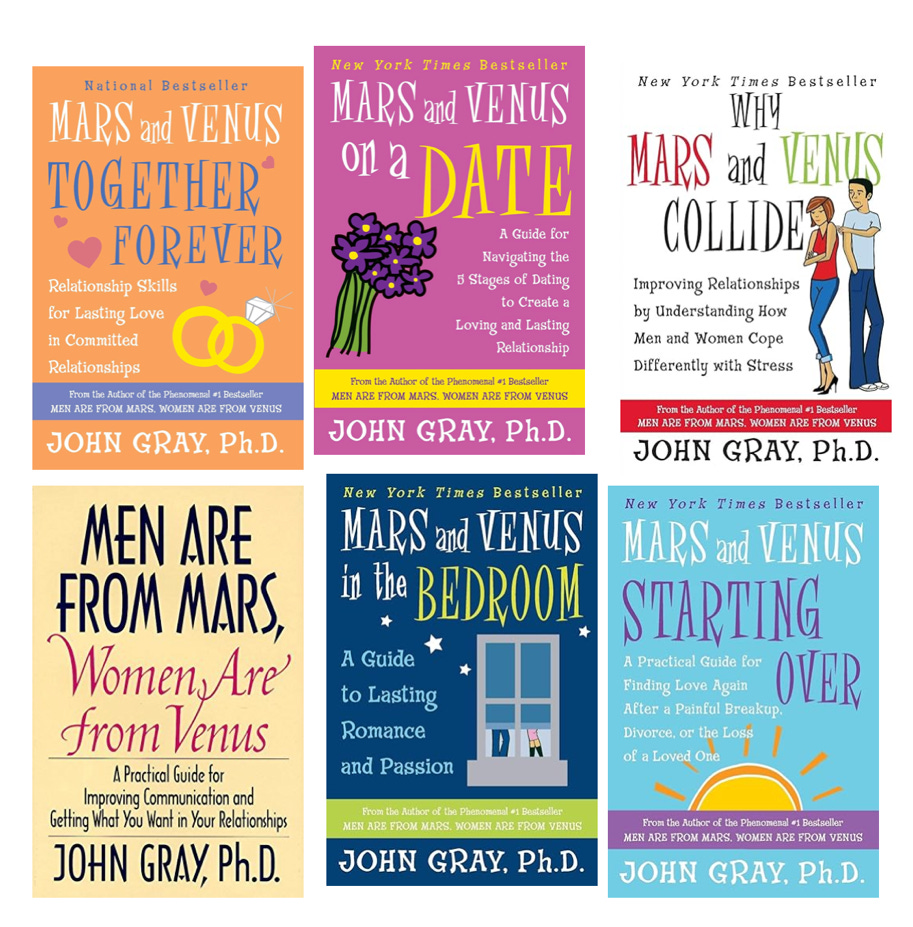
The series also inspired scores of imitators, like 1998’s Why Men Don’t Listen and Women Can’t Read Maps, by Allan and Barbara Pease, who followed up with the similarly titled Why Men Lie and Women Cry and the clunkier Why Men Don’t Have a Clue and Women Always Need More Shoes.
Most people understand the oversimplified gender slop exemplified by these books as silly and dehumanizing to both sexes. Plenty of men listen and tell the truth, just as lots of women can read maps and don’t care about shoes.

But because we’re in the Age of Discourse, anti-anti-gender essentialism has reared its head. It’s now trendy to make sweeping, gender-based claims with transgressive glee, as if one is revealing forbidden truths that the woke media and universities don’t want you to hear.1
As a researcher who studies fatherhood and sex-specific hormones like testosterone, I agree that biological sex differences are real.2 But acknowledging sex differences need not lead us into biological essentialism. The problem with Men are from Mars, Women are from Venus thinking isn’t (just) that it’s offensive, it’s that it’s wrong.
In fact, part of why it’s offensive is that it is wrong.
Why are we talking about this again?
The most prominent recent foray into the Mars and Venus universe came from Helen Andrews, whose essay “The Great Feminization” claimed that women’s entrance into elite professional institutions like law and academia has undermined these professions. Men, in her telling, are the direct, truth-seeking sex; women, the woke scolds salivating to report you for thought crimes.3

Never mind that the people actively undermining our institutions are mostly square-jawed men out of central casting, who have assiduously fired women and minorities in order to replace them with less-qualified men — and who have decided that the rule of law doesn’t really matter when a friendly crypto bro bribes you with a ballroom, a jet, or a paper bag full of cash.
Although Andrews’ perspective has been treated with varying degrees of seriousness by commentators, even her critics have asserted that acknowledging biological sex differences is effectively impossible in academia.
For instance, the writer Jesse Singal recently claimed that “in most corners of academia where those on the political left dominate — so in most corners of academia — the idea that biological factors could contribute to sex differences between men and women is seen as pseudoscientific, if not offensive.”
In support of this claim, Singal cited an academic article that stated, “Difficulties with making or maintaining close bonds between men is [sic] not attributable to biological gender differences but instead to stringent ideological barriers that men face in the formation of nonromantic social ties.” Singal calls this “blank slate view” a “radical theory.”
But close bonds between men are common in many cultures and across history. Just look at the ancient Greeks, who idealized male friendship as the highest form of love, or the strong bonds forged by men within Samurai culture in medieval Japan, or the many contemporary cultures, including those in North Africa, South Asia, sub-Saharan Africa, and Latin America, in which straight men show visible affection toward each other.
It is indeed quite likely that “biological gender differences” do not explain male bonding difficulties in industrialized societies, but rather that these are products of culture and socialization. Generally, if a factor is well-explained by biology, it’s conserved across different cultural and historical contexts and not contingent on where you’re measuring it.
The key here is that responsible academics don’t refrain from talking about sex and gender, but they aim to do so accurately. In truth, the evidence for a well-defined “Mars and Venus”-style divide between men and women is surprisingly weak.
A 2012 study parsed 13 studies comprising 13,301 individuals that reported on 122 unique traits and behaviors in order to test whether gender differences are truly “taxonic” — that is, whether you can detect two distinct clusters that can be clearly sorted into “male” and “female” — or “dimensional,” unfolding along a continuum without strong bimodal peaks.
When data is taxonic, members consistently fall into separate groups, strengthening the case for fundamental difference. Except for a handful of metrics, such as physical strength and body dimensions (weight, height, shoulder and hip breadth), statistical tests found that differences were consistently dimensional, telling us that women and men are not so much qualitatively different as they are spread out along a continuous distribution, with most people of both genders falling into a mushy middle.
This was true for sexual behaviors (preference for casual sex for example), success orientation, interest in science, personality traits, aggression, agreeableness, intimacy, social support, and attitudes about parenthood. It was also true of a construct labeled “moral orientation,” which assessed adherence to “justice” (“the difference between right and wrong”) and “care” items (concepts like “intimate relationships” and “caring for others”) — the exact types of attitudes that, according to Andrews, have been most shifted by “feminization.”
The evidence tells us that men and women aren’t particularly divided on these kinds of values after all. There are plenty of “care”-oriented men and “justice”-oriented women, and a person’s gender frequently tells us less about their values than does their class, education, religion, or political affiliation.
The 2012 “taxon” study built on a 2005 review of 46 meta-analyses (each one a round-up of multiple published studies) that calculated 124 effect size estimates of traits and behaviors including mating preferences, parental investment, cognitive function, self-esteem, and cultural values.
For about 80% of the effect sizes, gender differences were either weak or nonexistent, leading the authors to conclude that evidence favors the “gender similarities hypothesis” over the “gender differences hypothesis.”4 A 2015 follow-up used data from over 20,000 individual studies, which included over 12 million participants, and concluded that, while a few real gender differences emerged, overall effects were small and “the obtained findings were more consistent with the gender similarities hypothesis … than the gender differences hypothesis.”
The takeaway here is that, while we can definitely pick up on some gender differences when we measure large groups of people, they are generally not strong, universal, or prescriptive. People are flexible, shaped by culture and context, and men and women are more alike than different.
A 2021 review extended that examination to brain differences between men and women and found that, once you adjust for the fact that men’s brains are larger because of their bigger bodies,5 male and female brains are essentially identical, with sex and gender explaining only about 1% of the total variance in brain structure and function. As the researchers conclude, “The brains of male and females [sic] are not dimorphic (like the gonads) but monomorphic, like the kidneys, heart and lungs, which can be transplanted between women and men with great success.”6
In short, knowing someone’s sex tells us a little (but not a lot) about how they’ll behave or how their brain might look. If you plot most traits on a chart, with red dots for men and blue dots for women, you’ll see a big purple smear of overlap with sprinkles of red and blue out at the margins.
Gender essentialism is a poor theory of everything
Responsible academics talk about sex and gender not just accurately but carefully. This is not because of cancel culture but because good researchers should be careful about all their claims. It’s all too clear from both contemporary and historical examples that far-from-settled science might get distorted by culture warriors like Andrews.
Sexism in neuroscience has been around exactly as long as neuroscience. Paul Broca, a founding father of the field, argued that women were less intelligent than men on the basis of their smaller brains, which indicated “intellectual inferiority.” His disciple, Gustave Le Bon, invoked Broca’s craniometry data to argue against education for women, likening women’s brains to gorilla brains and calling intelligent women “monstrosities.” These ideas were echoed by Darwin, Freud, and scores of intellectual and political leaders, many of whom drew upon early brain studies to justify the exclusion of women from universities and workplaces.
These narratives weren’t overturned until women entered the field themselves. Physicians warned that education would render women infertile, because academic study taxes a menstruating woman’s constitution. In 1876, the enterprising researcher Mary Putnam Jacobi (whose own father called her medical career a “repulsive pursuit”) collected her own data to test this question,7 finding no evidence that women were intellectually incapacitated during menstruation.
Psychologist Helen Thompson Woolley was the first to empirically compare men and women. Her 1900 dissertation, which assessed the intelligence, memory, sensory sensitivity, and motor skills of men and women, found more similarities than differences, overturning the received wisdom of the time.
When it comes to the behavioral sciences, contra Helen Andrews, feminization was necessary for the pursuit of truth and justice.
Later in the 20th century, anthropologists like Margaret Mead challenged universalist explanations of behavior by showing how much cultures vary in their attitudes about mating and parenting. Indeed, any claim that biology drives behavior must be examined in light of counter-evidence that culture and socialization matter. (It’s true that testosterone is a hell of a drug, but it’s also dynamic and responsive to context — it changes when men become parents, for example.)
Take the workplace behaviors that Andrews’ essay blames on women, like face-saving and choosing gossip over direct conflict. There’s a large research literature on cross-cultural differences in confrontation: Japanese workplaces emphasize harmony, consensus, and adherence to social norms while discouraging open disagreement, but they are also male-dominated, with among the lowest rates of women in leadership in the developed world.
Nordic cultures prize greater directness but also have strong representation of women in corporate and political leadership. Are their workplaces more “masculine” or more “feminine?”
These are, fundamentally, stupid questions. Gender essentialism is, ultimately, a poor Theory of Everything.
The good thing about science is that it’s constantly evolving and (at its best) self-correcting. Every finding is a brick in a larger scientific wall that gets built and rebuilt over time. Sometimes you figure out that a brick is a bad brick, and you need to replace it with something better. And sometimes, you need to tear down a whole section of wall and start over.
Good science should be falsifiable, which means that you can collect enough data to refute any theory. This gets tricky when the public needs clear communication and direction, as in the case of the COVID-19 pandemic; the science on mitigation measures like masking and vaccination changed as the pandemic evolved, and certain corners of the internet, incentivized for bad-faith takes, cooked up conspiracy theories.
As someone who’s had my own studies misinterpreted and slopped back to me (a phenomenon that has become more insidious with the rise of AI), anticipating how scientific work might get twisted has unfortunately become bundled into the process of conducting research.
Ultimately, research on sex and gender always gets filtered through cultural lenses. For decades, the false claim that women are better multitaskers (based partially on now-debunked evidence that women have a thicker corpus callosum, which connects the left and right hemispheres of the brain) has been used to justify unequal divisions of household labor and women’s ownership of the mental load. Women are better able to watch a child while also catching up on work and making dinner, the story goes.
But we could just as easily cite that (fake) multitasking evidence to argue that women make better truck drivers, engineers, or senators, able to integrate competing strains of information. On the flip side, we rarely use the purported evidence of men’s superior spatial skills to argue that they should be in charge of home organization, vacuuming, or loading the dishwasher. Culture shapes how science is received, just as surely as science shapes culture.
In the meantime, there’s one thing we do know for sure about men and women: We are not from different planets at all, but from the same place — Earth, where we will need to learn to live together.

I notice a similar naughty frisson among the “race realists.”
Ironically, the biggest recent blow to scientific engagement with sex and gender comes not from the woke mob but from the defunding of scientific studies that include such controversial “banned” words as “women” and “female.” Texas A&M University is now restricting whether instructors can even talk about sex and gender in class — true cancel culture in action!
I won’t fully engage with “Great Feminization” discourse here, since her thesis has been thoroughly explored in excellent pieces by skeptical writers including Maia Mindel, Ivana Greco, Matthew Yglesias, Jim Dalrymple II, Dana Theus, Kate Manne, Richard Reeves, Elena Bridgers, Audrey Horne, Joe Duncan, Kara Van Cleaf, and many others.
Not everyone agrees with these conclusions. For example, some researchers have argued that if you combine male-female differences across multiple traits, distinctions come into sharper focus. One study used a statistic called Mahalanobis D, essentially a multivariate effect size, to detect much larger gender differences than had been reported in other studies. However, by lumping together variables that may not track together, their method exaggerates group differences. As one critic wrote, “If one takes a large enough set of psychological measures and then takes a linear combination to maximize differences, one can get a big gender difference … Overall, then, this application of Mahalanobis D produces results that are biased toward finding a large difference … and it appears to yield results that are uninterpretable.”
Brain size is well-known to scale with body size, but female brains have equivalent brain surface area and neuron density due to a more tightly folded cortex.
The paper ends with this mic drop of a conclusion: “Most neuroscientists assume this ambiguity will be solved through technical improvements: that larger studies, using higher resolution imaging and better processing pipelines, will uncover the ‘real,’ or species-wide differences between male and female brain structure and connectivity patterns. However, the present synthesis indicates that such ‘real’ or universal sex-related difference do not exist. Or at best, they are so small as to be buried under other sources of individual variance arising from countless genetic, epigenetic, and experiential factors … These findings can be interpreted as rebutting popular discourse about the ‘male brain’ and ‘female brain’ as distinct organs.”
Jacobi was a true scientist; after being diagnosed with a fatal brain tumor, she published one final, evocatively titled work: “Descriptions of the Early Symptoms of the Meningeal Tumor Compressing the Cerebellum. From Which the Writer Died. Written by Herself.”

I've seen papers where behavioural differences are much larger than those implied in this article (see Del Giudice works about this). And if you take something like the nordic paradox, you not only see a pattern in many countries, but you see non-trivial, large differences in behaviour.
Sex essentialism is obviously a bs, more so when you try to force by law women to do or not do certain stuff, but as far as I'm aware, scientific studies show larger differences and the debate is not settled as "akshually it's 1% biology and 99% socialisation". On top of these, even without reading any study, the average person usually understands/feels that there absolutely are differences, that these differences are big (even if not absolute by any means), and they're very likely not only due to socialisation. And I think a lot of today's backlash comes from this fact.
I’m skeptical of the strong version of this claim. I’d be surprised if there weren’t at least somewhat bimodal distributions for many personality-type traits that track sex, based on more than just socialization. But it also seems clear that there is a lot of overlap. That overlap has always kept me from really grokking the idea of being trans and, even more so, of being non-binary.
If male and female traits were strongly dimorphic, this would make a lot more sense to me. In that world, if someone with XY chromosomes had overwhelmingly “female” personality or cognitive traits, it would be straightforward to say that person is really a woman. And if their traits were roughly evenly split between “male” and “female,” it would be easy to say they were really (and quite literally) non-binary.
But if we start from what seems like the correct premise—that these traits are at most weakly bimodal—then I have a hard time understanding what people even mean when they say they are trans or non-binary. Are they saying that they happen to have a lot of personality or cognitive traits more associated with the other sex? If so, that feels almost universal; most of us have some mix of traits that cut across stereotypical gender lines.
This isn’t meant as an objection to people identifying as trans or non-binary. Some people are clearly more comfortable, for whatever combination of reasons, identifying as a gender other than the one they were assigned at birth, or as no gender at all, and I think we should try to accommodate that where we reasonably can. I just haven’t been able to make sense of the underlying metaphysical claim. I’ve also always found it odd that the strongest supporters of trans and non-binary gender theories so often also endorse a near–blank-slate view of gender; those two positions seem to be in real tension with each other.