


Welcome to The Closing Argument, our verdict on the news, plus everything The Argument published and appeared in this week. If you enjoy this newsletter, forward it along to your friends and help The Argument grow!
The Verdict by Jerusalem Demsas
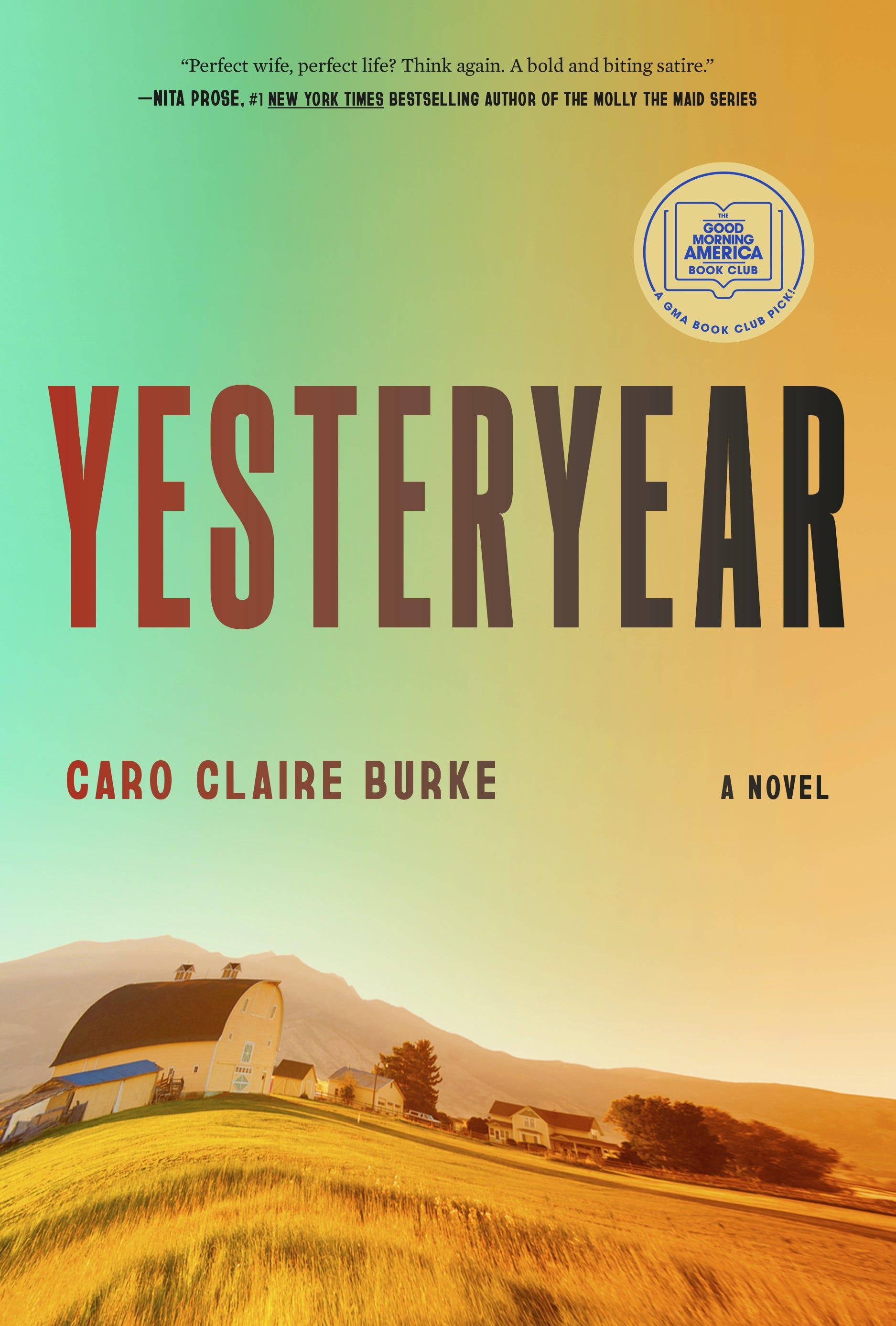
In Caro Claire Burke’s debut novel Yesteryear, the main character Natalie Heller Mills is a wealthy tradwife who gets her comeuppance when she’s transported back to 1855. It’s a tantalizing premise that promised a biting social commentary on the rise of the socially conservative boss babe who reigns on Instagram.
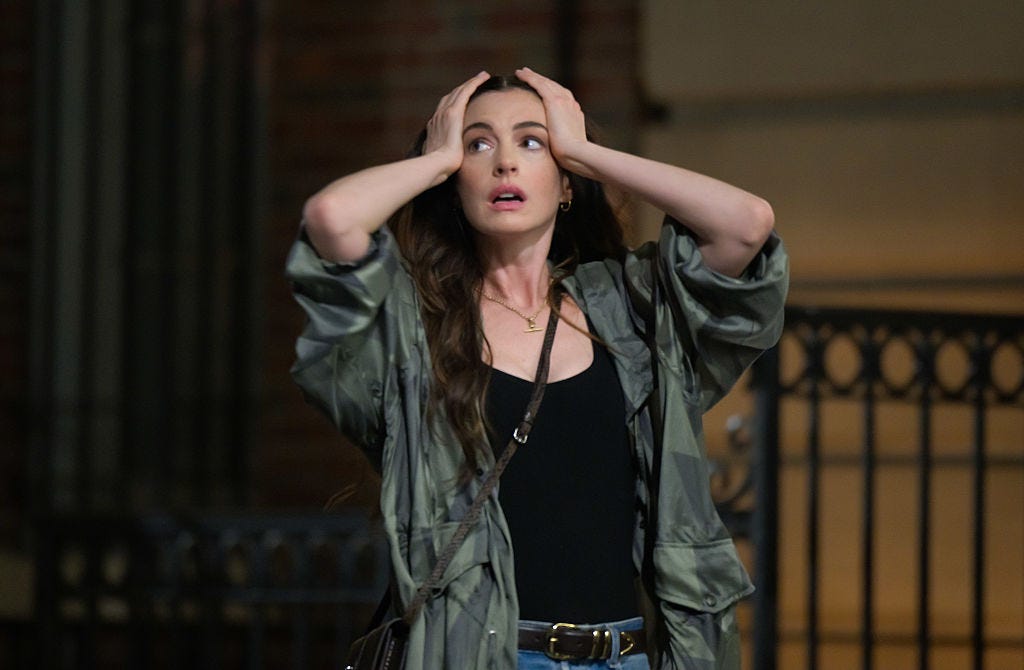
The book has rocketed up to the top of The New York Times bestseller list, and even before its release, actress Anne Hathaway had signed up to star and produce, sensing a hit.
The book, and reactions to it, are seemingly everywhere on social media. Last week, Burke shared a Substack essay of a self-described ex-Mormon who saw herself in the character of Natalie. “This is who I wrote the book for,” wrote Burke to her 68,000 Instagram followers.
But within seconds of opening the review, I recognized the familiar cadence of AI-inflected writing.

Burke’s praise of the hollow essay reflects the hollowness of her own book, one that promises biting satire and delivers superficiality.
From Burke’s public commentary, it’s clear her fixation centers around a handful of Mormon tradwives, namely Hannah Neeleman of Ballerina Farm and Nara Smith. The former seems very similar to Yesteryear‘s main character: Attended an elite private university? Married to the son of a wealthy magnate? Seems perfect from her Instagram while attracting the ire of liberal journalists? Check check check.
From merely reading the book, one would never know that Yesteryear draws inspiration from such specific individuals. Burke never reveals what denomination her main character belongs to — in fact, for most of the book, there’s little evidence Natalie even attends church as an adult.
In an interview with The Rumpus, Burke revealed that “whether it’s Mormonism or evangelicalism or Jehovah’s Witness, it’s really all the same in terms of how women are treated and what the expectations are for them.”
This shockingly naive statement came right after Burke told the interviewer that her “main focus” was to “understand the perspective and interiority of women who live in fundamentalist Christian communities.”
There’s a great book to be written satirizing the Mormon tradwife — even more so in the wake of The Secret Lives of Mormon Wives and the implosion of the recent Mormon Bachelorette. But Yesteryear is not that book.
Perhaps because of her “secular childhood,” Burke does not imagine that faith could play much of an important role in understanding the perspective of women living in religious communities. The word “God” is invoked more times as a curse (“God no,” Natalie laughs when asked about getting plastic surgery) or descriptor (“God-awful quilt”) than as the central figure of any Christian’s life.
When exactly is “yesteryear?”
Throughout the novel, Natalie recounts vague allusions to some past time when settlers spent their time “facing down Indians” and “drinking milk straight from the udder.” Equal parts lost Eden and survival porn, yesteryear is a memory she relates to her own children, “talking about the olden days as if they were something I could speak to, when the truth was I’d never been truly cold a day in my life” (prior to her time travel, that is).
The nonspecificity is itself a critique.
Idaho in 1855, which is where Natalie is sent back in time, was not a demarcated territory until 1863. And not until April 1860 was a permanent white settlement even established in the territory (Mormon pioneers who thought they were in Utah).1
Natalie’s ignorance is a character flaw: She does not know her history, her performance is pure artifice, there is no there there.
What becomes clear over nearly 400 propulsive pages is that the author shares this debilitating incuriosity with her main character.
Satire is at its best when the author displays fluency in their subject — most often through attention to detail.
Take Paul Beatty’s The Sellout, a satire of race relations in modern America that also invents a locale to satirize. But Beatty’s Dickens, California, is a satire of a real place — Compton — that gives his book depth. For instance, here is how he describes the gentrification of Los Angeles County:
“When the housing boom hit in the early part of the century, many moderate-income neighborhoods in Los Angeles County underwent real estate makeovers. Once pleasant working-class enclaves became rife with fake tits and fake graduation and crime rates, hair and tree transplants, lipo- and cholosuctions.
In the wee hours of the night, after the community boards, homeowner associations, and real estate moguls banded together and coined descriptive names for nondescript neighborhoods, someone would bolt a large glittery Mediterranean-blue sign high up on a telephone pole. And when the fog lifted, the residents of the soon-to-be-gentrified blocks awoke to find out that they lived in Crest View, La Cienega Heights, or Westdale. Even though there weren’t any topographical features like crests, views, heights, or dales to be found within ten miles.”
Since Jonathan Swift’s 1726 classic Gulliver’s Travels, the best satire has detailed its inhabitants’ world. The difference between a middle school bully’s taunts and the sharp knife of a well-written satire is insight, knowledge, and awareness — in short, understanding.
Compare Beatty’s description of Los Angeles County to the first time Natalie and her husband drive onto the lot that would become Yesteryear Ranch:
“Breathtaking. It was breathtaking. The barn, the mountains, the house. All of it was so much more beautiful in three dimensions than I could’ve possibly imagined when I saw it online.”
The twist at the end of the novel [spoilers ahead!] rescues Burke from having to make a point about tradwives or politics or anything. Natalie has not actually time-traveled and has, instead, lost her mind.
In a few short pages, Burke undermines her novel’s fundamental purpose.
Most tradwives are not suffering from psychotic breaks; they are promoting a new social conservatism compatible with just enough female empowerment to allow them to pursue commercial success but not enough to cast off their central purpose as submissive wives and mothers. But if Natalie is just a crazy woman disconnected from her religious community, then what can she reveal or say about any of this?
Burke’s Yesteryear, which promised to be a “satire of women everywhere,” can’t really tell us about women anywhere. Natalie’s motivations, desires, and needs are rootless because Burke doesn’t know enough about her world to develop her into a real person.
Upcoming Events
We’re bringing The Argument to San Francisco! On Wednesday, May 13, I’m joining our staff writer Kelsey Piper on stage at The Chapel to debate a question that feels unavoidable right now: Are we poised for an AI-powered scientific revolution? Or is the only scientific development AI going to produce just… more AI?
I’m bullish; Kelsey is skeptical.
Join us as we hash things out Wednesday, May 13, 7:00 to 10:00 p.m. in the Mission.
Priority RSVPs below the paywall at this link.
Not a paid subscriber yet? Upgrade your subscription — or join the waitlist, and we’ll let you know if seats open up: Waitlist →
Top stories this week
As we grow, we want to make sure you see everything we’re doing without flooding your inbox with dozens of emails. But for the real libs, you can get every post as it drops by opting into The Mag here.
Why Democrats can't win more Trump disapprovers

The Argument's recent poll suggests that crime might explain why Democrats are not gaining nearly the amount of ground as Donald Trump is losing.
AI's biggest critic has lost the plot

Ed Zitron has prominently and prolifically made the case that AI is a bubble. Kelsey Piper disagrees.
🌟Abundance Wins of the Week🌟
Pennsylvania lawmakers advance the so-called “Golden Girl Law,” which would prohibit arbitrary limits on the number of unrelated individuals allowed to live together according to current state zoning codes.
New York Gov. Kathy Hochul is closing in on a deal — backed by major developers and Mayor Zohran Mamdani — intended to eliminate an involved review process that has set some building projects back years.
Based on early trials, a new pancreatic cancer mRNA vaccine shows promising results. The vaccine works as a kind of immunotherapy and could meaningfully improve the odds of patients diagnosed with one of the deadliest cancers.
Worth watching...
Matthew Yglesias wants to end asylum. On a new episode of The Argument, Matt argues that the post-WWII asylum framework is not just politically untenable but practically unworkable. Jerusalem Demsas, true to form, disagrees.
Subscribe: Apple Podcasts | Spotify | YouTube | Overcast | Pocket Casts
The Argument recommends by Maibritt Henkel
Four book recommendations for you:
The first is Pachinko by Min Jin Lee, suggested by Milan Singh. He sounds like he genuinely enjoyed it, but Lee is also set to speak at his college graduation later this month, so he might be biased.
Next up, some cultural input from Jerusalem Demsas, who seems to have read everything, everywhere, all at once. This week, she wrapped up Lottie Hazell’s Piglet, which she said was “fine” and Tony Tulathimutte’s short story collection Rejection, which she loved. Apparently it is the first book she has read that includes texting or internet posts but “doesn’t read awfully and feels realistic.” Kobe Yank-Jacobs felt very differently. He says he bailed after the first story and a half.
Kobe Yank-Jacobs reread his “second favorite of all modern social science books” Trying Not To Try: The Ancient Art of Effortlessness and the Surprising Power of Spontaneity, by Edward Slingerland. Maybe he will reveal his number one favorite next week? Stay tuned.
From me you get a music rec: Swedish singer and DJ Robyn’s new album Sexistential. At age 46, this is her ninth solo album, which comes after an eight-year break from making music. I cannot emphasize enough how awesome it is. Think Lily Allen’s West End Girl comeback but less sob and more rave.
— Maibritt Henkel
More to read:
You can't redistribute your way out of a housing shortage

Zach Parolin argues that without an an aggressive plan to build more homes, there is no sustainable path to lower poverty for California and other high-cost areas.

There were a few dozen Mormon missionaries, two trading posts that were manned by skeleton crews, and transient Oregon Trail migrants.
I was disappointed by Yesteryear because I thought I was going to get a story about a character being punished for being deceptive. (She allows her audience to believe that she is superhumanly capable- making elaborate meals from scratch in an old-fashioned kitchen and effortlessly raising five children, yet in reality the kitchen hides lots of modern appliances and she has two full time nannies off screen to help). But ultimately she is punished for being socially conservative, which is fine but just not terribly interesting. The book also indulges in the tired trope that there aren’t any actual sincere conservatives- they are all just angry hypocrites who want to control others. I was disappointed because I think there are some potentially really interesting ideas about performance and artifice and how damaging that can be, but I don’t think Yesteryear executed those ideas very well.
AI detectors are consistently inaccurate and unreliable. Why would you turn to a technology with a proven record of both false positives and false negatives? This book's subject matter / obvious political leaning would bias you against it, so giving in to using a notoriously unreliable technology to "confirm" your assumptions seems pretty sketchy and calls into question your own commitments to truth and reason.
https://humtech.ucla.edu/technology/the-imperfection-of-ai-detection-tools/
https://teach.its.uiowa.edu/news/2024/09/case-against-ai-detectors
https://mitsloanedtech.mit.edu/ai/teach/ai-detectors-dont-work/
https://lawlibguides.sandiego.edu/c.php?g=1443311&p=10721367