


Welcome to The Closing Argument, our verdict on the news, plus everything The Argument published and appeared in this week.
The Verdict, by Milan Singh
Growing up, I was captivated by the BBC documentary series The Life of Birds, particularly Sir David Attenborough’s direct-to-camera address in the final episode.
“Now, we have taken over the Earth, the sea and the sky,” he says. “But with skill and care and knowledge, we can ensure that there is still a place on Earth for birds, in all their beauty and variety. If we want to — and surely, we should.”
I agree with him, and it’s why I’m sympathetic to the goals of the environmental movement. We should have strong environmental regulations to prevent wanton habitat destruction, even if those regulations involve some degree of economic inefficiency.
So I understand environmentalists’ hesitancy to support federal permitting reform efforts, such as the Bipartisan American Affordability and Jobs Act (BAAJA), which is currently under consideration in Congress.
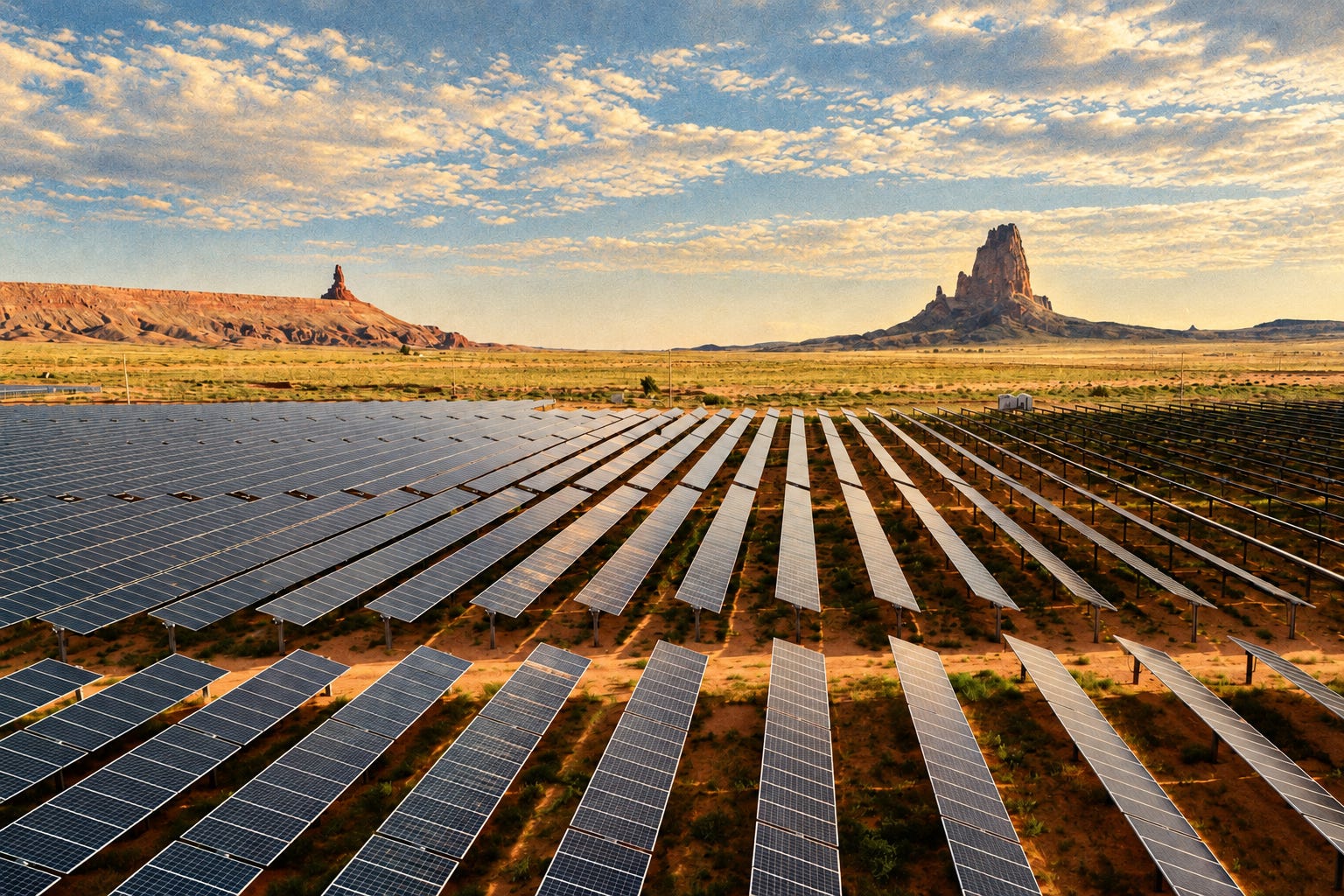
We know some degree of permitting reform is necessary for the fight against climate change — because we need to make it easier to build out solar, wind, batteries, and transmission lines that can carry clean energy — but it stands to reason that making it easier to build infrastructure might also make it easier to despoil natural environments.
Indeed, BAAJA includes reforms to a slew of environmental laws: the National Environmental Policy Act (NEPA), the National Historic Preservation Act (NHPA), the Clean Water Act, and the Endangered Species Act.
For this reason, some groups such as the Center for Biological Diversity have already announced opposition to the bill. But many of America’s most storied environmental organizations are still on the sidelines. The Sierra Club released a statement expressing concern about potential benefits for oil and gas companies, though it also said that it was “still reviewing this new 400+ page package.” The Natural Resources Defense Council’s statement said that there are “stark tradeoffs” in BAAJA but noted that “[i]t will take us time to digest this bill.”

What the green groups say could determine the fate of the bill. Many House Democrats who are on the fence are likely waiting to see how these groups weigh in, because their constituents take these organizations’ endorsements very seriously.
Luckily, after reading all 417 pages of the legislative text, I can confirm that BAAJA does not actually weaken the substantive protections that America’s environmental laws are meant to guarantee.
“I think when folks hear changes to the Clean Water Act or to the Endangered Species Act, you know, they’re thinking all of a sudden this is going to allow polluters to dump stuff into streams and lakes, or it’s going to allow folks to go out and take an endangered bird habitat and bulldoze. None of that is in this law,” Rep. Josh Harder, D-Calif. and chair of the bipartisan Build America caucus, told me.
What BAAJA will do is reform the procedural elements of the environmental laws that currently make it difficult to build new energy infrastructure — even if it can be demonstrated that this infrastructure does not involve illegal environmental harms.
In other words, BAAJA mostly just prevents environmental laws from being used for reasons other than their intended purposes. When you add in the bill’s likely benefits for climate, the result is a win for the environment overall.
Procedure vs. substance
Most major environmental laws have two elements: procedural and substantive. Substantive elements are things such as the Endangered Species Act’s prohibition on killing, harming, or harassing an animal on the endangered species list. Procedural elements are things like mandating studies or reviews or other bureaucratic steps that, in and of themselves, do not directly protect the environment.
I could identify just one substantive change that the permitting reform bill would make to any of the environmental laws it targets.
Under Section 401 of the Clean Water Act, states (as well as federally recognized Native American tribes) can effectively veto federal permits for projects that would discharge into their waters. This makes sense! People don’t want pollution dumped into their water.
Section 1202 of BAAJA aims to fix a loophole some states have used to block fossil fuel infrastructure on pretextual grounds, at times by arguing that fossil fuel use causes climate change, and climate change could be bad for water quality. If BAAJA becomes law, certification denial will be allowed only if a state can provide clear and convincing evidence of specific water quality harms — and that no reasonable modifications would mitigate those harms. One of the bill’s authors, Senator Martin Heinrich, D-N.M., says that this change will also stop pretextual roadblocks for transmission lines as well.
In other words, if you want to stop a project based on a risk it will pollute the water, there actually has to be a risk it will pollute the water.
When it comes to the Endangered Species Act, BAAJA makes just one significant procedural change, imposing a 150-day statute of limitations for plaintiffs to seek an injunction or voiding of (part of) a permit if the underlying project threatens an endangered or threatened species. But it does not limit the ability of anyone to file legitimate suits within that window.
There is even less substance to the changes to the other laws. That’s because NEPA and NHPA are laws that only have procedural elements.
Here’s how NEPA works: Federal agencies have to produce detailed statements of the environmental impacts of “major federal actions.” If someone believes that the agency did not properly evaluate the environmental impact of a proposed action — such as the issuance of a permit for an energy project — then they can sue. If the court rules in the plaintiff’s favor, then the permit is vacated and sent back to the agency to start from scratch.
This process is easily abused. Even if a plaintiff knows their case is unlikely to hold up in court, they might litigate anyway. Maybe the goal is to delay the project while the agency redoes the permit, or to raise costs for the developer so much that the project no longer pencils out.
A report from the Breakthrough Institute analyzed 387 NEPA cases brought before appellate courts from 2013 to 2022. Federal agencies won 80% of the challenges — but those cases took more than four years to wrap up, adding substantial costs to the projects even though they were aboveboard.
NHPA, which requires that federal agencies perform a review for projects that will affect historic sites, has been a tool for similar abuses: Plaintiffs can allege spurious harms, and lawsuits dragging on and on can significantly raise project costs.
BAAJA makes several changes to both laws. It imposes a series of deadlines for agencies to complete the review process. Any lawsuits based on NEPA or NHPA must be filed within 150 days of permits being issued, and lawsuits can only be filed by parties that participated in the public comment period during the permitting process and can demonstrate a direct harm.
Cases go straight to federal appellate courts — that way plaintiffs can’t cherry-pick district court judges who are ideologically aligned with them — and the courts are instructed to give “substantial deference” to the agencies’ decision-making. Most importantly, if a permit is found to be deficient in a particular area, then that part — and only that part — of the permit is returned to the agency to fix in 180 days or less.
This means that a successful lawsuit doesn’t kill an otherwise-good project that would’ve imposed a specific, fixable harm.
Presidents shouldn’t play politics with the environment
It is true that some elements of the bill would benefit oil and gas projects. But in the long run, making it easier to build energy infrastructure of all kinds will likely disproportionately benefit renewables, which are already beginning to crowd out fossil fuels’ role in meeting new demand in global energy markets.
To the extent that environmentalists don’t trust the Trump administration to play fair when it comes to renewable energy, they should support this bill.
President Donald Trump seems to have some sort of personal vendetta against wind projects and, to a lesser extent, solar power. His Interior Department issued stop-work orders to halt construction of five major offshore wind projects that had already been permitted, which has rightly irked environmentalists. Conservatives retort that this turnabout is fair play, given that the Biden administration yanked a permit for the Keystone XL pipeline.
One of BAAJA’s goals is to fix this tit-for-tat problem by tying the hands of presidents from either party, so they can’t abuse the permitting process to slow down energy projects they couldn’t block on the merits. Trump’s ability to meddle with already-permitted offshore wind projects will be limited. Future Democratic presidents won’t be able to pull permits for oil and gas projects that they don’t like.
For environmentalists, this bill is essentially a bet that, given an even playing field, renewables can outcompete fossil fuels. That’s a bet I think is worth taking.
Midterm update
Lakshya Jain, our director of political data, uses data from The Argument’s polling operation to inform the Split Ticket 2026 House and Senate models. Here’s his update on the state of play this week:
Democrats retain very strong odds to win the House of Representatives (89%) and their odds of taking the Senate have stabilized at 65%. While that’s roughly where things stood last week, there’s a new state in the “toss-up” column of our Senate forecast: Kansas, where we haven’t seen Democratic nominee Adam Hamilton trail in a poll for over a month. Between that and Josh Turek continuing to hang on at 50/50 odds in Iowa, Democrats have a lot of reason to feel optimistic — though they only need to look back to 2020 for a sobering reminder of what can happen if the polls are wrong.
These models update every day; bookmark this page to see the odds of each party taking the House and the Senate.
Top stories this week, by Kobe Yank-Jacobs
It’s October, flu season, and like many of us, Texas Senate candidate James Talarico got the flu and stayed home from work. While this should have been a banal affair, somehow, it turned into an absolute right-wing freak-out: Texas Attorney General Ken Paxton, Talarico’s opponent, demanded “proof of life” as others claimed Talarico had been institutionalized. This week, staff writer Jeremiah Johnson unpacks what a sorry sign this is for the right’s broken epistemic culture. Read on for his searing analysis:

The Trump administration has imposed a new rule for student loans. Is this part of Trump’s assault on universities? Staff writer Kelsey Piper argues in favor of this move and wants Trump to go even further. Dive in to learn more:

It’s a cliche to say you’ve “spent the afternoon lost in a good book.” Part of that transporting experience, of course, is living inside some other world, inside some other life. But the trends in fiction preferences are running the other way. Some people now claim they are unable to read unless they can fantasize about themselves in the main characters’ shoes. This week, Jerusalem Demsas steps into the discourse to assert the value of reading without having to see yourself in the story. Click for a fresh reminder:

🌟Abundance Wins of the Week🌟
A new ordinance went into effect this week in Riverside, California, easing the construction of accessory dwelling units and eliminating owner-occupancy requirements, as well as parking requirements.
Oklahoma City has been finding really nice uses for old hotels, recently approving an old Holiday Inn for the construction of residential units in the city.
The FDA has been earning its place in this wins column for changing its approval processes to speed drug development. This week, it expanded the indication of a drug to a certain type of bladder cancer — but just as important, it did so using a new process. “The agency based its decision on evidence supporting an earlier approval of Anktiva for adults with another form of [the disease],” the FDA wrote. In other words, it included evidence it already had, rather than taking it from the top.
Worth watching…
Even Alexandria Ocasio-Cortez has conceded “Woke 1 was crazy,” so maybe it’s time to reconsider some of what it accomplished. In honor of Columbus Day, Matt and Jerusalem did just that on their latest podcast episode. They examined a slate of historical figures — including Christopher Columbus, Thomas Jefferson, and Paul Ehrlich — to see who might deserve the high privilege and distinct honor of being uncanceled. Honestly, this episode sells itself. Tune in to find out where they landed:
We are racing toward the midterms, which are in just three weeks. Last week, Sean Trende, a veteran elections analyst from RealClearPolitics, joined The Argument’s Lakshya Jain and VoteHub’s Zachary Donnini to examine the latest. They discussed the difficulty of communicating probability as political analysts — and how to help people keep a level head when a model assigns 70% probability to one party winning a seat. (Hint: 70% is not 100%!) Tune in to get your own read on the polls:
In the 1990s, the internet was seen as a decentralizing technology — widespread access to information plus the chance for anyone to build on top of it. But from the vantage of 2026, that view seems naive. Can we avoid the same fate with AI? Akash Kapur teaches “Public AI” at Princeton University. In last week’s interview, he argued that we are at an early enough point with AI that we can still preserve the openness of the technology — but governments have to act. Tune in to learn what we can do:
What’s News with The Argument
The Argument recommends, by Kobe Yank-Jacobs
This week, I asked my colleagues to make culture recommendations about a specific place — even if the connection between art and place was only tangential.
Senior editor John Robert Thomason recommended a film by David Gordon Green, best known for directing an endless parade of Halloween reboots. Green may not be a font of wisdom, but he does have an eye for John’s home state.
The 2000 film George Washington is about “five multi-racial preteen friends and a laidback crew of blue collar railroad workers during a hot summer in an decaying small rural town,” according to Wikipedia. John says it’s “the single most evocative portrayal of North Carolina ever committed to the screen.”
Speaking of home states, I was delighted to see Editor-in-Chief Jerusalem Demsas’ mind wander to one of my own favorite places: She highlighted Among the Sierra Nevada, California by Albert Bierstadt, which is actually a composite of sites across the American West, closer to “the atmosphere of Kingdom Come than of California,” as Mark Twain wrote about Albert Bierstadt’s The Domes of Yosemite.
Senior video producer Justin Zuckerman took the tangential part seriously. “Don’t Let Me Down” by The Beatles called up their January 1969 rooftop concert for him, which in turn reminded him of his initial draw to big cities.
“Even though it's shot on a London rooftop,” he told me, “I loved it so much when I watched it for the first time that I felt inspired to move to [New York City].”
Operations manager Angela Tracy understood the assignment even more exactly, drawing connections from Rome to the desert horizons of Texas.
“Seneca’s Naturales Quaestiones is a collection of wonderful natural philosophy musings that devolve into even better stoic rants,” she explained at first, before announcing: “It will always remind me of Texas.”
The mind works under its own power. Sometimes, one of the great joys of art is how it can generate a connection between distant parts of the inner world. As Allen Ginsberg once described it in a poem, “lightning in the mind leaping toward poles of Canada & Paterson, illuminating all the motionless world of Time between.”
In less poetic terms, the scholar Mircea Eliade says that for the secular and nonsecular alike, specific places can become sacred sites. Each of us has:
“privileged places qualitatively different from all others — a man’s birthplace, or the scenes of his first love, or certain places in the first foreign city he visited in his youth. Even for the most frankly nonreligious man, all these places still retain an exceptional, a unique quality; they are the ‘holy places’ of his private universe.” [emphasis mine]
We have merch!
We have quarter-zips, keychains, hats, and stickers. Each one is a great conversation starter in its own way. Buy them here.
More to read:
Liberalism let me change my mind

There’s an important flip side to the tolerance that liberalism promotes between groups: the humility it promotes within individuals.
You can't drone the internet into being normal

Also: Proof that 2016 never ended and a scheme to pay an influencer to stop posting.