

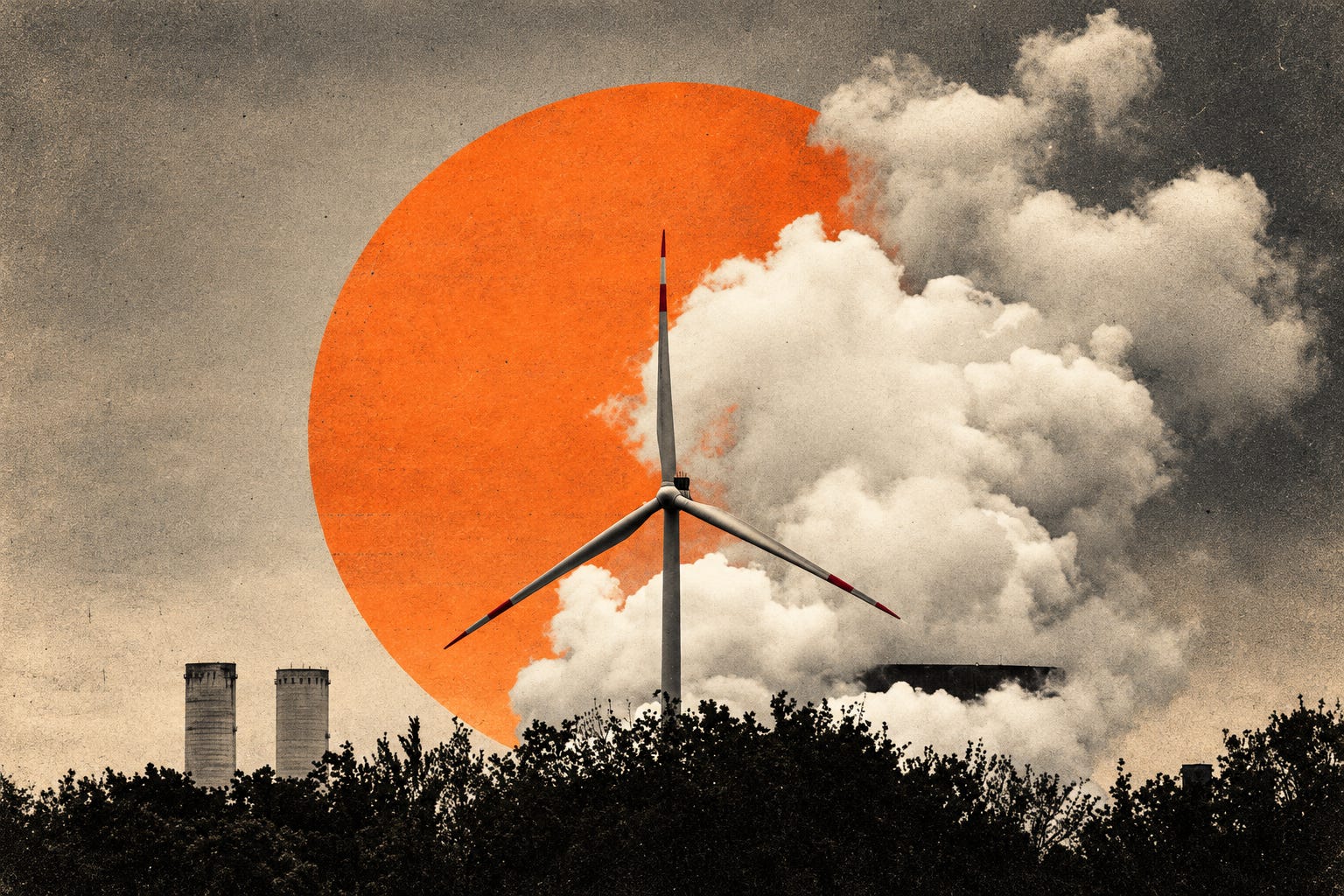
Editor’s note: The first essay The Argument ever published asked, “How do we live with each other?” To mark our first anniversary on Aug. 17, we’re returning to that founding question with a series about what we owe people whose beliefs and choices we may find difficult to accept or even understand. During this series, familiar voices at The Argument and new voices alike will approach that question from different angles.
The last piece in this series comes from senior editor John Thomason. This essay is about falling out of love with dogmatic ideologies, but it’s not a love letter for moderation or a case against strong political convictions. Instead, John argues that liberalism is uniquely suited to people with deep commitments who nevertheless recognize they might be wrong. After a series about learning to live with people who see the world differently, it seems fitting to end with an essay about learning to live with the possibility that you might someday see it differently, too.
If there was one issue that convinced me that I must be a socialist, it was climate change. Climate change has arguably been the defining issue of the 21st-century left. For many of us, it was not just one issue among many but the premier existential threat to human well-being the world over.
My ideological journey started innocently enough, with a broad consideration of the evidence: It’s indisputable that the historical causes of global warming can be traced to countries like ours with the most wealth and resources — we are the ones whose energy and transportation needs have been met with coal, gas, and oil, while others go without. And climate change’s damages are poised to fall most severely on those with the least.
I saw climate change not just as a failure to regulate pollution, but as a consequence of who controlled the economy. The companies selling fossil fuels could collect massive profits while much of the damage fell on people who had neither a stake in those companies nor a say in their decisions.
What was disastrous for humanity could still be good for business. And those businesses could use their largesse to railroad politicians, leaving few avenues for effective political change, except maybe mass mobilization.
Socialism seemed to offer a way out of this mess. If decisions about energy and investment were put under collective control, then we could make them according to what humanity as a whole really needed, rather than what was merely valuable for shareholders. I assumed that if the people bearing the costs of pollution had the power over its sources, then they would make dramatically different choices about how much to pollute.
I now believe I was wrong.
There is no theory of everything
My socialist account of climate change seemed to make all of my commitments point in the same direction: Protecting the climate, fighting exploitation, and lifting people out of poverty were all parts of the same struggle against the same enemy. What I eventually had to confront was that those commitments could sometimes be in conflict and that no one ideological movement held all the answers — or could resolve all of those conflicts.
The unequal harms of climate change often mimicked older relationships of violence and exploitation that rich countries visited upon poor: The U.K. contains less than 1% of the world’s population but is responsible for 4% of historical carbon emissions. Bangladesh and Pakistan, two of its former colonial holdings, together have more than five times the population but are only responsible for less than 0.5% of historical carbon emissions. And they will almost certainly suffer more from climate change, experiencing disruptive levels of extreme heat and drought.
The U.K. may not need to do much besides investing in air conditioning.1
Just as climate change can be seen as reviving the injustices of colonialism, so too can it be seen as reinforcing the inequalities of capitalism. This is why Naomi Klein subtitled her bestselling 2014 book Capitalism vs. the Climate. The accumulation of carbon in the atmosphere was concurrent with the rise of global capitalism. And, again, those who have benefited the most from that rise also have the most resources to deal with its consequences, while those who have benefited least will be hit hardest by its effects.
While this seems to clarify the moral stakes of climate change, it doesn’t tell us exactly what to do about it. As Karl Marx put it, “The philosophers have only interpreted the world in various ways. The point, however, is to change it.” Like Marx, I turned my attention to the capitalists.
Finding these villains was easy enough. The past decade has seen a recurring chorus of headlines like “Half of world’s CO2 emissions come from 36 fossil fuel firms,” “80 Percent of Global CO2 Emissions Come From Just 57 Companies,” and “You’d Be Surprised How Few Companies Are Behind Half the World’s CO2 Emissions.” If most new sources of warming are caused by just a few dozen companies, the logic goes, then those companies can be targeted for reform (or destruction).
This same impulse helps explain why I became fixated on ExxonMobil. If you look at the database that all those headlines are based on, Exxon is the American company that has the greatest share of global emissions attributed to it between 2016 and 2022 (1.4%). Activist groups like Climate Defiance, which disrupted a private event in order to tell Exxon CEO Darren Woods to “eat shit,” hope that their unrelenting ire can bring that number down. (Of course, it helps that Exxon’s own corporate history isn’t exactly spotless: It concealed its own knowledge of the reality of climate change for decades, during which it supported climate denial campaigns in public.)
For years I held fast to this worldview: Climate change meant that the chickens of capitalism and colonialism were coming home to roost. We would either have to end the tyranny of the fossil fuel capitalists once and for all, or we would subject most of humanity to wave after wave of increasing misery — possibly snuffing our species out altogether. It was a stark vision, but it gave me a feeling I’ve always had trouble mustering on my own: resolve.
Then, one day, I looked at the other companies on those lists.
Even if you accept the logic that only suppliers of fossil fuels are to blame for global warming (and not consumers like you and me), it turns out that the vast majority of the world’s top polluters are not exactly paradigms of capitalist enterprise. They are state-owned oil, coal, gas, and cement companies: Saudi Aramco, Russia’s Gazprom, Mexico’s Pemex. In fact, not a single investor-owned enterprise made the most recent annual top 10 polluters list.
This is not to say that the firms above are not engaging in capitalism. Saudi Aramco’s oil sales are subject to the laws of supply and demand. (Up to a point, at least: OPEC’s cartel behavior famously puts hard limits on how “free” the global market for oil can be.) And its products are key inputs for investor-owned, profit-chasing firms.
But the fact that all of these companies could and would exist under any political system with enough state capacity should disabuse us of the notion that capitalism is the thing that is causing them to provide oil, gas, and coal to people who want to use it. And however you classify China’s current political system, the fact that 5 out of 10 of these firms are run by something called the “Chinese Communist Party” only reinforces the correction.
A look at the database’s list of the top 10 historical emitters is even more ideologically inconvenient for the committed socialist: It says that the single most polluting entity in history is still, by a long shot, the former Soviet Union. Of course, if you were to combine all U.S. polluters into a single entity, America would come out on top. But the point is just that there is nothing inherently capitalist about carbon emissions. In fact, one reason the Soviet Union’s emissions were so high relative to its lackluster economic performance is that there were so few market incentives for energy efficiency.
Even if we get past the fact that neither capitalism nor communism appears responsible for climate change, these polluter lists get us no closer to clarity on a course of action. For if we truly believed that climate change was primarily caused by firms owned by the governments of China, Russia, Saudi Arabia, and Iran, then climate activism would be primarily directed at eroding those countries’ abilities to exploit their natural resources. Indeed, the climate community would be supporting Trump’s war on Iran, since it is accomplishing exactly this.
But climate activists don’t show any sign of supporting the war — and they are right not to, because depriving people of energy makes the world poorer and disproportionately hurts those who already have the most precarious access to energy.
More difficult to reckon with was what all that energy made possible for the people socialists wanted to defend. State-directed coal production in China and India clocks in at second place and tenth place, respectively. Even the most committed climate activist would have to admit that the energy unlocked by that coal was a key ingredient in lifting over 1 billion people in those two countries out of poverty.
If we’re going to pull even more people out of poverty — if we’re going to allow more people to live in the kind of comfort we enjoy in the U.S. — we’re going to need more energy. Thankfully, carbon-free sources like solar, wind, and nuclear power are already beginning to crowd out fossil fuels when it comes to meeting new electricity demand.
But there are going to be trade-offs and inconvenient compromises along the way. The billions of people who currently rely on wood, charcoal, and other biomass for cooking and heating are going to need to be allowed to burn gas if they don’t have reliable electricity — both because gas is less emissions-intensive than wood-burning, and because all that smoke is killing people.
Foreclosing the option of gas-fired cooking is just one of the many ways that abolishing fossil fuels would be devastating for the world’s poor.
Some climate priorities will need to take a back seat, at least temporarily. Many countries recently learned the hard way that they cannot count on natural gas imported from Russia or Gulf autocracies. If those countries have domestic coal reserves, they are going to have to be allowed to burn that coal while we scale up renewable energy supply chains, even though it would be better for the climate if they simply didn’t use electricity at all (or propped up Russia’s war efforts by buying Russian gas, which burns cleaner than coal).
Where did these uncomfortable realizations leave me? I had assumed that private profit stood between humanity and a decision we would otherwise make more rationally together. But “humanity” did not have a singular interest in stopping the climate crisis, just waiting to be expressed. People want to protect the climate and also want electricity, employment, and relief from poverty. Changing who owned the energy system would not, by itself, reconcile those demands.
Once I stopped expecting socialism to supply the whole answer, I could better distinguish what it had to offer from what I needed to look for elsewhere. Indeed, of all the modern ideologies, socialism is the one that holds internationalism as a core tenet — the idea being that many of the modern world’s most pressing problems can’t be resolved without some kind of solidarity across national borders. The fight against climate change absolutely requires this solidarity: Emissions don’t recognize borders, and neither does the warming they cause.
But capitalism has things to offer the fight as well: If there are strong-enough market incentives for providing cheap, low-carbon technologies, then firms will spring up to provide those.
Of course, it may take something other than capitalism to create those incentives in the first place. I’m no fan of nationalism, but I’ll admit that the Chinese Communist Party appears to have successfully harnessed nationalist aims for a cause with global benefits: Promoting export-led growth in the green energy sector has been good not only for Chinese national power, but also for the world’s transition to renewable energy. Indeed, it’s probably the single biggest reason that the apocalyptic predictions outlined in David Wallace-Wells’ 2019 bestselling book The Uninhabitable Earth are no longer plausible.
While all of these ideologies have something to offer in the fight against climate change, they also each would inhibit the fight if pursued too single-mindedly — if, in other words, they’re treated as inflexible ideologies in the first place. A dogmatic socialism can trap its collectives in indecision and misaligned incentives, a dogmatic capitalism will fail to price important externalities, a dogmatic nationalism will just incentivize a country to free-ride at others’ expense, and so on.
The liberal mind
I had come to see the fight against climate change as a final battle between good and evil, like the one foretold in the book of Revelation. In The New Science of Politics, Eric Voegelin objected to bringing that kind of religious vision into secular politics, because those who felt that they had complete apprehension of the ideal form of human society might stop at nothing to realize it. Nazism and Soviet communism were his obvious reference points, but many other modern forms of politics came under suspicion as well.
The argument endeared him to a plucky Yale graduate named William F. Buckley Jr., who emblazoned Voegelin’s warning atop his new conservative magazine, National Review: “Don’t immanentize the eschaton!” In other words: Don’t expect politics to deliver heaven on earth.
The precise theory that drew Buckley to Voegelin doesn’t hold up all that well. The social democratic programs pursued by Western governments after World War II were not actually the apocalyptic purges Voegelin predicted them to be.
But Voegelin’s general warning about the dangers of importing religious convictions into the realm of secular governance is well taken. Not only is it the height of hubris to think that human institutions can effectively carry out cosmic or divine plans, but there is also, of course, the fact that we live in societies where people hold wildly different views about what the divine plan for humanity is — or whether there is one at all.
Liberalism doesn’t require us to weaken our convictions or assume that truth always lies somewhere between opposing dogmas. You can believe that society needs radical change without believing that your political tradition has the answer to every single question. Being willing to reconsider how to achieve your aims is not the same as abandoning them.
One thing I’ve noticed about The Argument’s leadership team is that we all grew up as believing, churchgoing Protestants — a strange coincidence given that the overlap between liberals and our coreligionists seems to be in free fall.
Another thing I’ve noticed is that I am the only one of us who’s lapsed. Christianity was only the first of my pieties to fade; socialism was the second. But the habits of mind that those belief systems inculcated are still with me. Both ideologies made me hope for the overthrow of hierarchies and inequalities that others accepted as natural.
My religion also left me with a hunger for final judgments and righteous victories, something that could redeem the endless trials of life on earth. The fight against climate change seemed to offer both.
Here at The Argument, we believe that liberalism is the system that best accommodates competing views about ultimate goods and final ends. It gives people inalienable rights, plus security over their lives and property, no matter how weird their views are. The universality of those very same rights prevents them from imposing those views on anyone else.
It’s no surprise that religious sects with extremely strong beliefs — some with beliefs that many would consider illiberal — thrive in America: Mormons, Mennonites, Amish, Hasidic Jews, Sikhs, and more. And, of course, the social fabric of early America was shaped by the persecuted Protestant sects who left Europe in part to worship freely in the New World.
But there’s an important flip side to the tolerance that liberalism promotes between groups: the humility it promotes within individuals. Liberalism doesn’t just allow competing visions of ethics and morality and social harmony to coexist in one state — it’s the only political system where it makes sense for those competing visions to coexist within an individual mind. It’s the natural home of the skeptic and the freethinker.
Not for nothing were many of the most famous American founders unorthodox theists. And not for nothing have the original Protestant impulses — to derive belief straight from the source, to distrust intermediary authorities — been particularly amenable to liberal politics.
Liberalism’s critics sometimes act as though liberalism is the enemy of conviction. But liberal political systems have welcomed more strong and disparate convictions into their citizenries than any alternative systems in history. No, if there is an intellectual orientation that is the enemy of liberalism, it is not conviction, but ideology.
Ideologues expect that political victory will bring the total fulfillment of both their psychological needs and philosophical convictions. Liberals have no such pretensions. What they promise — what we promise — is to have a home for you whenever you decide to change your mind.
Recommended reading:
When "economic liberty" means central planning

The notion that airport privatization is a more egregious threat to democracy than Jan. 6 is a reminder that the postliberal economic camp is full of strange ideas.
Four things I changed my mind on after a year of polling

Issue polling is dominated by interest groups. We wanted to do something different.
In Europe, this is a surprisingly tough sell to policymakers.
To add some diversity: I'm a lapsed Catholic, rather than a lapsed Protestant
Excellent article - thanks! Dogma, and the love of dogma in all its varied forms, constitute obstacles to human growth and development. A key aspect of mental and emotional maturity is the ability to note and address the operational effects of our own dogmatic ideologies and embrace the growth that arises when we finally move beyond those rigidities of thought. The main challenge we face in facilitating this growth process is our anxious discomfort with uncertainty in the absence of dogmatic belief.