

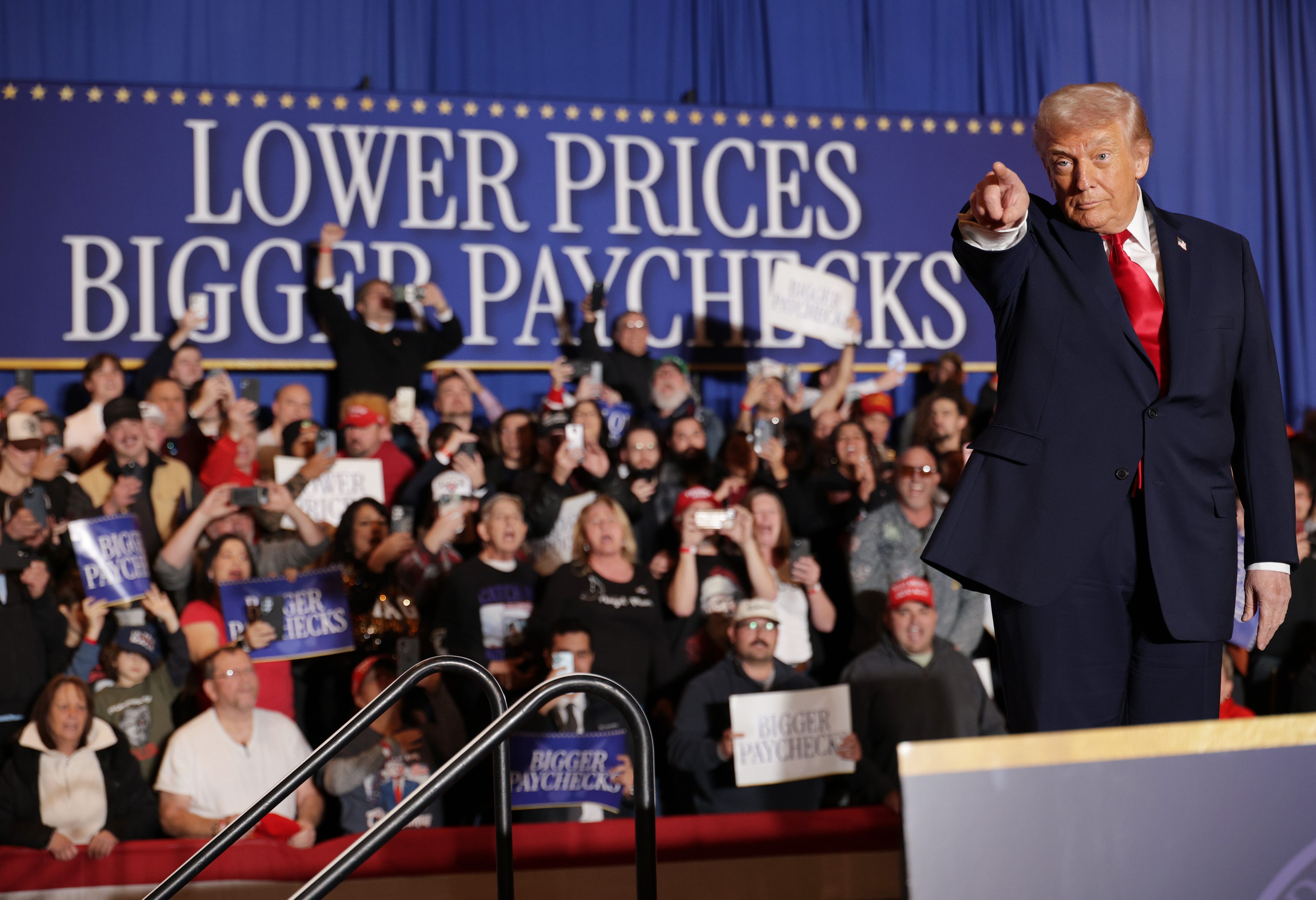
In 2024, Donald Trump rode a wave of anger at high prices back into the White House. In 2025, Zohran Mamdani’s laser focus on “affordability” led him to an upset victory in the Democratic primary for mayor of New York City. Looking ahead to the midterms, Democrats think that they have a winning hand in cost-of-living-focused messaging; the president, for his part, has decided that affordability is a “fake word by Democrats.”
If you look at practically any poll conducted within the last few years, you’ll notice that most voters are indeed fired up about the cost of living.1 But beneath this now-well-trod, surface-level consensus, issue priorities vary dramatically by income, age, partisanship, and education level.
This variation highlights an uncomfortable reality: The voters most insulated from economic precarity are the ones most likely to prioritize abstract threats. Among Harris voters, that manifests as a heightened focus on democracy; among Trump voters, it manifests as a heightened focus on immigration.
But voters most affected by high prices can’t afford such luxury beliefs.
Affordability is especially important to younger, poorer, and less-educated voters
Unsurprisingly, affordability is more important to the poor than to the rich.
In our polling, the poorest group of respondents was 23 percentage points more likely to list cost of living as one of their top two issues than the wealthiest group, and nine percentage points more likely to list health care.
The wealthiest were eight points more likely to list immigration as a top issue and 14 points more likely to list democracy.
Prioritizing immigration or democracy over the cost of living could be considered a “luxury belief” — writer Rob Henderson’s term for an idea “that confer[s] status on the upper class, at very little cost, while often inflicting costs on the lower classes.” But democracy is beneficial, not harmful, to the lower classes. And our polling data doesn’t directly tell us whether rich people who prioritize immigration favor more immigration or less, but this effect is almost entirely driven by rich Trump 2024 voters, so you can draw your own conclusions.2
Regardless, to some extent, a laser focus on democracy and immigration can read as highbrow, even as it crowds out a focus on cost-of-living issues.
The income gap in immigration is mostly driven by white voters. Rich white voters were eight points more likely to list immigration as a top issue than poor white voters, while rich nonwhite voters were only four points more likely to do so than poor nonwhite voters.
The youngest voters are much more concerned about affordability, being 12 points more likely to list cost of living as a top issue than seniors. Prioritization of health care was uncorrelated with age; just over a third of respondents in all age brackets listed it as a top priority.
For both white and nonwhite voters, cost of living and health care were rated as the most important issues, but white voters were nine percentage points more likely to say that immigration was a top issue.
Young people are also less concerned about immigration and democracy than older people. Thirty percent of respondents over 65 listed immigration as a top issue, compared to just 17% of respondents under age 30; similarly, 28% of respondents over 65 said democracy was a top issue for them, while just 16% of respondents younger than 30 said the same.
Affordability may be “crowding out” other issues for young people. That is, young people are so focused on the cost of living that they’re not putting as much weight on other issues.
The Democratic data scientist David Shor has floated the hypothesis that young people today are more focused on making money than previous generations, and other survey data shows that Gen Z’s bar for financial success is over twice as high as the average American’s.
To the extent this is true, social media is a big reason why. It’s a lot easier to compare your lifestyle to others’ on Instagram, and short-form video content (think “get ready with me,” “day in the life,” or “5 to 9 after or before by 9 to 5” reels) often implicitly or explicitly valorize material wealth.
Finally, while our data showed that cost of living and health care were the top issues for voters of all races, there were substantial differences across education levels.
In our data, nonwhite voters’ views differed less across educational attainment levels than did white voters’. Voters without a college degree were much more likely to say that cost of living was most important and much less likely to say that democracy was a top issue. Across education levels, voters placed roughly equal weight on the importance of health care, though nonwhite voters were slightly more likely to say it was a top issue.
The education gap on cost of living and democracy was largest among white voters — see the left two columns of the chart above — and much smaller among nonwhite voters. White noncollege voters were particularly likely to list immigration as a top concern; research has linked this phenomenon to both concerns about labor market displacement and nativism.
Democrats and Republicans have very different priorities
Regardless of who people voted for — or whether they voted at all — everyone’s top issue is the cost of living. What’s really interesting is what respondents’ second priorities were: for Trump voters, it was (perhaps unsurprisingly) immigration, while for Harris voters, third-party voters, and nonvoters, it was health care.
Democracy was a much more salient issue for Harris voters — 38% said it was one of their most important issues, compared to 12% of third-party/nonvoters and just 5% of Trump voters. To the extent that Harris pivoted from talking about the economy to talking about threats to democracy in the final weeks of the campaign, that messaging appealed more to her base than anyone else.
Even among voters who backed the same candidate, income, education, and race shaped which issues came second after cost of living. White and college-educated Trump voters were far more focused on immigration than their nonwhite noncollege counterparts.
Meanwhile, white and college-educated Harris voters were far more focused on democracy than nonwhite and non-college-educated Harris voters.
In other words, the divide isn’t just between the two parties — it runs through each of them.
For 18- to 29-year-olds who voted for Trump, cost of living was the top issue, followed by immigration and crime. Cost of living was also the top issue for 18- to 29-year-old Harris voters, followed by health care and democracy. Seniors who voted for Trump prioritized cost of living and immigration equally; Harris voters 65 and up said that democracy and cost of living were their top issues, followed by health care.
Among Trump 2024 voters, cost of living was rated more or less the same across race and educational attainment level. But there were large gaps in what different types of Trump voters said was their second most important issue. White Trump voters were much more likely to list immigration as a top issue compared to nonwhite Trump voters (42% vs. 31%), and college-educated Trump voters placed a lower weight on cost of living and health care and a higher weight on immigration and crime than did Trump voters without a college degree.
Across race and education levels, Harris voters placed roughly the same weight on health care. However, white Harris voters cared relatively less about cost of living and much more about democracy than nonwhite Harris voters, as did college-educated Harris voters compared to those without a degree.
The lesson isn’t complicated. Affordability is everyone’s top issue, while democracy and immigration are, by and large, the preoccupations of voters comfortable enough to prioritize something other than making rent.
If the last two election cycles have shown anything, it’s that the politicians who forget this lesson tend to lose and then waste a lot of time wondering why.
More polling:
The Trump voters telling pollsters they never voted for him

There is a curious polling phenomenon where a nontrivial share of respondents falsely claim to have voted for the winner of the last election. Whether they’re lying, misremembering, or rewriting history, “winner’s recall” is common enough that many reputable pollsters have observed it in past elections.
Against thoughtless moderation

I think it’s worth grappling seriously with why so many people think the only options are throwing trans people under the bus or burying our heads in the sand about public opinion.
In February 2020, Annie Lowrey wrote an interesting piece about a “Great Affordability Crisis,” wherein the price of housing, health insurance, education, and child care kept rising even as employment, wages, and confidence in the economy picked up.
Specifically: among Trump voters earning $200,000 or more, 51% said immigration was one of their most important issues, compared to just 8% of Harris voters earning $200,000 or more.
The literature on immigration and labor markets generally finds that immigrants don’t reduce wages for native-born workers. Noah Smith’s overview of the literature is helpful; the intuition is that immigrants increase the supply of labor but also the demand for labor, because immigrants buy stuff too. That said, a recent paper from George Borjas and Nate Breznau — which I have not yet had the chance to read — argued that researchers might be biased by their own pro-immigration beliefs.
