

Welcome to the The Closing Argument, our verdict on the news, plus everything The Argument published and appeared in this week. If you enjoy this newsletter, please forward it along!
The Verdict
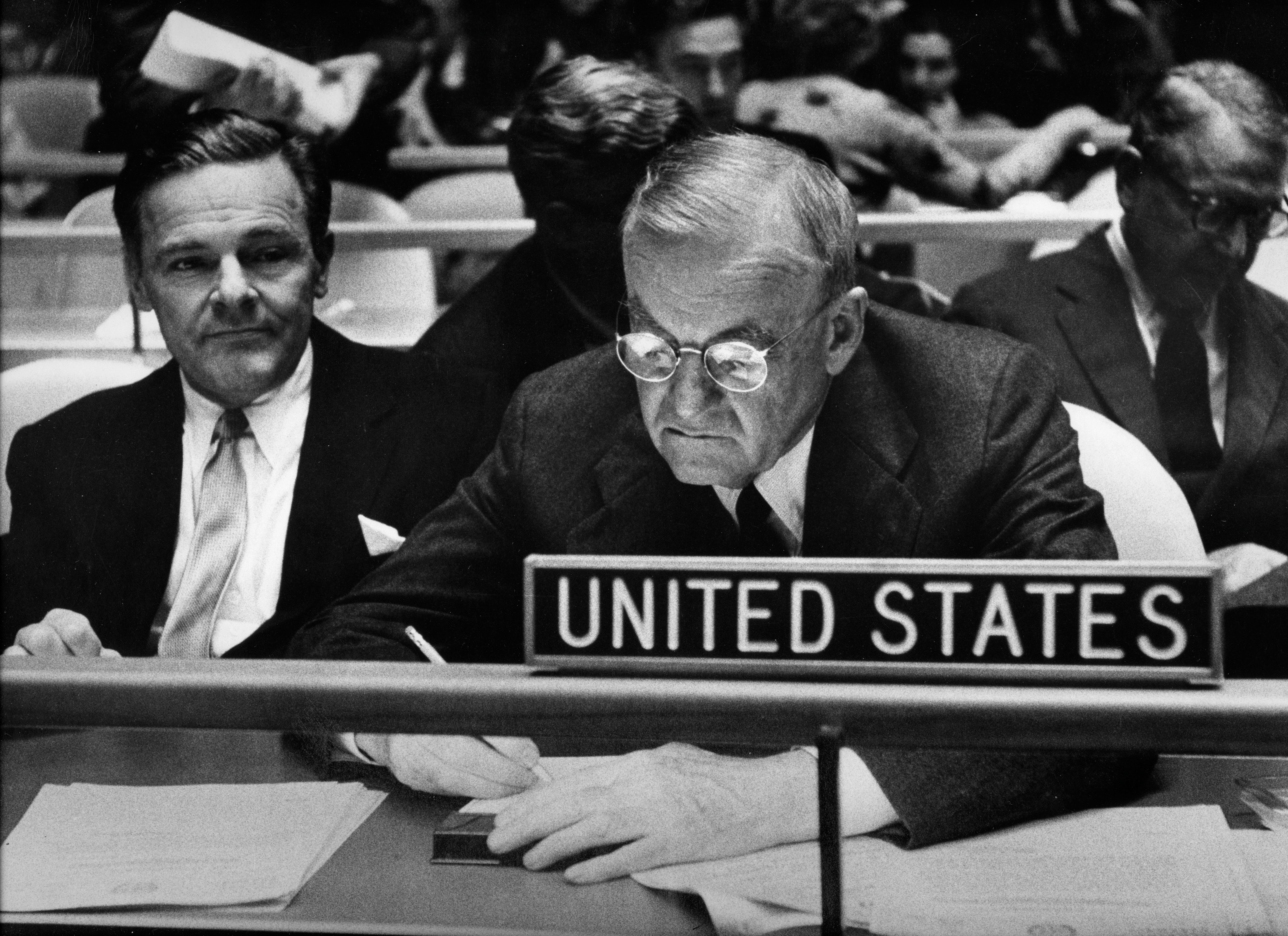
After the end of WWII, the Allied powers were figuring out what to do with Italy’s African colonies. Libya and Somalia got independence, but Eritrea was handled very differently.
There’s a quote that can be cited by basically any Eritrean in the world attributed to John Foster Dulles, a U.S. representative to the UN General Assembly who would go on to become Eisenhower’s secretary of state:
“From the point of view of justice, the opinions of the Eritrean people must receive consideration. Nevertheless, the strategic interests of the United States in the Red Sea basin and considerations of security and world peace make it necessary that the country has to be linked with our ally, Ethiopia.”1
Essentially, the U.S. was preparing for the Cold War — lining up allies, securing military bases, containing Soviet influence — and wanted Eritrea’s Red Sea ports and communications facilities to go to its existing ally, Ethiopia. Ethiopia is a landlocked country without Eritrea, which was (and is) a large part of its motivation for continued hostilities with its smaller neighbor.
During Ethiopia’s occupation of what is now an independent country, it imposed its own language, banned political parties and unions, and dissolved the Eritrean parliament at gunpoint. Eritreans did not go quietly; what followed was a long and bloody war of resistance.
In a country of about 3 million, between 60,000 and 80,000 were killed, and 50,000 children were orphaned. Those casualties include many of my parents’ direct relatives. Proportionally, if this happened in the U.S., that would mean about 6.8 million deaths, on the low end. Hilariously,2 Ethiopia switched sides in the Cold War anyways and imposed communism on both its own people and Eritrea as well. This was all depressingly predictable at the time.
The U.S. decision to oppose Eritrean independence ended up being net negative for world peace and national security as well as for its stated aims of the right to self-determination and independence.
I need to underscore how unbelievably infuriating this all is. At this exact moment in time, the U.S. was the chief architect of the UN, whose founding charter enshrined the self-determination of all peoples. In 1941, a joint declaration between Roosevelt and Churchill explicitly stated they “respect the right of all peoples to choose the form of government under which they will live.”
So, as an Eritrean-Ethiopian immigrant growing up in the Bush era, anger about U.S. hypocrisy over international “norms” and “human rights” and “democracy” is etched into my heart.
And yet, watching the Trump administration rip up even the pretense of caring about liberal internationalism is a reminder that sometimes virtue signaling and hypocrisy are a preferable equilibrium:
Trump sent the military into Venezuela to capture a foreign leader and then said he was going to “run” the entire nation himself for the purposes of accessing Venezuelan oil.
Trump repeatedly threatened to annex Greenland (a NATO ally’s territory!) and refused to rule out military force.
Trump worked with Israel to attack Iran on a seemingly manufactured pretext of imminent threat to the U.S.
Now, The Atlantic is reporting that the U.S. may be on the verge of “taking Cuba.”
It would be stupid and ahistorical to claim that the previous order prevented the U.S. from engaging in selfish, destructive acts. But it would also be stupid and ahistorical to forget that it was possible to shame the U.S. and other countries into comporting with their stated values on occasion. Now, we’re really in the world of realpolitik.
Hypocrisy is infuriating when you’re the one being held to a higher standard, but it’s also leverage. Take civil rights: Mary Dudziak’s book Cold War Civil Rights is the definitive account of how Truman, Eisenhower, Kennedy, and Johnson became reluctant supporters of desegregation because of international pressure as foreign nations accused us of failing to live up to our democratic principles.
The USSR exploited racial violence against Black Americans as propaganda worldwide, particularly in Africa to turn nations against the West. The gap between the stated values of the U.S. and its actual behavior gave activists a foothold to demand better behavior. When you’re asking someone to live up to what they say they believe, that’s an easier sell than telling them they should both act differently and believe different things.
Shame is an incredibly important social tool for improving behavior. Unfortunately for all of us, Trump’s superpower is his shamelessness.
Top stories this week
As we grow, I want to make sure you see everything we’re doing without flooding your inbox with dozens of emails. But for the real libs, you can get every post as it drops by opting into The Mag here.


🌟Abundance Wins of the Week🌟
Austin’s Surge of New Housing Construction Drove Down Rents
Montana Supreme Court ruled against the NIMBYs
Florida passed Live Local 4.0 with near-unanimous votes
Washington State closed a bumper housing session
Worth watching...
Every Wednesday, Lakshya Jain, our director of political data, will go live on Substack with leading election nerds to discuss what’s going on in politics that week.
This week, Lakshya joined Split Ticket’s Armin Thomas and VoteHub’s Zachary Donnini to discuss the electoral implications of the war in Iran.

Subscribe to The Mag so you don’t miss future live election breakdowns.
What’s News with The Argument
We’re hiring a Senior Editor to join our team. Are you a liberal? Do you love to argue? Do you read social science research for fun? Apply!
The Argument recommends
Here’s what our staff is watching, reading, and listening to this week:
Books:
The Wall Dancers: Searching for Freedom and Connection on the Chinese Internet by Yi-Ling Liu
The Stepford Wives by Ira Levin, Peter Straub
The Other Bennet Sister by Janice Hadlow
The Liberal Imagination by Lionel Trilling
Watching:
Music:
“Lemon Pound Cake,” by Afroman
“Don't Wake Me Up,” by The Hush Sound
“Glow in the Dark,” by Skepta
We have merch!
My favorite merch is either the hat or the keychain, but we have stickers and quarter-zips too! Buy them here.
Send us a picture of you with your merch and we might just feature it in this weekly roundup.
More to read:


Whether Dulles actually said this exact quote is disputed, but what’s not disputed is the underlying substance in which the U.S. wanted access to a military base on the Red Sea and was willing to engage in a little quid pro quo.
I'm not laughing.
Thanks for the info about Ethiopia and Eritrea. I didn't know any of that.
Nailed it. Also this was an excellent history lesson. I too didn't know any of this.