

Veterans Day began as Armistice Day, the anniversary of the 1918 ceasefire that ended the fighting in World War I. Now, it’s a holiday to thank the people who served our nation in the armed services. If that’s you, thank you for your service.
I also like remembering that that the date itself marks the day that a group of nations that had collectively killed more than 15 million people finally agreed to stop. Most of our disagreements are, thankfully, lower stakes than one of the deadliest conflicts in world history. Still, it seemed like a good day to revisit — and in some cases unpaywall — the ambitious series we recently concluded on how different people can live with each other.
— Jerusalem Demsas, Editor-in-Chief
Reasonable people disagree with each other about a lot. Some people think the path to a good life requires a college degree and 2.5 kids. Others believe in stay-at-home moms and deep religious conviction. Others still would prefer living on the open road and never saving a dime.
Liberalism’s core purpose is to figure out how to set up a society where lots of people are going to disagree. In that vein, The Argument launched 15 months ago with a simple question: How do we live with each other?
All factions of American politics have, in different ways, rejected the premise of reasonable disagreement. The left has tamped down free speech and flirted with central planning, the right has turned to moral authoritarianism and out-group persecution, and the center has defaulted to splitting the difference.
In a series of 15 essays published over 10 weeks (and collected together for the first time below), we asked prominent contributors from the left, right, and center — including regular writers of The Argument Matt Yglesias, Derek Thompson, and Kelsey Piper, plus outside contributors such as Cassie Pritchard and Leah Libresco Sargeant — to tackle this question from different angles:
How do we secure rights for those whose very identities are objects of suspicion, as is the case for many trans people? How can American and liberal ideals of equality survive the intense magnification of difference that the digital revolution has made possible? Can tolerance survive the realities of residential segregation? How can difficult questions about birth and death be peacefully resolved when liberal subjects disagree on the nature of life itself?
The full series is summarized and linked below, and most of the essays are now available without a paywall for the first time.
If you would like to access the full range of this debate — including paywalled essays by Matthew Yglesias, Derek Thompson, and Leah Libresco Sargeant — please consider becoming a paying subscriber today.
Your subscription helps us prove that disagreement doesn’t mean giving up on each other.
Join us — we’re libbing out.
The series began with trans democratic socialist Cassie Pritchard, who argued that a winning strategy for trans freedom and security emphasizes a civil rights framework that appeals to the mass public, rather than philosophical red lines about the nature of gender.
Most Muslim or Mormon Americans don’t premise their rights and dignity on everyone necessarily sharing their religious convictions, but on a mutual ethic of noninterference and nondiscrimination. If trans people can make the same kinds of arguments — that we have a common interest in mutual respect despite different beliefs about gender — we stand a chance at rebuilding the coalitions we need for our security.

The series’ next entry came from the right: Economic historian (and 1619 Project debunker) Phil Magness dissected why postliberals such as Vice President JD Vance are so skeptical about economics.
Vance latches onto this age-old criticism of GDP (one that economists have long acknowledged) not because he wants to engage with the decades of debate over the best way to measure an economy’s health but because he wants to inoculate his political project from criticism — criticism that the world that he wants to usher us into will be a poorer one.

While the liberal conception of human rights is based on the idea that all people are created with equal worth, the uncomfortable fact is that people are highly unequal in ability. In other words, not everyone can be Taylor Swift. Rather than try to drag everyone up (or down) to the same level, we should embrace a certain kind of inequality that can make everyone better off, The Argument staff writer Kelsey Piper argued.
The more we build a world that promotes positive-sum cooperation, the easier it becomes to tolerate the inevitable kinds of inequality. We shouldn’t be trying to build a society in which everyone’s life outcomes are the same, but a society in which we wouldn’t even want that, because it is sufficiently evident that when our neighbors are stronger, so are we.

Jerusalem Demsas, founder and editor-in-chief of The Argument, offered a rebuttal to those on the left and right who want politics to bring meaning to people’s lives. Orienting public policy around a curiously yet-to-be-defined “common good” sounds nice — but in a society with so many disparate and contradictory worldviews, politics should really just make space for people to find their own meaning in life.
A liberal order begins with the presumption of freedom and then requires public justification when the government chooses to intervene. The cult of the common good reverses that presumption. It begins with an Official Version of the Good Life and then treats the law and politics as the way to direct people toward it.

Milan Singh, one of The Argument’s writing fellows, argued that we should consider the imperative to live together more literally: His essay shows that mixed-income neighborhoods provide a variety of benefits that ease the work of liberalism.
When it comes to low-income housing, location is not just another amenity like in-unit laundry or plentiful natural light. That’s because research suggests that whether poor families can achieve upward mobility largely depends on where they live.

Staff writer Jeremiah Johnson then gave us his analysis of how well we’re living with each other online. His diagnosis is not positive, but he finds pockets of hope in online forums.
Simplistic good-versus-evil narratives are easier to communicate quickly, and they’re more likely to provoke the behaviors that platforms measure: clicking, liking, sharing, and replying. Illiberal politics thrives in this kind of environment, where the distinction between an opponent and an enemy is collapsed.

Immigration has destabilized liberalism in the Western world more than perhaps any other issue. “Import the third world, become the third world” has become MAGA’s rallying cry. But as columnist Joseph Politano pointed out, immigrants who come to America are self-selecting for… liking American values:
The cumulative picture is of the world’s more pro-democracy citizens responding to rising authoritarianism in their birth countries by trying harder to immigrate to stable democracies. These people are not activists per se; primarily, they are just workers with high ambition, a taste for freedom, and a preference for risk-taking.

Are we witnessing, as a recent cover story for The Atlantic suggests, the “end of reading”? And does the end of reading mean the end of democracy? Writing fellow Maibritt Henkel answers with an emphatic “no”: Liberalism, public reason, and debate existed long before the era of widespread literacy; there is little reason to believe that they now depend on it.
The slump in American literacy is sad and concerning for many reasons — one of those simply being that Americans express wanting to read way more than they actually do. But how much someone reads does not determine how liberal they are. Respecting democracy, celebrating pluralism, and giving moral primacy to the individual do not rest on a Great Books education.

The AI boom is poised to unleash billions of dollars in philanthropic giving as it mints new millionaires and billionaires — many of whom have, let’s say, idiosyncratic views about the world. Dylan Matthews, a onetime skeptic of big philanthropy who is now a program officer at the major philanthropy Coefficient Giving, considers the dilemma of billionaire giving from first principles. (Disclosure: Coefficient Giving is an investor in The Argument.)
Implicit in the critique that philanthropy conflicts with democracy is the notion that decisions about the distribution of wealth and power should be made principally by the government, not by private actors. I believed this to be true in 2019. But now I think this is mistaken — and, indeed, somewhat illiberal. No single entity, including the government, should monopolize these decisions.

The presence of children in America’s inner cities has evaporated — one reason for this is decades of anti-urban school siting policy. In this entry, Emily Hamilton and Yonah Freemark argued for the pro-social benefits of more city-forward school policy.
How kids get to school shapes families’ daily lives. Students who switch from active to passive modes of transportation to school get less exercise in general. Kids’ loss of unsupervised time with friends at the bus stop or on the walk to school may negatively impact their mental health. Parental quality of life, too, can be diminished by the need to shuttle their kids to school each day.

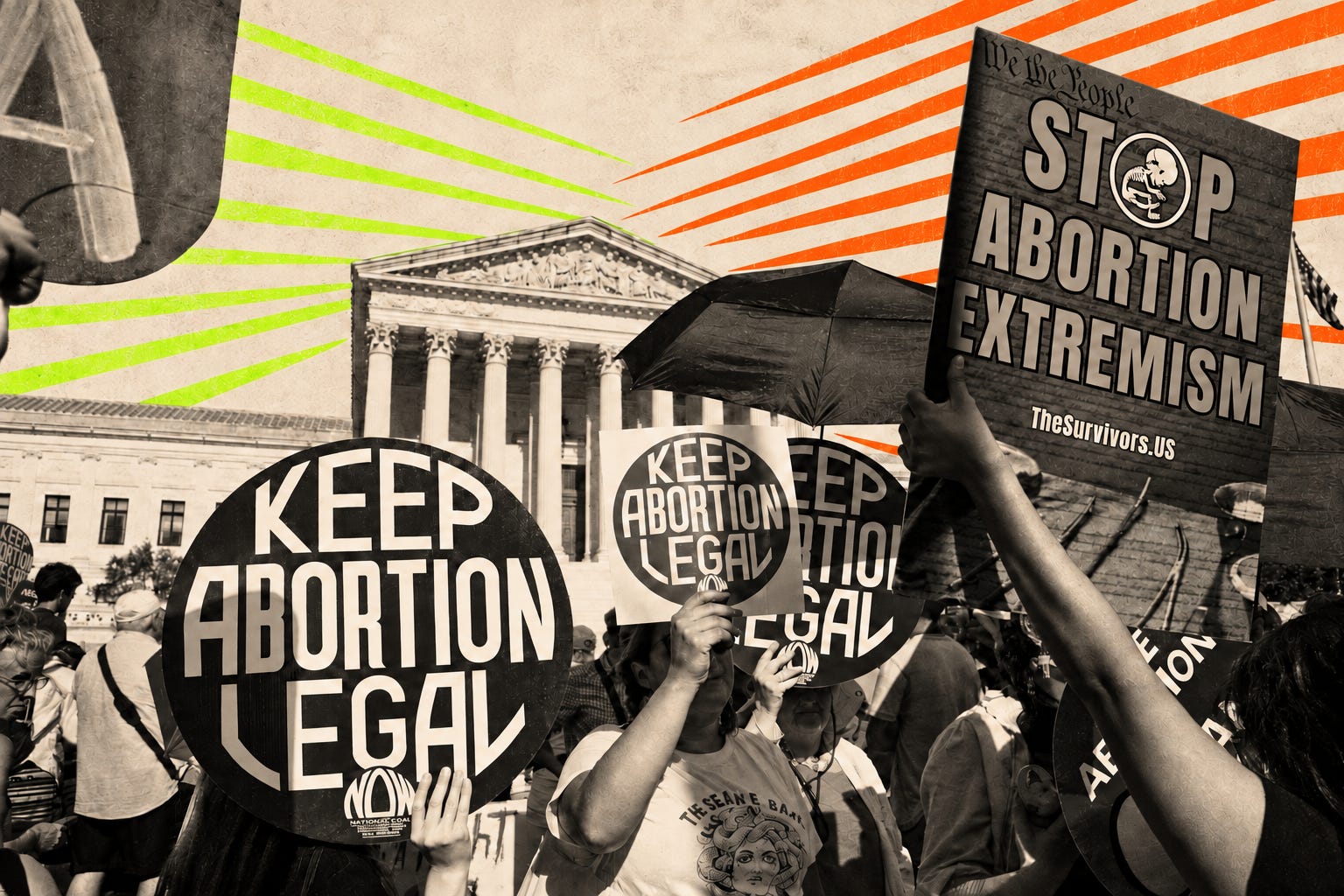
Pro-life feminist Leah Libresco Sargeant turned the series’ focus from present to future children. She argues that discarding viable embryos during in-vitro fertilization will be the next flashpoint in the pro-life movement’s battle with the reproductive rights movement.
As IVF becomes more widely used, there will be more and more uncomfortable questions about whether the embryos on ice are property or people. Every day, more and more embryos are banked that will not ultimately be carried by their parents. The families with spare embryos are unsure of what to do with these excess children.

As AI models get more sophisticated and human-like, many people are asking themselves… is this thing alive? Writing fellow Kobe Yank-Jacobs doesn’t think so, but he argues that shouldn’t stop us from at least trying to treat AIs well.
AI is probably not conscious, but being wrong about that would come with a heavy cost. Luckily, moral behavior has intrinsic value, independent of the machine and its possible experience. It is ugly behavior when someone yells at a GPS, though it doesn’t affect the GPS.

Columnist Matthew Yglesias returned to the question of whether and how people should find meaning in politics. Though he agrees that liberals are right to worry about the government prescribing the common good, he doesn’t think that should stop them from offering their own perspectives on what a good life looks like.
Liberalism leaves people free to decide what makes life worth living, but those of us who defend it need to take more responsibility for helping people find compelling answers. We should be making the case for commitments beyond personal enrichment and building communities that help people live up to them. Keeping the government out of the business of prescribing a good life is good. Keeping liberals out of the business of prescribing the good life is an abdication of power to the illiberals snapping at our heels.

Meanwhile, columnist Derek Thompson offered his take on how liberal societies should confront technological disruption. While many technologies offer unambiguous benefits in the long run, only politics can save us from their short-run turmoil.
Even if the tech accelerationists are right and the existential freak-out over AI is completely misguided, that doesn’t translate exactly to “calm down.” Even “normal” general-purpose technologies are initially volatile and dangerous, even those we come to think of as unalloyed goods.

To close out our series, senior editor John Thomason considered his own return to liberalism, which he credits with providing him the intellectual freedom to change his mind about climate change.
Liberalism’s critics sometimes act as though liberalism is the enemy of conviction. But liberal political systems have welcomed more strong and disparate convictions into their citizenries than any alternative systems in history. No, if there is an intellectual orientation that is the enemy of liberalism, it is not conviction, but ideology.
